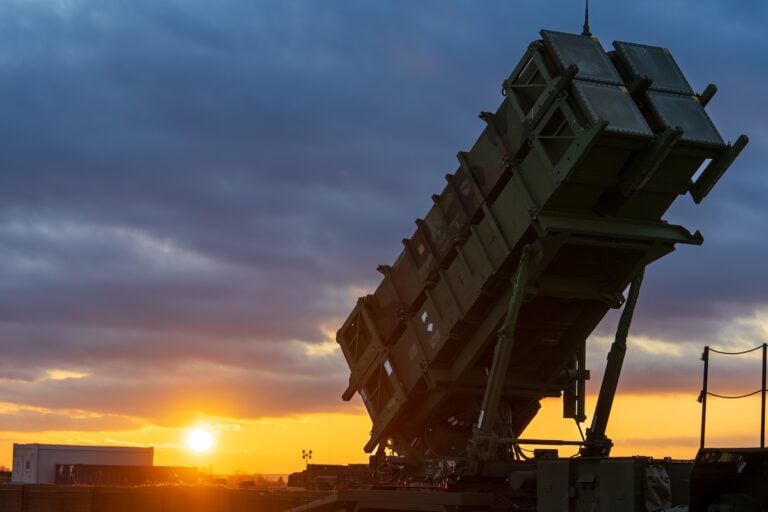
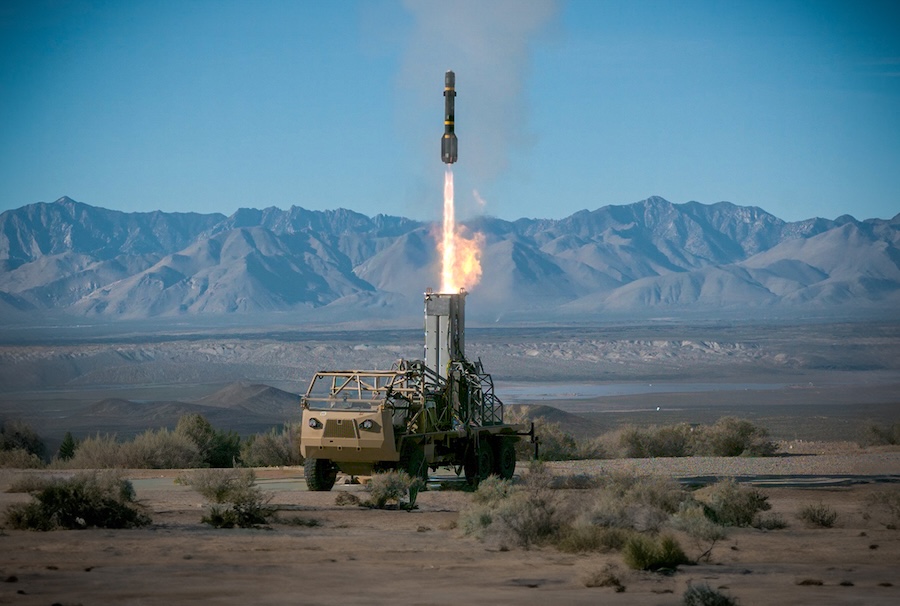
The vertical-launch approach removes the need for a forward firing arc, allowing missiles to be launched from confined environments such as ship decks, rooftops and ground vehicles. The capability is designed to support rapid response and enhance protection of high-value assets.
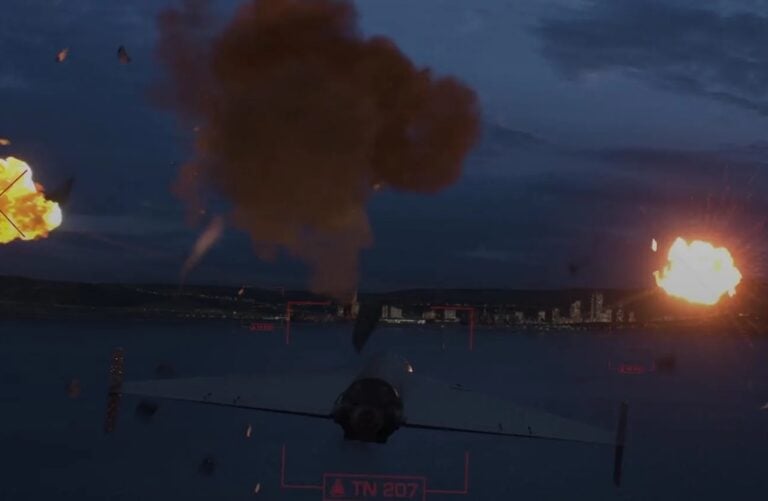
Recent live-fire exercises, including a demonstration of the JAGM Quad Launcher, showed how the missile can be adapted beyond its traditional air-to-ground role. The system can now operate as a ground-, vehicle- or maritime-based counter-unmanned aerial system solution.

Felipe Benvegnu, Mission Systems and Weapons Business Development Director at Lockheed Martin, said: “In today’s rapid pace environment, where information, data and threats evolve faster than ever, flexibility and versatility are essential to stay ahead of adversary threats.” He added: “By integrating JQL with JAGM vertical launch, we broaden the defensive envelope and deliver a scalable layered defense solution that spans the full spectrum of conflict. It enables operators to field a low-cost, high-precision interceptor from platforms that were previously unable to launch missiles, delivering reliable protection wherever the mission demands.”
The launcher is built on a modular, open architecture designed to integrate with existing combat systems across multiple domains. This allows users to update software and connect sensors without redesigning hardware, supporting long-term adaptability.
The system can be mounted on a range of platforms, including surface combatants and mobile ground vehicles. Demonstrations included deployment on a 6×6 mobile platform developed by RCR Enterprises.
Casey Walsh, Multi-Domain Missile Systems Program Director at Lockheed Martin, said: “JAGM delivers the same lethality as a purpose built C UAS system but at a fraction of the cost per shot, giving our users a truly cost-effective, layered defense option.” He added: “Combining that with vertical-launch capability means we can protect any platform in any scenario with a single, proven missile.”
The missile uses a dual-mode seeker combining semi-active laser guidance with millimetre wave radar. This allows it to detect and track targets, including low-signature drones, in various weather and lighting conditions.
The vertical-launch system also enables a 360-degree engagement envelope without repositioning the launcher. This capability is intended to improve survivability and responsiveness in complex operational environments.
Mike Verlander, President of RCR Enterprises, said: “Using the same manufacturing, machining, and engineering capabilities that drive our race teams and engine company, RCR Enterprises is becoming a trusted integrator in the defense space, particularly in ground mobility, as proven by our recent successful Lockheed Martin JQL VL demonstration,”
Lockheed Martin said further demonstrations are planned, including integrations with maritime platforms in cooperation with Saildrone. The company aims to expand the system’s application across missions including fleet defense, surveillance and strike operations.
The development is positioned as part of broader efforts to enhance layered defense capabilities. Officials said the system is intended to provide a flexible and cost-effective solution for countering evolving aerial threats.