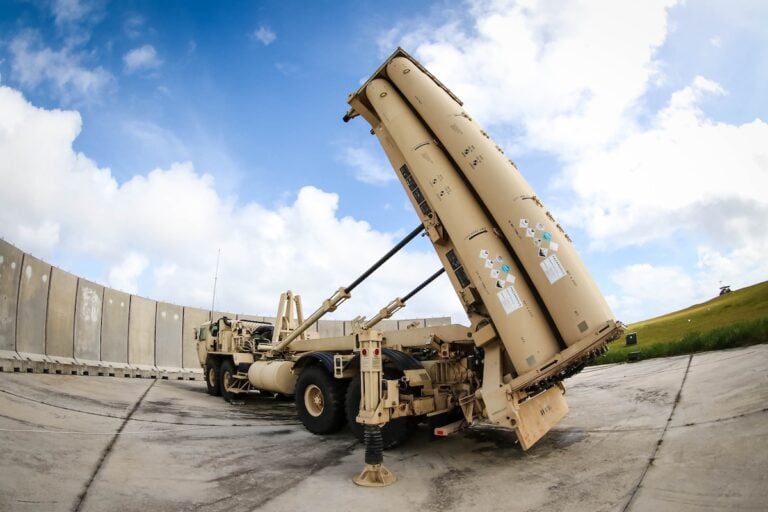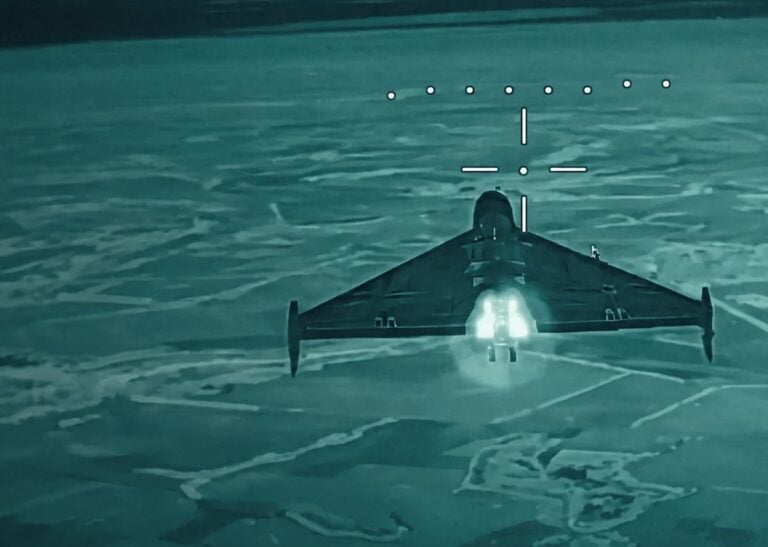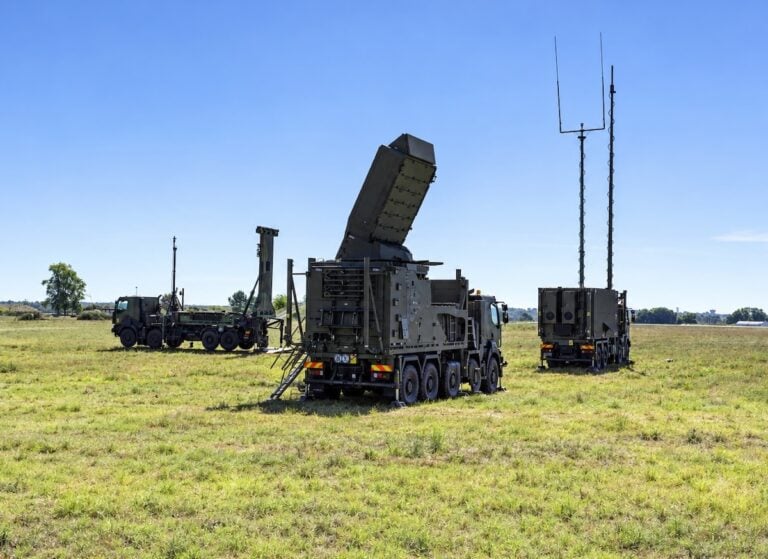

During the test, Sanctum sensors detected and tracked a hostile unmanned aerial vehicle. Sanctum mission management software then processed the engagement, and the GRIZZLY launcher fired a JAGM missile that neutralized the target.
Lockheed Martin said the event demonstrated an end-to-end counter-drone solution completed with speed, agility and affordability. The company said hardware-in-the-loop integration and live-fire testing were completed in under 45 days.
Built on existing prototype architecture, GRIZZLY allows users to employ the ready-to-fire Sanctum C-UAS system without extensive infrastructure or logistics requirements. Lockheed Martin said the system integrates advanced sensors, battle management and missile technologies to support agile and distributed lethality.
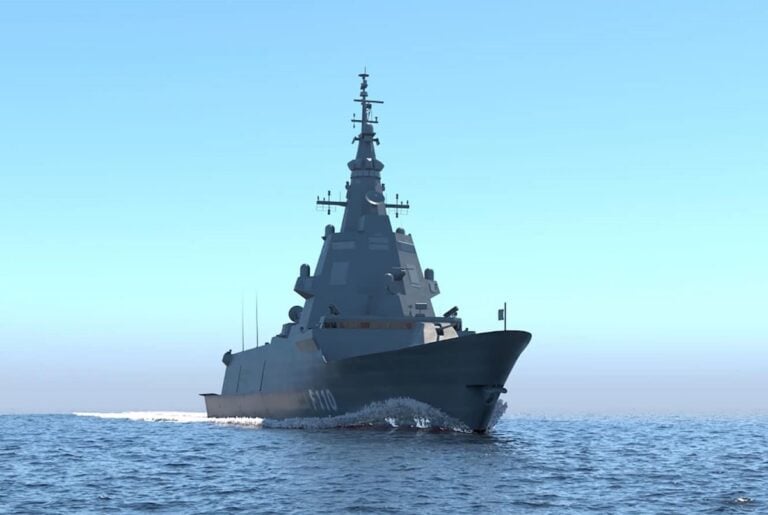
The company said small-footprint radar sites with distributed sensors can provide configurable coverage options. The containerized launcher can be mounted at ground sites or on maritime platforms, supporting distributed operations with a reduced logistical footprint.
Lockheed Martin said wireless communication between radars, battle management and the launcher enables rapid and agile deployment. It also said low-cost commercial sensors, toolless reload and an eight-round capacity reduce sustainment costs while maintaining high-volume firepower.
The system integrates radar, battle management, a proven weapon container and existing layered effectors through Sanctum C-UAS Battle Management software. Lockheed Martin said this provides a complete kill web against Group 1-4 UAV threats and can help protect forward operating bases, critical assets and maritime platforms.
The company said JAGM’s dual-mode seeker, combining semi-active laser and millimeter wave guidance, supports layered defense against unmanned aerial systems. Lockheed Martin said the missile can be rapidly deployed from a multi-missile launcher across a range of domains to protect high-value assets.
“The ability to integrate GRIZZLY’s proven launch architecture with Sanctum’s battle manager on an accelerated timeline demonstrates how Lockheed Martin is applying battlefield innovation and cross-program collaboration to rapidly deliver layered defense capabilities to the warfighter,” said Randy Crites, vice president and general manager of Lockheed Martin Advanced Programs. “This test demonstrated a modular, affordable point-defense solution that can be quickly scaled and deployed across multiple domains to counter evolving threats.”
“This test demonstrates a rapid, low-cost and modular point-defense solution that can be deployed on land or maritime platforms within days,” said Paul Lemmo, vice president and general manager of Lockheed Martin Sensors, Effectors and Mission Systems. “The demonstrated kill chain can operate standalone or integrated with higher echelon command and control systems through the Sanctum mesh network, showing our commitment to meet our customers’ toughest missions.”