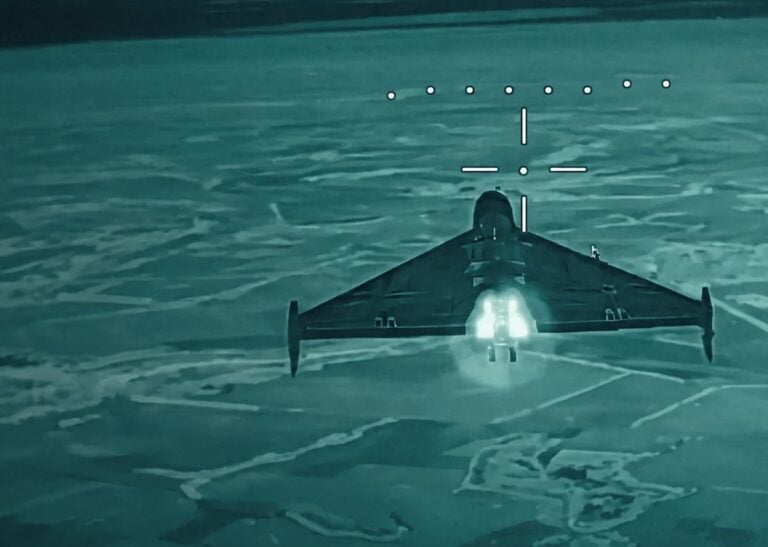

During the night of 1 to 2 June, Russia carried out one of its largest air attacks in months. A total of 729 aerial attack weapons were launched towards Ukraine, including 656 drones and 73 missiles of various types.
Kyiv was the main target of the attack, while Dnipro, Kharkiv and Zaporizhzhia were also struck. Seventeen people were killed and several dozen were injured, with fires and power outages reported in several cities.
The strike followed a series of large Russian attacks on Ukraine. In May alone, Russia launched more than 8,150 long-range drones at Ukraine, one quarter more than in April, as well as 211 missiles.
Moscow has also used Oreshnik, a hypersonic ballistic missile capable of carrying nuclear payloads. In attacks on Ukraine, conventional warheads or dummy warheads are used.
Among the weapons used during the night of 1 to 2 June were eight 3M22 Zircon hypersonic missiles. The missile is among the Russian weapons against which Ukrainian air defence has had the greatest difficulty and varying levels of success.
That night, Ukraine shot down 40 missiles of different types, but the data did not list any intercepted Zircons. This does not prove that no Zircons were shot down, although Kyiv usually publicises such interceptions when they occur.
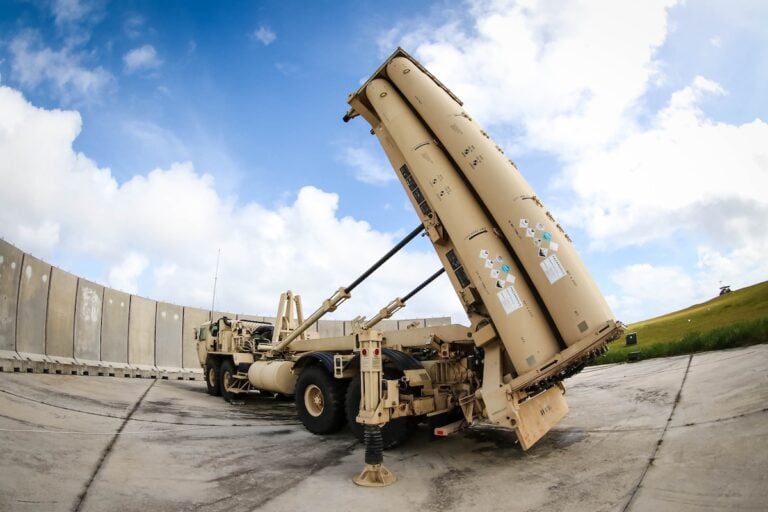
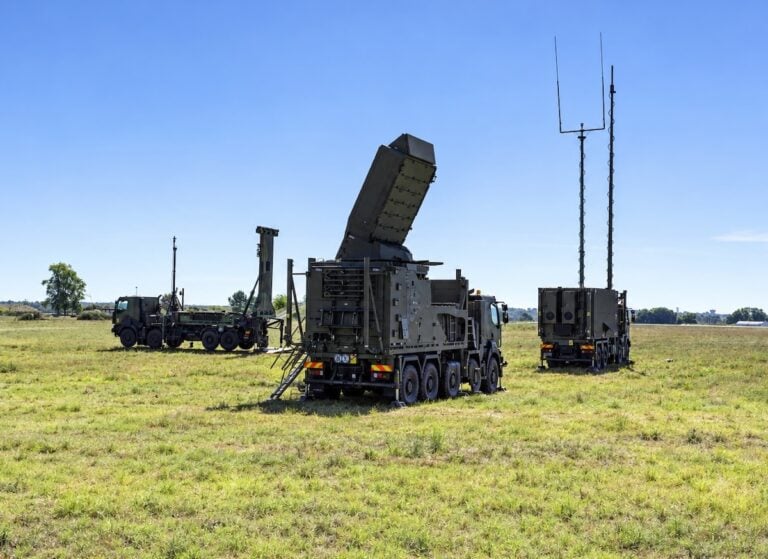
As Russian attacks on civilian targets intensify, Ukraine’s air defence system is facing increasingly serious ammunition shortages. These include shortages of PAC-3 missiles for Patriot systems, which President Volodymyr Zelensky described in a letter to Donald Trump as a critical problem.
The Zircon has become a Russian tool for trying to break through Ukrainian air defences. This is not because Russia has especially large numbers of such missiles, but because they are difficult to shoot down and push air defence systems to their limits.
The 3M22 Zircon was not originally designed for the role it now plays in attacks on Ukrainian cities and critical infrastructure. It was developed as an anti-ship missile intended to target U.S. Navy carrier strike groups.
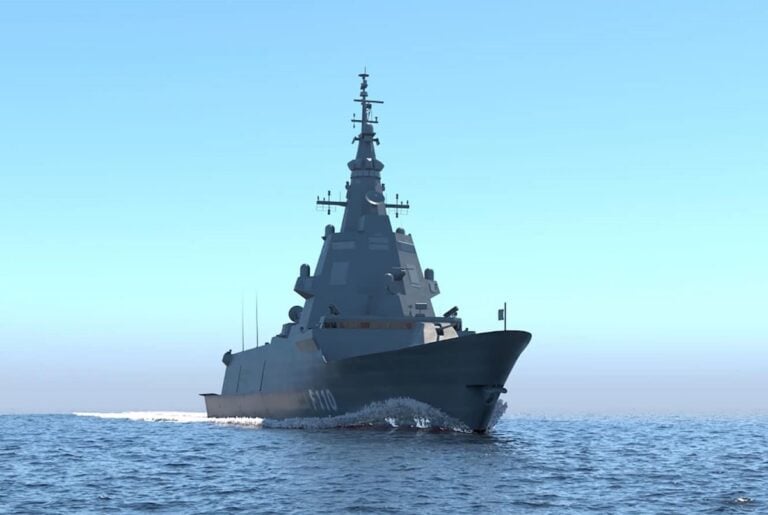
The missile entered service on platforms including Russian Project 22350 frigates of the Admiral Gorshkov class and Project 885M Yasen-M submarines. A key factor behind its wider use is compatibility with Russia’s 3S-14 universal vertical launchers, which are also used to fire Kalibr and Oniks missiles.
That compatibility allowed the Zircon to enter service relatively quickly and across several platforms at the same time. Russia later decided to use the missile against land targets and has done so regularly since 2023.
This is not the only case of Russia changing the intended role of its missiles. Moscow has also used older surface-to-air missiles from the S-300 system to attack land targets.
The Zircon is powered by a two-stage propulsion system. A solid-fuel booster accelerates the missile and takes it to the correct altitude before it switches to an air-breathing engine.
Russia advertises the Zircon as being powered by a scramjet, a supersonic combustion ramjet that burns fuel in an airflow already moving at supersonic speed. However, analysis of debris collected in Ukraine indicates that the missile uses a technically simpler ramjet engine.
Unlike a scramjet, a ramjet slows incoming air before combustion. It has no moving parts, as air is compressed by the geometry of the intake, mixed with fuel and burned, with hot gases expelled through the nozzle to produce thrust.
When flying at high altitude, around 30 to 40 kilometres, reduced air resistance allows the Zircon to reach speeds of Mach 5 to Mach 8. The Kremlin claims the missile can reach Mach 9, but Western analyses treat such claims with caution.
Zircons intercepted or recovered in Ukraine have travelled at only about Mach 2 to Mach 2.5 in the final phase of flight. This indicates that the missile slows significantly before impact.
The missile’s range remains uncertain. Official Russian claims state a range of more than 1,000 kilometres, while independent estimates are more conservative.
Those estimates suggest a range of 250 to 500 kilometres in low-altitude sea-skimming flight, and 700 to 1,500 kilometres on a semi-ballistic profile from high altitude. The difference reflects the difficulty of independently verifying the Zircon’s performance.
The Zircon carries a relatively small warhead for a missile of its class. Its mass is estimated at 150 to 400 kilograms, depending on the source, with the explosive material itself weighing about 40 to 80 kilograms.
The warhead design is derived from an anti-ship weapon and was not intended to destroy deeply buried or heavily fortified land targets. This limits the missile’s use against bunkers or concealed command posts.
The missile is better suited to striking energy infrastructure or civilian buildings than hardened military facilities. This makes its current use against land targets different from the mission for which it was originally developed.
Despite Kremlin propaganda claims, the Zircon is neither a wonder weapon nor a fully reliable missile. Each launch still forces Ukraine to choose between using scarce PAC-3 ammunition or allowing the missile to reach its target.
Kyiv has had some success against Zircon missiles. Ukraine shot down two Zircons fired in March 2024, all of those launched at the time, and in February 2026 Patriot systems disabled half of four incoming missiles.
In the terminal phase of flight, the Zircon slows to around Mach 2 to Mach 2.5. This is below hypersonic speed, which begins at Mach 5, and makes the missile easier to intercept.
The cost of interception is still high. Each successful engagement can require one or more PAC-3 missiles, which Ukraine lacks in sufficient numbers.
Even an intercepted Zircon can remain dangerous. Its debris continues on a ballistic path and can fall within a radius of several kilometres, injuring people and damaging buildings.
Russia uses the missile against land targets in Ukraine for two main reasons. The first is demonstration and testing, as every combat use provides data on the system’s performance.
The second reason is operational pressure on Ukraine’s air defences. As Ukrainian air defence becomes more effective, Moscow is looking for missiles that are harder and more expensive for Kyiv to intercept.