The mission will now shift to an on-orbit phase focused on operationally relevant systems and realistic rendezvous and proximity operations threat-response scenarios. After on-orbit checkout and vehicle commissioning, the Rocket Lab and True Anomaly space vehicles will conduct scenarios demonstrating space domain awareness and characterization capabilities.
SSC’s System Delta 89 Space Safari office is leading the execution of Tactically Responsive Space missions. The office operates under the Space Force Program Executive Officer for Space Combat Power.
“We are excited to demonstrate advanced TacRS capabilities on orbit,” said USSF Lt. Col. Lincoln Miller, Space Safari system program manager. He said the mission builds on earlier responsive space demonstrations.
Miller added: “VICTUS HAZE culminates the TacRS ‘crawl, walk, run’ phase of on-orbit demonstrations. We are confident in the technology and space operations expertise of our teams who have paved the way for rapid capability delivery to orbit in support of urgent operational needs.”
VICTUS HAZE is a multi-launch, multi-vehicle mission intended to show the nation’s ability to rapidly acquire, launch and operate space vehicles on operationally relevant timelines. The mission is designed to respond to urgent on-orbit threats.
The mission also uses commercially developed products to provide options for future Tactically Responsive Space missions. “VICTUS HAZE set out to demonstrate our ability to respond to irresponsible behavior on orbit under operationally realistic conditions, and we are doing just that, leveraging commercial partnerships to maximize flexibility and minimize cost,” said USSF Col. Bryon McClain, acting Space Force portfolio acquisition executive for Space Combat Power.
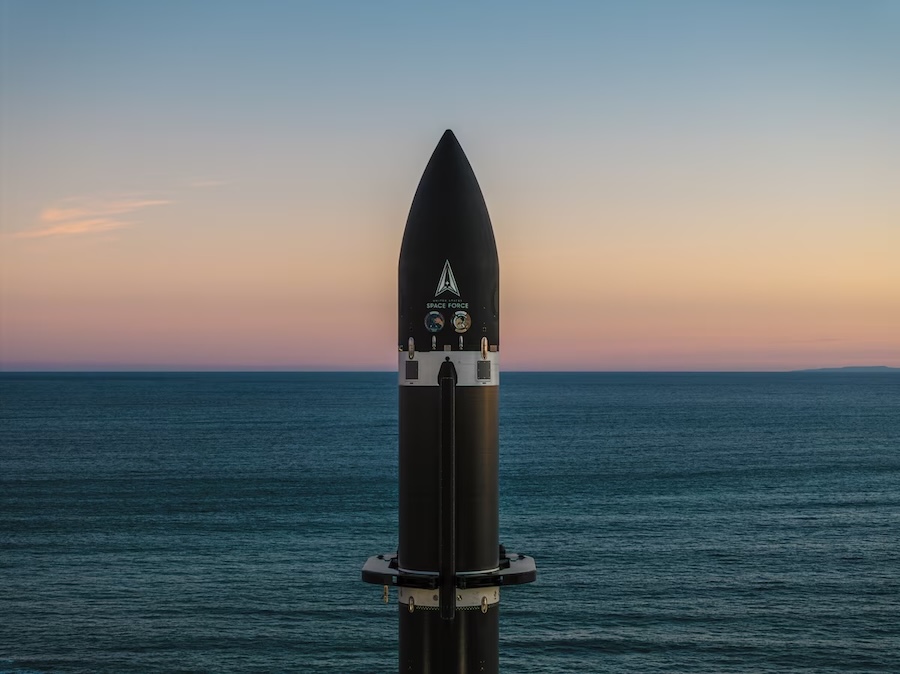
The June 19 launch was the second of two launches within the VICTUS HAZE mission. It delivered Rocket Lab’s company-built response space vehicle to low-Earth orbit.
That vehicle will now rendezvous with another VICTUS HAZE space vehicle already on orbit. The second vehicle is True Anomaly’s Jackal, which launched on a SpaceX Falcon 9 rideshare mission from Vandenberg Space Force Base in California on May 3, 2026.
Before the Rocket Lab launch, the Space Safari office placed the Rocket Lab team into a heightened state of readiness. The team was then directed to activate into alert status, with the activation process taking less than 48 hours.
Rocket Lab later received a Notice-to-Launch order requiring it to prepare for launch to a previously unknown orbit within its performance ability. The order gave the company only 24 hours’ notice.
“Not only does this mission open the door for acquisition of follow-on vehicles that allow our warfighters to close critical gaps and seams in a conflict scenario, it also presents a more immediate value by giving our current operators a crucial opportunity to exercise and improve LEO RPO tactics, techniques, and procedures,” Miller said. Space Safari’s acquisition efforts for the mission established groundwork for rapid production and fielding of follow-on vehicles from Rocket Lab or True Anomaly.
The U.S. Space Force said the effort strengthens the defense industrial base by adding two providers capable of responsive rendezvous and proximity operations missions. It also gives the Space Force and U.S. Space Command additional options that may be needed to deter adversary aggression on orbit and maintain the security of national interests.
“The United States has the most innovative space industry in the world,” McClain said. “VICTUS HAZE is primed to further demonstrate our readiness to lean on our commercial partners to deny, disrupt, and counter any adversarial advantage—no matter where they try to operate in space.”
The VICTUS HAZE mission is the result of work across federal agencies and the defense industrial base. Its partnerships include DIU support for the Rocket Lab effort and a SpaceWERX partnership for the True Anomaly effort.
The mission also includes an advanced Lawrence Livermore National Laboratory optical payload hosted on the Rocket Lab space vehicle. Other partners include the Space Domain Awareness Tools, Application, and Processing Lab under SSC’s System Delta 85 and the Aerospace Corporation.