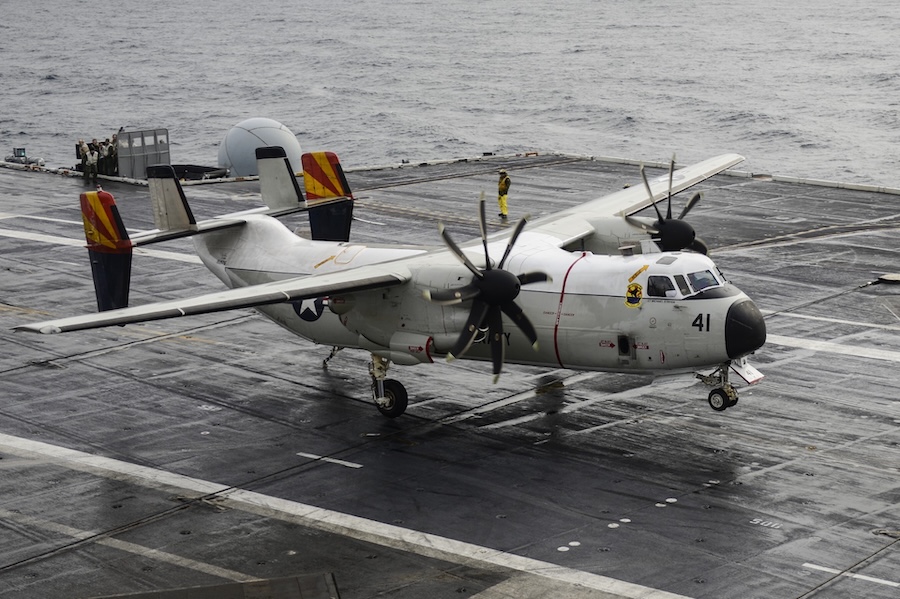
Developed by Northrop Grumman and fielded in the late 1960s, the C-2A was purpose-built for the carrier-onboard-delivery mission. It provided fast and reliable transportation to carriers operating around the world during peacetime and combat deployments.
A large, unobstructed cargo compartment and rear loading ramp allowed the Greyhound to carry high-value, time-sensitive equipment. Its payloads included jet engines, major assemblies, maintenance tools and personnel traveling to and from ships.
The C-2A was also designated as a special warfare asset capable of airdropping special operations personnel and equipment directly into the water. By delivering critical parts and people to the flight deck, it helped carriers remain deployed and operationally effective.
Northrop Grumman designed the Greyhound specifically for the demands of carrier aviation, equipping it with folding wings and an onboard auxiliary power unit. The unit provided independent engine starting and ground power in remote areas, giving the aircraft operational flexibility that the company said was unavailable in any other cargo platform.
During its service life, the C-2A operated alongside successive generations of Navy aircraft, from the A-6 Intruder and F-14 Tomcat to the F/A-18 Hornet, Super Hornet and F-35 Lightning II. It also shared 53% of its parts with the E-2 series, supporting a common and efficient sustainment model throughout its lifespan.
Continuous maintenance and upgrades kept the platform effective as carrier operations, onboard technology and global requirements evolved. Northrop Grumman said the C-2A’s service record reflected its long-term commitment to specialized naval aircraft and operational connectivity.
The Greyhound delivered more than cargo for sailors serving aboard carriers far from home. Mail and care packages provided a connection to family and friends, while the aircraft’s arrival signaled that mission-essential parts had reached the ship.
C-2A aircraft are displayed at Naval Air Station North Island, the USS Midway Museum and the Patuxent River Naval Air Museum. Another aircraft from the National Naval Aviation Museum is currently on loan to the Pima Air and Space Museum.