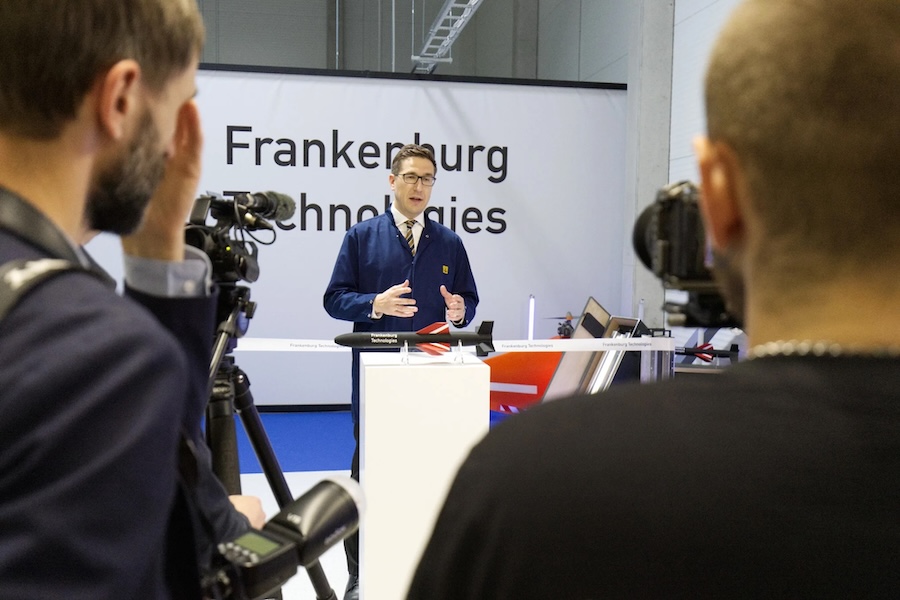
The opening was attended by Andrius Kubilius, European Commissioner for Defence and Space. He joined Frankenburg leadership for the ribbon-cutting ceremony and addressed the company’s team at the new facility.
The Riga site supports production of Frankenburg’s Mark I guided air defence missile system. Its work includes missile electronics assembly, weapon system assembly, fire control system integration, production testing and quality control.
Frankenburg said the Riga facility was established in 12 months. It is designed around modular production stations, lean manufacturing processes and standardised workflows.
Together with a planned final assembly site in Ādaži, the Riga facility will form Frankenburg’s first complete Latvian FieldFoundry production system. The two-site setup is planned to reach capacity of up to 100 missiles per day by the end of 2026.
The Riga facility covers about 1,000 square metres and is expected to employ up to 50 people. Frankenburg plans to produce 1,500 missiles in 2026 as it moves from initial low-rate production towards higher-volume manufacturing.
FieldFoundry is the company’s model for sovereign high-volume missile system production. Frankenburg said the system can be deployed in existing facilities, temporary structures or containerised installations and scaled across multiple sites.
A standard FieldFoundry configuration is designed for capacity of up to 100 missiles per day. The company said output can be expanded through additional production lines and multiple sites.
Frankenburg said the model is intended to help allied countries establish local missile production capacity faster. It is also designed to reduce dependence on long supply chains and replenish stockpiles closer to the point of need.
Kusti Salm, CEO of Frankenburg Technologies, said: “The era of affordable defence missiles has arrived. For too long, guided missiles have been scarce, expensive and slow to replenish.”
“Frankenburg is proving they can be built differently: with missile speed and precision, but with the production logic of scale bringing costs down. Riga shows what that model looks like in practice, as compact, fast to set up, lower in capital intensity and scalable across allied countries.”
“Latvia has been central to Frankenburg’s development from the beginning,” Salm added. “Riga and Ādaži together will form our first FieldFoundry production system and the Latvian foundation of a wider NATO-aligned manufacturing network.”
“From here, we scale to Estonia, the United Kingdom and Poland. That is how Frankenburg moves from thousands of missiles to the annual million-missile capacity Europe will need.”
Taavi Madiberk, Chairman of the Supervisory Board of Frankenburg Technologies, said: “Defence is entering its production age. Millions of warhead-mounted drones already exist, and the free world now needs the industrial capacity to defeat them.”
“A million missiles a year sounds impossible until somebody builds the system to make it possible. Frankenburg is already building that factory network one FieldFoundry after another.”
Andrius Kubilius, European Commissioner for Defence and Space, said: “Europe must be able to move from limited and expensive production toward affordable systems produced in larger numbers. Frankenburg’s work in Riga is an example of the industrial ambition and new thinking Europe needs to strengthen its defence readiness.”
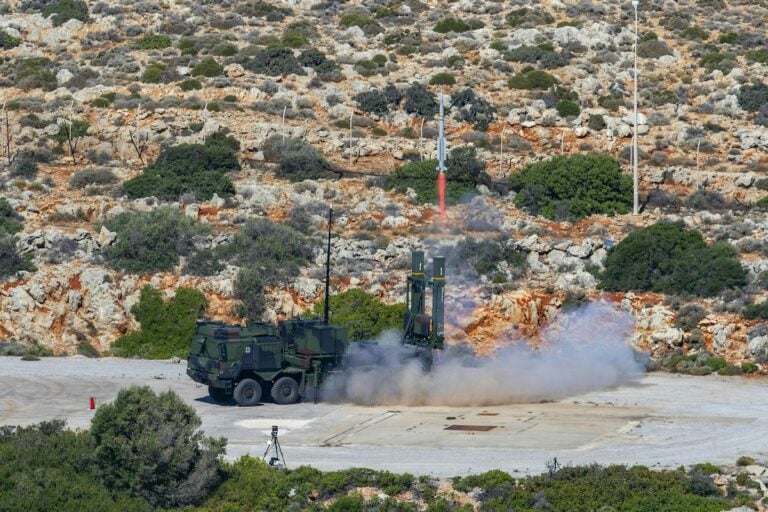
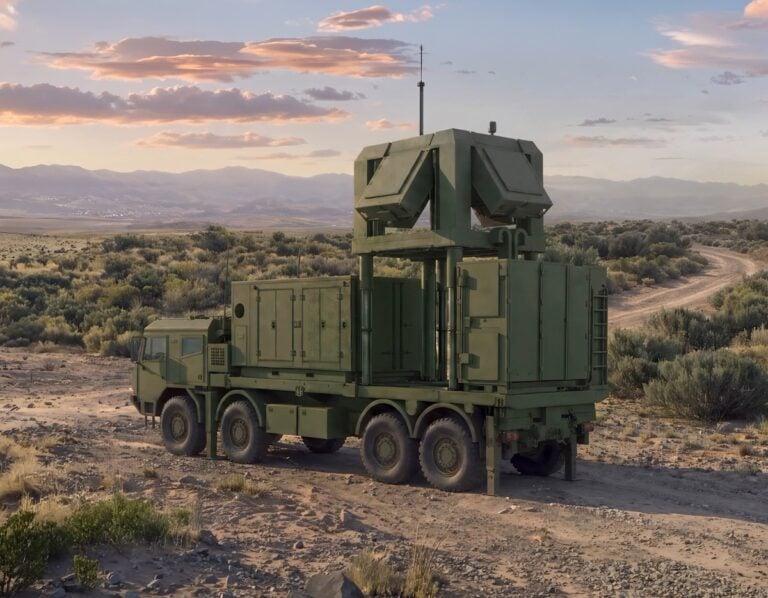
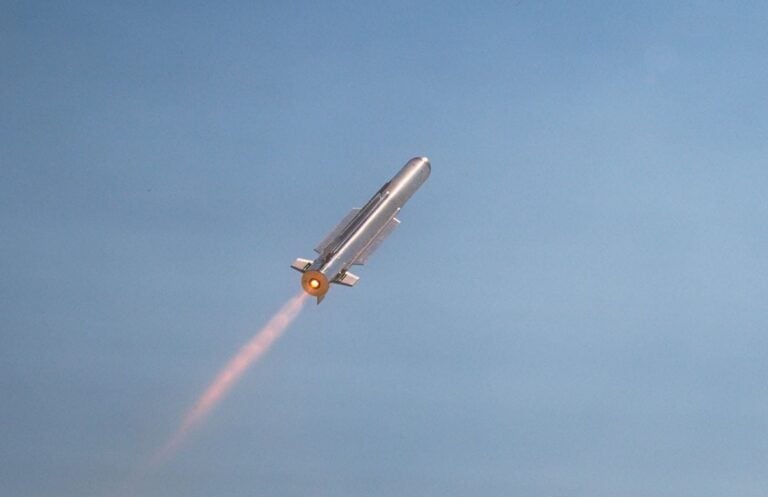
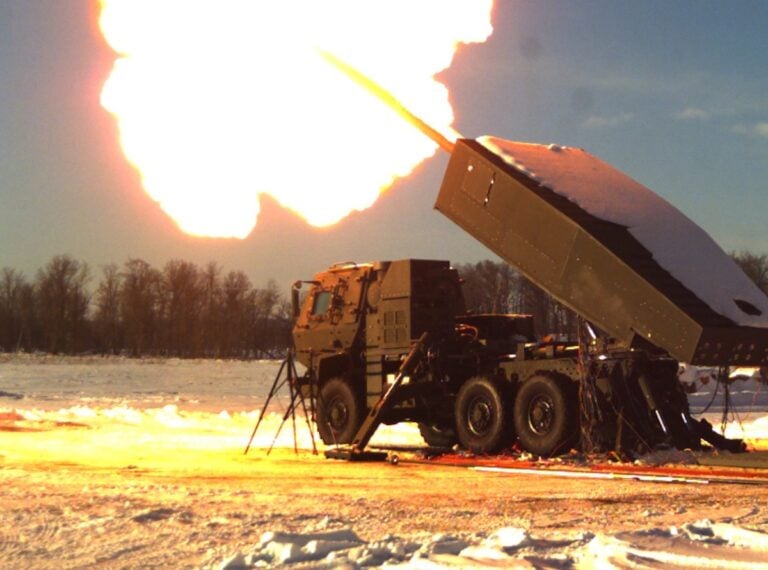
Mark I is Frankenburg’s first affordable guided air defence missile system developed to counter mass drone and aerial threats. The company said it is designed to reduce the cost of interception by more that 10× and enable mass production of guided air defence missiles for European and allied nations.
Frankenburg plans additional FieldFoundry sites in Estonia, the United Kingdom and Poland. The planned network forms part of the company’s long-term plan to reach annual capacity of 1,000,000 missiles.