The company received a seven-year undefinitized contract action modification in July for up to $53.86 billion in PAC-3 MSE interceptors.
Lockheed Martin said the funding would support plans to triple PAC-3 MSE production capacity by the end of 2030.
The PAC-3 action was the second major multiyear procurement under the Department of War’s Acquisition Transformation Strategy.
It followed a June procurement contract worth up to $35 billion for THAAD interceptors.
“We are moving with speed to support the Department of War’s Arsenal of Freedom,” said Dan Nimblett, vice president, Lockheed Martin Munitions Acceleration Integration.
“Lockheed Martin continues to move with urgency to support investments to expand capacity, modernize critical facilities and deter adversaries through comprehensive defensive capabilities.”
Lockheed Martin has marked two munitions facility groundbreakings this year.
The projects are located in Troy, Alabama, and Camden, Arkansas.
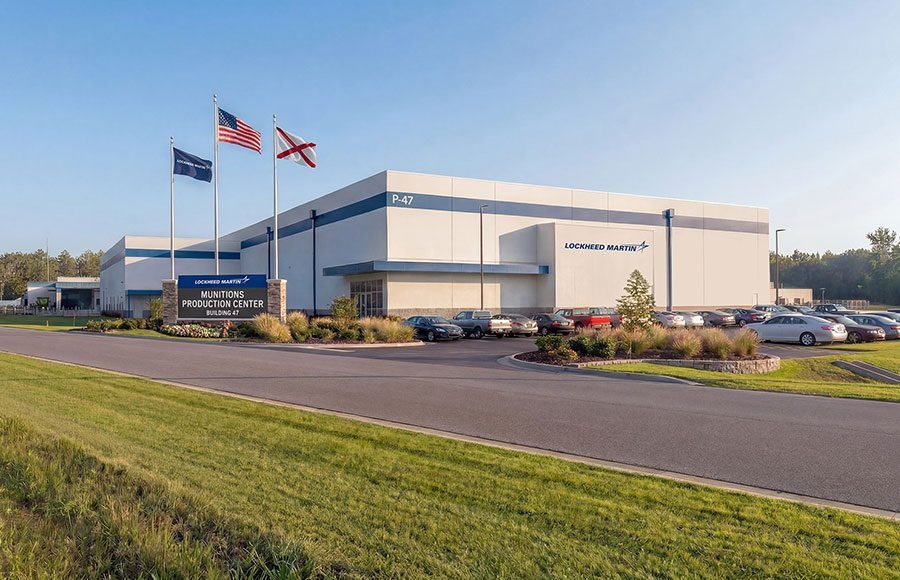
The Munitions Production Center Building 47 in Troy will support THAAD production and potential future NGI work.
The Munitions Acceleration Center in Camden will support the planned increase in PAC-3 output.
Lockheed Martin also opened Missile Assembly Building 5 at its Courtland, Alabama, campus in June.
The facility will support NGI production through digital engineering and manufacturing processes.
“Once again, we are expanding the Courtland campus to meet the national security challenges of today,” said Reshondra McInnis, Lockheed Martin Courtland site executive.
“MAB-5 will shape the local workforce by introducing high-skill jobs to create even more pathways toward advanced manufacturing careers.”
NGI is designed to defend the United States and allied nations against evolving long-range ballistic missile threats.
Lockheed Martin said the Courtland facility would help accelerate the program’s transition from development to production.
“NGI is more than a ‘next generation interceptor’, it’s a next generation solution to missile defense’s most serious threats,” said Chris Jewell, vice president, Lockheed Martin NGI Program.
“We are creating a foundation that enables long-term production, sustainment and mission support with greater adaptability and more resilient defense architecture.”
Lockheed Martin is also working to integrate the PAC-3 missile with its Aegis Combat System.
The U.S. government awarded the company a contract in April to develop, integrate and test the ability to launch PAC-3 from Aegis.
Aegis is deployed aboard more than 120 ships across six nations and can also support land-based operations.
Lockheed Martin said PAC-3 integration would expand the system’s capacity and flexibility against increasingly advanced threats.