The discussions, which also included Japanese embassy officials, focused on improving Japan’s ability to detect, disrupt and counter threats across the electromagnetic spectrum. Northrop Grumman said the effort builds on previous talks aimed at improving Japan’s defense readiness.
The company said Japan has increased investment in its defense infrastructure in response to shifting geopolitical conditions and rising regional threats. Northrop said it is seeking to support those efforts through advanced electronic warfare technologies and operational systems.
The company said effective electronic warfare requires preparation long before systems are used in combat. Its technologies are designed to help military forces detect, exploit, deceive and deny adversaries’ use of the electromagnetic spectrum while protecting allied operations.
Northrop said Japan faces increasingly sophisticated threats that are software-defined, wideband, distributed and multispectral. The company said these challenges require faster software updates and adaptable hardware upgrades.
To address those needs, Northrop highlighted its Combat Electromagnetic Environment Simulator (CEESIM) platform. The system is designed to simulate complex threat environments and support mission readiness.
The company said CEESIM can generate multiple simultaneous emitter scenarios connected to both static and dynamic platforms. It said the technology is used to replicate combat conditions and accelerate radio frequency system development and validation.
Northrop said CEESIM has been deployed globally since 1983 and has supported major electronic warfare programs. These include the ALQ-257 Integrated Viper Electronic Warfare Suite, ALQ-251 Radio Frequency Countermeasures and the APR-39E(V)2 Digital Radar Warning Receiver.
The company said those systems are designed to improve survivability against modern threats and protect aviators in contested environments. Northrop added that CEESIM has been used throughout the development cycle of the ALQ-257 program, contributing to flight testing results.
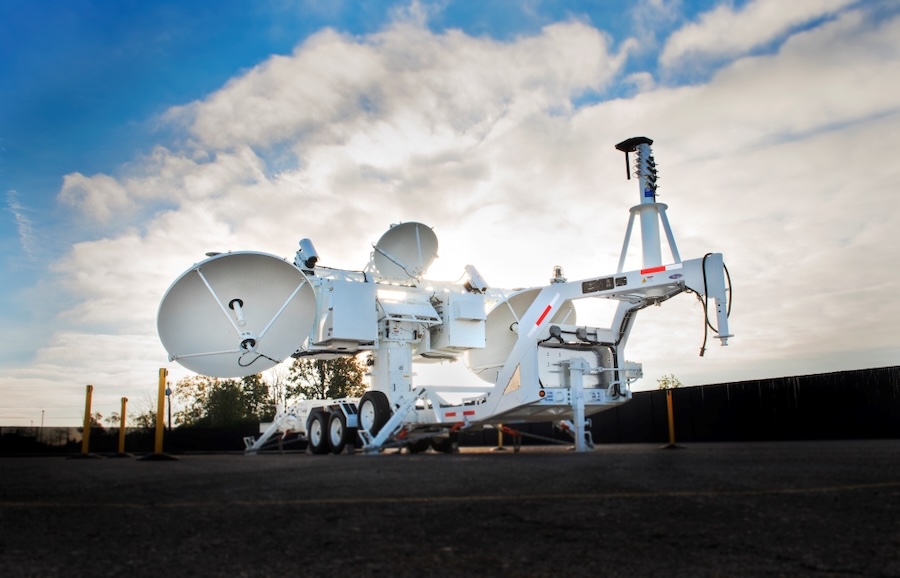
Northrop also highlighted its Joint Threat Emitter as part of efforts to strengthen Japan’s workforce training. The system is designed to prepare military personnel to identify and respond to missile and artillery threats.
The company said integrating the Joint Threat Emitter into Japan’s training programs could help develop operators capable of responding to evolving threats across the full electronic warfare spectrum. Northrop said the broader effort is intended to strengthen regional security and improve interoperability between Japan and its allies, including the United States.