![Northrop Grumman says 10,000 experts and $2 billion investment support Sentinel ICBM program development [VIDEO]](https://defence-industry.eu/wp-content/uploads/2026/07/Northrop-Grumman-says-10000-experts-and-2bn-investment-support-Sentinel-ICBM-program-progress-VIDEO.jpg)
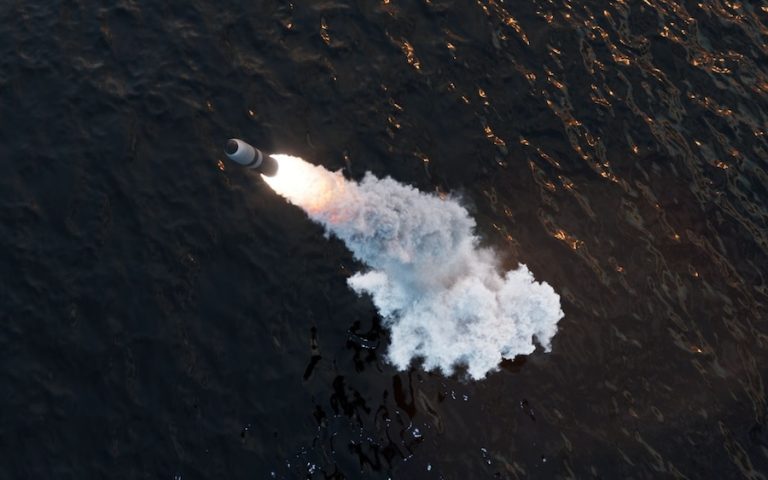
“We’re driving progress on Sentinel with over $2 billion invested and a dedicated team of 10,000+ experts nationwide,” Northrop Grumman said. “Together with the United States Air Force, we’re successfully completing critical testing and design reviews, advancing a next-gen strategic deterrent designed for decades of security.”
Sentinel is being developed to replace the aging LGM-30 Minuteman III intercontinental ballistic missile. The U.S. Air Force describes the program as a comprehensive modernization of the land-based leg of the U.S. nuclear triad.
The system will be deployed at F.E. Warren Air Force Base in Wyoming, Malmstrom Air Force Base in Montana and Minot Air Force Base in North Dakota. The Air Force Nuclear Weapons Center is responsible for the complete life-cycle management of the Sentinel weapon system.

The Air Force says nuclear deterrence is the Department of War’s highest priority mission and the foundation of national defense. After more than 50 years of Minuteman III service, the service says the missile and its 1970s-era infrastructure require replacement.
Following analysis, the Air Force decided to build new launch silos, launch centers, communications systems and infrastructure rather than reuse existing Minuteman III silos. The Sentinel effort is described as the largest construction project in Air Force history.
The first Minuteman III silo at F.E. Warren was taken offline in September 2025 to prepare for the transition. The Air Force says Minuteman III will remain in service until Sentinel is fully deployed to preserve a continuous and credible deterrent.
Northrop Grumman leads an industry team of more than 500 suppliers designing and producing the new ICBM system. The company says Sentinel is designed to stay on alert until 2075.
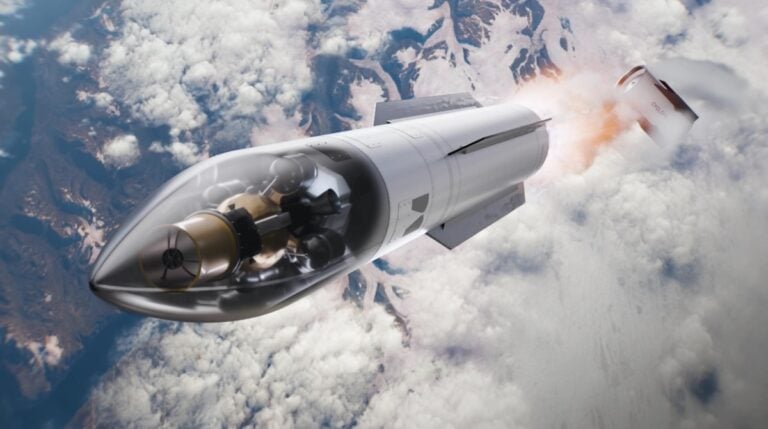
The program is a broad system-of-systems effort covering missiles, silos, launch centers, transport vehicles, computer networks and physical infrastructure. Northrop Grumman says the LGM-35A missile is intended to provide performance in accuracy, range and flexibility, while upgraded infrastructure improves resiliency, maintainability and modularity.
Sentinel will replace large copper cable networks with a fiber optic network. Northrop Grumman says the change is intended to improve security, speed, data capacity and reliability across the nuclear command and control network.
The program includes more than 450 LGM-35A missiles, 450 hardened missile silos, 24 launch centers and three Wing Command Centers. It also includes 16 Secondary Launch consoles, 5,200 miles of fiber optics, more than 100 maintenance vehicles and support equipment, and 90 training devices.
Northrop Grumman says Sentinel is the first U.S. ICBM system designed in a digital ecosystem. The company says modular open systems architectures and digital design work are being used to support long-term performance, reliability and maintainability.
The company said Sentinel has moved from digital designs into prototyping, assembly and testing. The U.S. Air Force and Northrop Grumman have prototyped and tested each stage of the missile, along with several critical weapon-system components.
Testing has included Stage I, Stage II and Stage III static fires, a shroud fly-off test and assembly of the first booster. The program also completed a critical design review for the Launch Support System in October 2025, supporting work on Sentinel’s digital command and control infrastructure.
“The Sentinel program is moving forward with purpose and momentum. We have the right strategy, we are proving the technology, and we will deliver on our promise to provide our Airmen with the modern, credible system they need to deliver the unwavering deterrence our nation requires,” said General Dale White, Director, Critical Major Weapons Systems, U.S. Air Force.
The Air Force says the number of land-based nuclear missiles on alert in the continental United States will remain the same. Sentinel is expected to move toward production and initial capability by the early 2030s.