
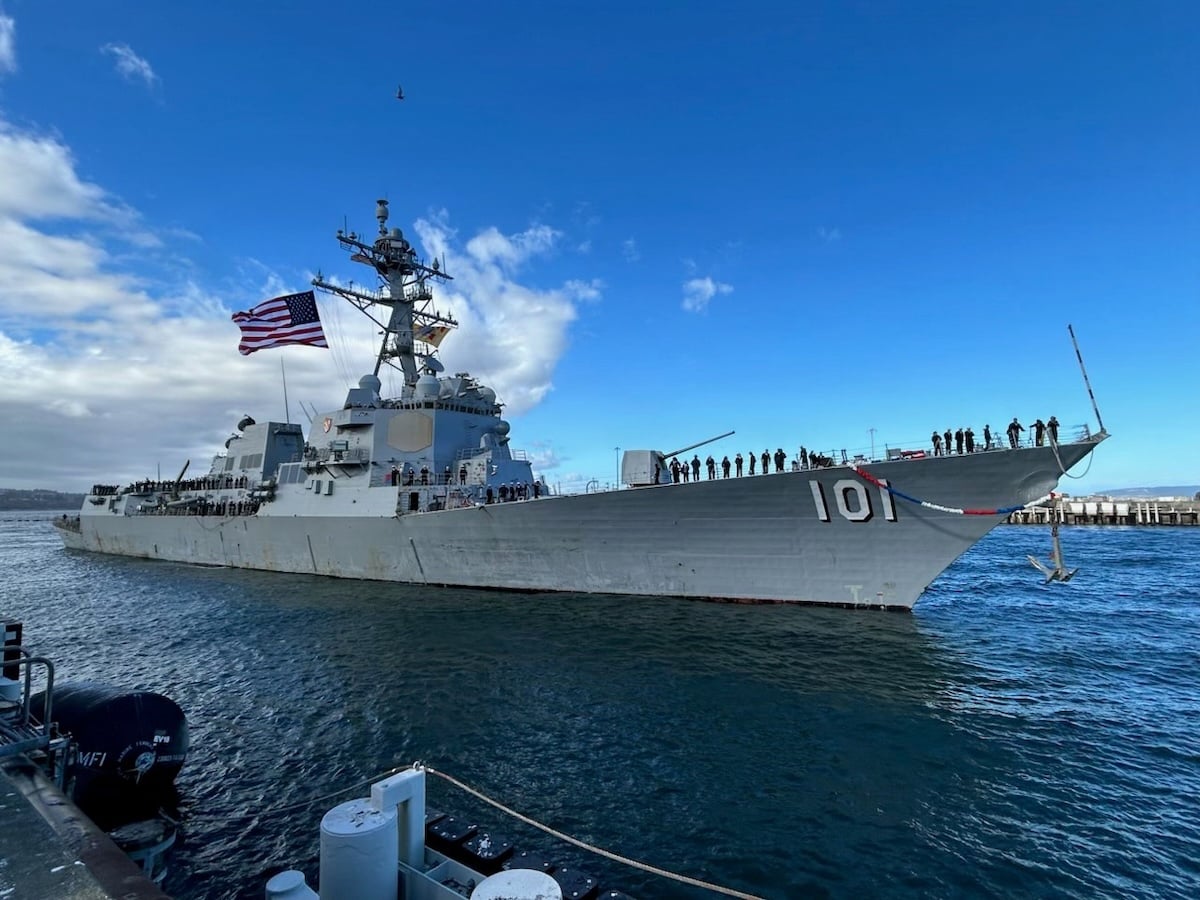
The assessment examined whether the General Dynamics yard could take on another ship while completing its current workload. Officials reviewed production throughput, schedule adherence, quality assurance, supplier performance and workforce management.
The Department of War found that operational and managerial changes had established the capacity and stability needed for additional construction. Deputy Secretary of War Steve Feinberg cautioned that the yard still had longstanding production problems to resolve.
“Our national security requires an industrial base that can respond to demands for increased speed and volume,” Feinberg said. “After a rigorous review, Bath Iron Works has proven it has the capacity and stability to support construction of a second destroyer.”
“While the operational improvements we have seen at BIW are a significant step in the right direction, the shipyard must continue this momentum to fully resolve legacy production challenges – sustained performance is essential,” he said. “The Department will continue to partner with contractors who prioritize execution, accountability, and the rapid modernization of our forces.”
Senator Susan Collins of Maine said she had pushed to include a second destroyer in the current budget. The administration made repeated visits to the shipyard during its review, she said.
“Today’s decision by the Department of War validates the capacity of Bath Iron Works (BIW) and the hard work of its highly skilled 6,800 employees who build the best ships in the world,” Collins said. “I have advocated for a second destroyer to be included in this year’s budget, and I worked with the Administration during its careful review and repeated visits to BIW to verify the ability of the shipyard to construct another ship while continuing to complete its current workload.”
“This certification will help keep our Navy strong and support BIW as a steady source of good-paying Maine jobs,” Collins said. “I will continue to work to ensure our shipbuilders have the resources to meet the Navy’s needs at a time when China is relentlessly expanding its fleet.”
The department described another destroyer at Bath as feasible and strategically beneficial to the Navy. It linked the decision to efforts to expand domestic shipbuilding capacity through modernization investment, workforce development and procurement changes.
Bath Iron Works and Huntington Ingalls’ shipbuilding operations are the two builders of Arleigh Burke-class destroyers. The class forms the core of the U.S. Navy’s surface fleet.