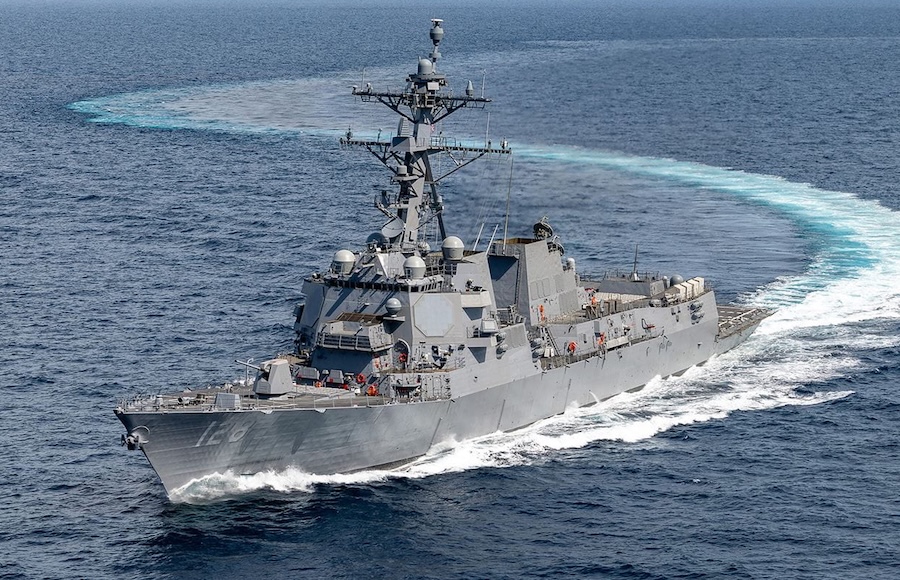
The contract includes upgrades for Flight IIA destroyers with the SPY-6(V)4 variant. Raytheon will provide continued support for the SPY-6 radar family under the sole-source award.
The contract also includes support for the government of Germany. RTX said other countries could be added through the Foreign Military Sales program.
“With over a decade of demonstrated success at sea, SPY-6 remains the U.S. Navy’s most advanced maritime radar, providing the fleet with unmatched sensing power and multi-mission readiness to counter evolving threats,” said Barbara Borgonovi, president of Naval Power at Raytheon. “Backed by an $800 million investment to modernize our radar manufacturing facilities, we’re accelerating production and are expecting to double SPY 6 output by 2028.”
SPY-6 is now aboard two commissioned U.S. Navy ships. It has also been installed on 11 other ships that are undergoing different stages of testing.
Over the next decade, SPY-6 is expected to be deployed on more than 50 U.S. Navy ships. RTX said the radar will enhance defence against air, surface, ballistic and electronic warfare threats.
SPY-6 is among several radar programmes designed and manufactured at Raytheon’s Radar Development Facility in Andover, Massachusetts. The 30,000-square-foot site supports production of different radar types for U.S. and allied forces.
RTX described the Andover site as vertically integrated and highly automated. The facility includes a gallium nitride foundry that produces semiconductors used in SPY-6 and other Raytheon radars.