The test focused on increasing the number of targets that a single aircraft can engage during one mission. Raytheon said the result gives operators more flexibility to conduct precision strikes in complex operating environments.
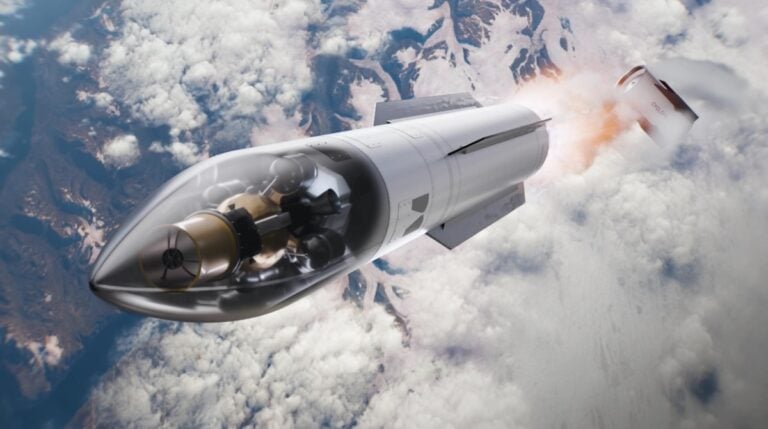
StormBreaker is a compact, winged munition designed to strike fixed and moving targets in all weather conditions. It can autonomously detect and classify moving targets when darkness, poor weather, smoke or dust limits visibility.
The weapon uses a tri-mode seeker that combines millimeter-wave radar, imaging infrared and semi-active laser guidance. Targeting information is shared across all three modes to support engagement of targets at any time of day.
Millimeter-wave radar allows StormBreaker to detect and track targets through adverse weather, while imaging infrared supports target discrimination. The semi-active laser mode enables the weapon to follow designation provided by an aircraft or a ground-based operator.
StormBreaker can fly more than 45 miles to strike moving targets, allowing launch aircraft to spend less time within threatened areas. Its small size also enables aircraft to carry more weapons and engage a larger number of targets without adding further jets to the mission.
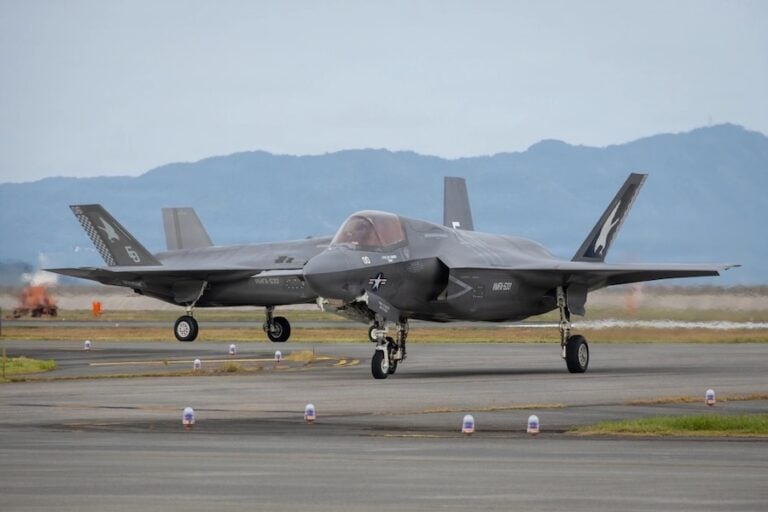
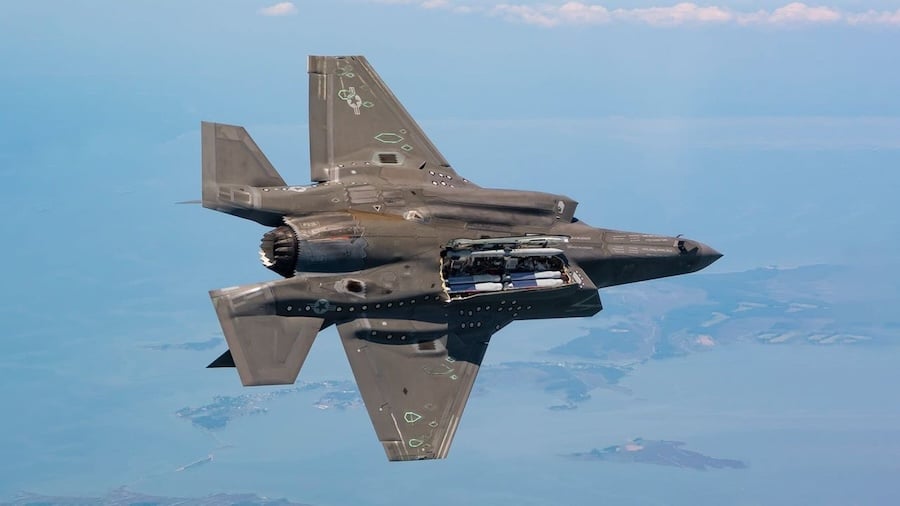
The Arizona test forms part of ongoing StormBreaker integration work involving the F-35 Joint Strike Fighter. The U.S. Air Force and U.S. Navy are also integrating the weapon with the F/A-18E/F Super Hornet.
StormBreaker is already approved for operational use on the F-15E. Raytheon is positioning the weapon as an all-weather precision-strike option for aircraft operating against mobile targets in contested environments.