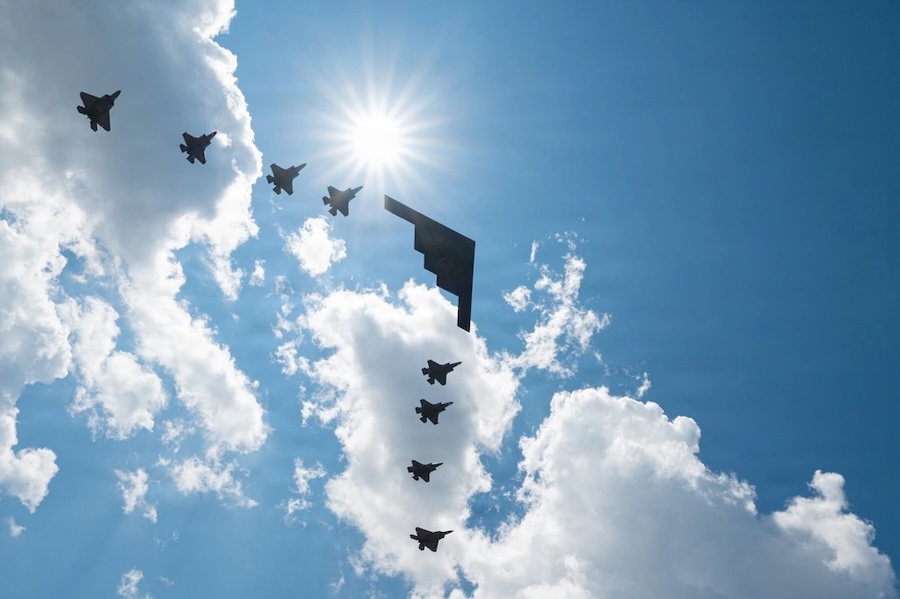
The formation included two Air Force F-35A Lightning IIs, two F-22 Raptors and four Marine Corps F-35B Lightning IIs. The Air Force said the flyover was “displaying U.S. airpower.”
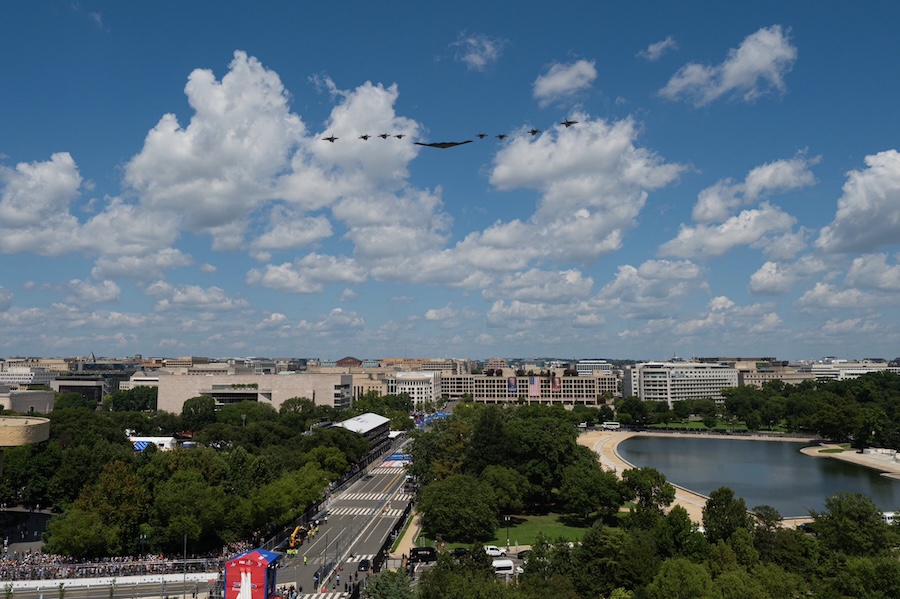
The 509th Bomb Wing said the B-2’s appearance accompanied a 147-lap race through the National Mall. The event was the first Nippon Telegraph and Telephone Corporation IndyCar Series race held at the site.
The 509th operates the B-2 fleet from Whiteman Air Force Base in Missouri. The wing is part of Air Force Global Strike Command and can project combat power worldwide from its home station.
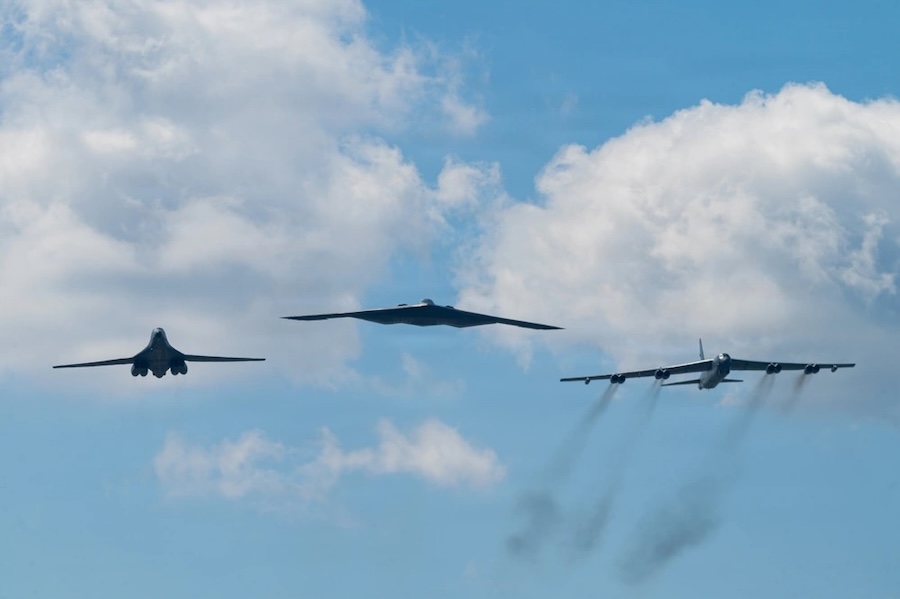
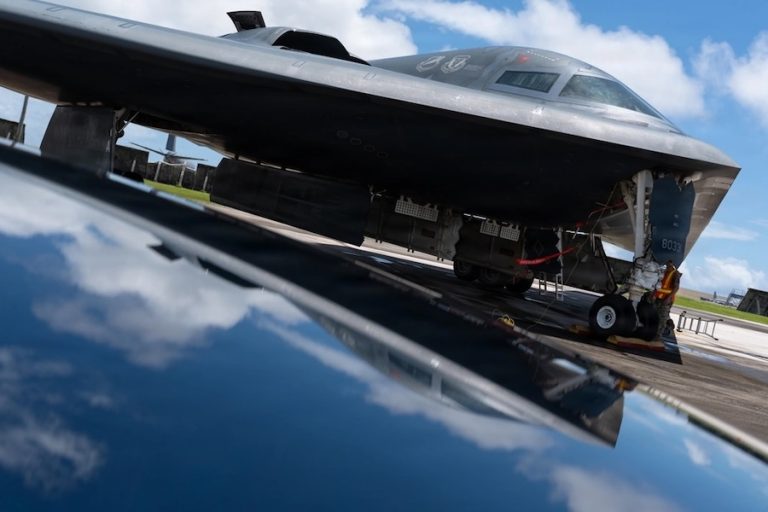
Its B-2 bombers support both conventional and strategic missions. They can carry a broad range of precision-guided weapons and deliver conventional or nuclear munitions.
The bomber’s low-observable design allows it to penetrate advanced air defenses and reach heavily protected targets. That capability gives the Air Force a long-range platform for deterrence and combat operations against sophisticated defensive systems.
The B-2 reduces its infrared, acoustic, electromagnetic, visual and radar signatures to limit detection and tracking. Its composite materials, specialized coatings and flying-wing design contribute to that profile, while many technical details remain classified.
Low observability also gives the aircraft greater freedom to operate at high altitude. This improves its range and provides a wider field of view for onboard sensors.
The B-2 has an unrefueled range of about 6,000 nautical miles, or 9,600 kilometers. Its range, payload and stealth allow the 509th Bomb Wing to project U.S. airpower from Missouri to targets worldwide.