
The company was presented at an inauguration ceremony attended by Croatian Prime Minister Andrej Plenković, Rheinmetall Chief Executive Officer Armin Papperger and DOK-ING founder Vjekoslav Majetić. Members of the Croatian government, representatives of state institutions, the diplomatic corps, industry, academia and international partners also attended the event.
Rheinmetall said the establishment of the joint venture is the first step in a wider plan to develop Croatian industrial, technological and manufacturing capabilities. The plan includes cooperation with domestic industry, research institutions, universities and shipyards, with the aim of integrating Croatian partners into Rheinmetall’s European and global programmes.
The new company will combine DOK-ING’s more than 30 years of experience in unmanned systems with Rheinmetall’s global development, production and market capabilities. Rheinmetall said the venture would create a European centre for the development of next-generation unmanned ground platforms.
Armin Papperger, Chief Executive Officer of Rheinmetall AG, said: “We aim to build a broad industrial partnership with Croatia that will include local suppliers, the shipbuilding industry, research institutions and academia. Croatia has the expertise, industrial tradition and talented people required to become a manufacturing and development hub for advanced defence technologies.”
“Together, we can build capabilities that will serve Croatia, Europe and our allies, while creating new export opportunities for Croatian industry.”
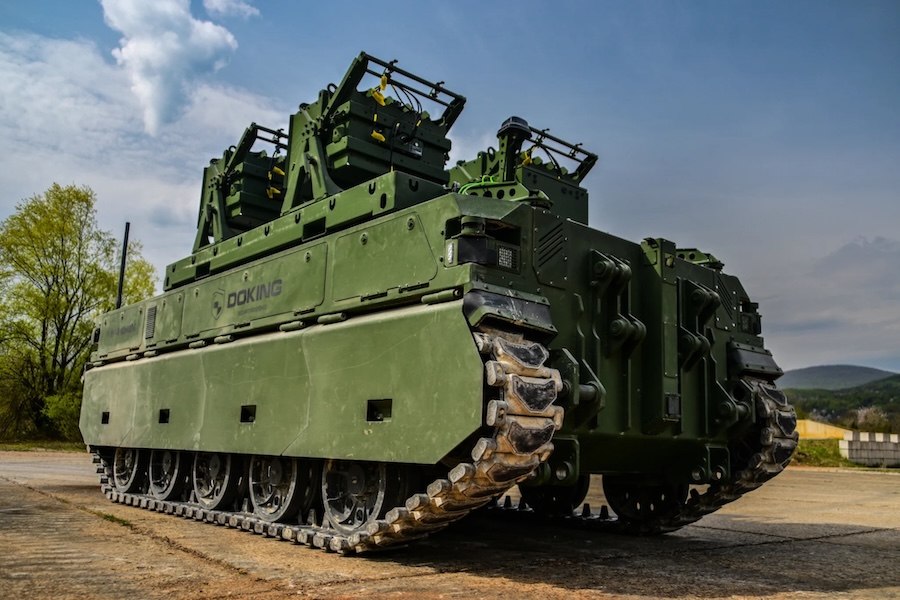
Research, development and engineering capabilities will remain in Croatia, while the joint venture will give Croatian experts access to global markets, advanced technologies, serial production and international development programmes. The company will focus on unmanned and autonomous ground platforms for military and security applications, including combat support, combat engineering, mine clearance and other high-risk missions.
The platforms will build on DOK-ING’s Komodo system and Rheinmetall’s experience in integrating complex defence systems. Rheinmetall said the cooperation is intended to strengthen Croatian expertise as part of a wider international defence technology structure.
Vjekoslav Majetić, Founder of DOK-ING, said: “More than thirty years ago, DOK-ING was founded on the belief that Croatian knowledge and expertise could create technologies capable of changing the world. Today, we are not closing one chapter—we are opening a new one.”
“I firmly believe that technologies developed in Croatia will contribute to Europe’s security and demonstrate that Croatian industry can stand alongside the world’s leading companies as an equal partner. I am particularly proud that Croatian engineers will have the opportunity to develop, here in Zagreb, systems that will shape the future of the European defence industry.”
Rheinmetall said its strategy in Croatia extends beyond unmanned ground systems and includes its existing presence in the naval sector. The group said it had expanded cooperation in recent months with Croatian industry, the shipbuilding sector and academia.
According to the company, this cooperation creates the basis for long-term localisation of production, the development of new technologies and the stronger integration of Croatian companies into European defence programmes. Rheinmetall said its industrial model is based on local value creation through domestic suppliers, technology transfer, research and development, new jobs and sustainable manufacturing capacity with export potential.
The company said Croatia’s role in its strategy goes beyond hosting a single investment. It said Croatia has the opportunity to become Rheinmetall’s long-term industrial partner in Southeast Europe.
Andrej Plenković, Prime Minister of the Republic of Croatia, said: “I congratulate Rheinmetall and DOK-ING on strengthening their partnership, marking a new chapter in the development of Croatia’s defence industry and an important step forward in advanced technologies, innovation, and the strengthening of domestic industrial capabilities. We want to build a Croatia that develops, manufactures, and exports the most advanced technologies while actively contributing to Europe’s security.”
“This strategic partnership between DOK-ING and Rheinmetall confirms that Croatia is not only a user of advanced technologies, but also a country that helps develop and create them. In today’s evolving security environment, Europe is rapidly strengthening its defence capabilities and industrial base, and Croatia is actively contributing to these efforts.”
“We are implementing the largest modernisation cycle of the Croatian Armed Forces, increasing investment in defence, and supporting the growth of Croatia’s defence industry, which brings together around 200 companies, employs more than 3,000 people, and achieves strong export results across EU and NATO markets. It is particularly important that key development activities will remain in Croatia, where a Centre of Competence for the development of autonomous and uncrewed ground systems will be established.”
The prime minister said the centre would give Croatian engineers, experts and researchers a role in future defence and security technologies. “This will enable Croatian engineers, experts, and researchers to play an active role in developing the cutting-edge technologies that will shape the future of defence and security.”
Rheinmetall said the project is aligned with Croatia’s Industrial Development Plan 2027–2034, including objectives related to competitiveness, exports, innovation, digitalisation and integration into European value chains. The company said the initiative would also support Europe’s defence industrial base, supply chain resilience and technological sovereignty.
Plenković and Papperger also held a bilateral meeting on the further development of Rheinmetall’s activities in Croatia and future investment plans. Their discussions covered the integration of Croatian companies into international supply chains and opportunities to expand manufacturing and research capacities.