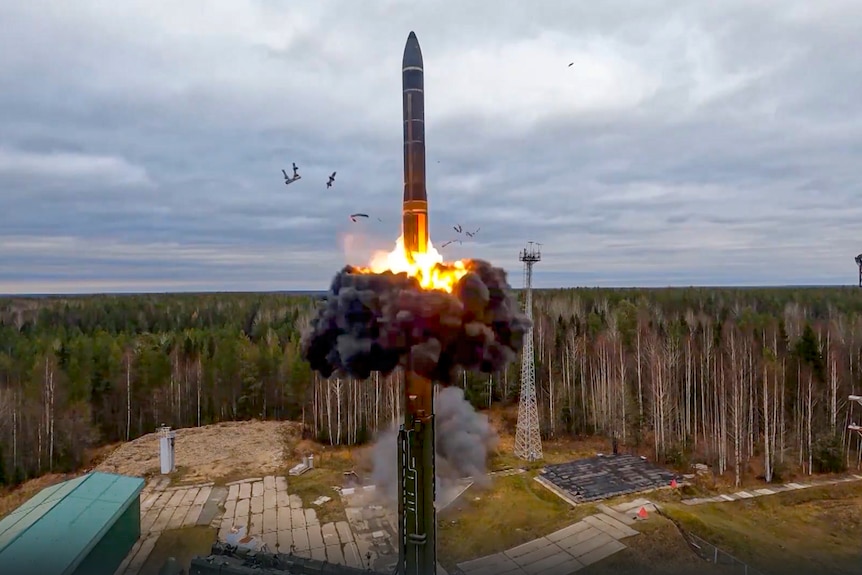
Among the missiles detected over Ukraine was one intermediate-range ballistic missile launched from the Kapustin Yar test range in Russia’s Astrakhan region. Ukraine identified it as an Oreshnik missile and said it struck targets in Bila Tserkva, about 80 km south of Kyiv.
Russia’s Defence Ministry confirmed on Sunday that it had used the Oreshnik, along with other missile types, to strike Ukrainian “military command and control facilities,” air bases and military industrial enterprises. The ministry did not specify where the targets were located.
The ministry said the attack was retaliation for Ukrainian strikes on “civilian facilities on Russian territory”. It did not immediately provide further details.
It was the third reported Russian use of the Oreshnik missile. The first took place in November 2024 against the Yuzhmash plant in Dnipro, while the second occurred in January 2026 against targets in the Lviv region.
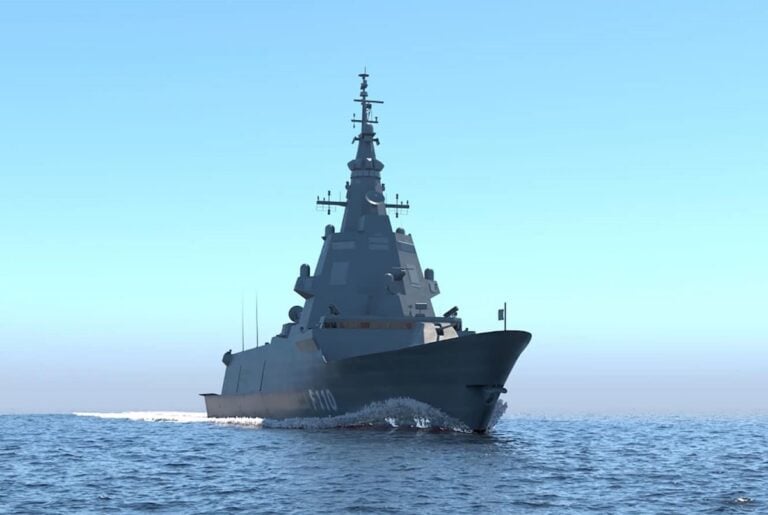
Russia also used two Kh-47M2 Kinzhal aeroballistic missiles launched from the Lipetsk region. Three 3M22 Tsirkon hypersonic anti-ship missiles were fired from Crimea and Russia’s Kursk region.
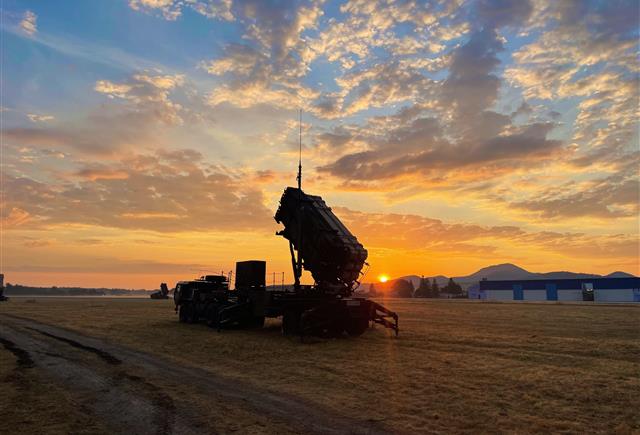
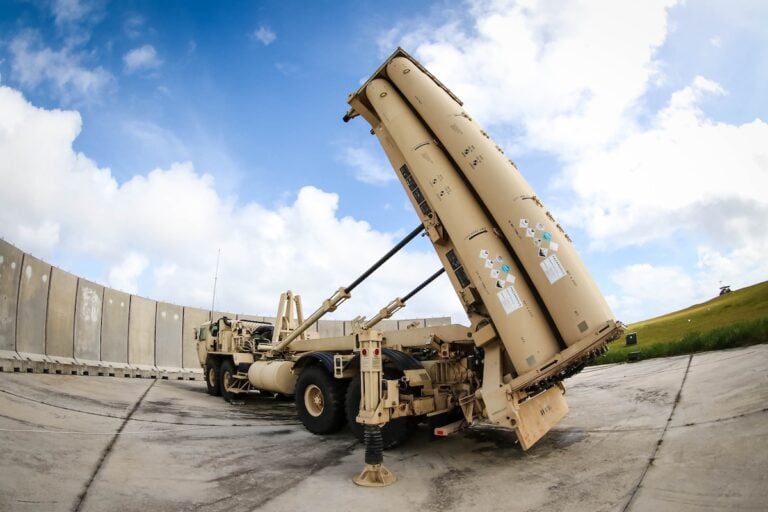
Russian forces also launched 30 Iskander-M and S-400 ballistic missiles from Bryansk, Kursk and Crimea. A further 54 Kh-101, Iskander-K and Kalibr cruise missiles were launched from the Vologda and Kursk regions and from the Black Sea.
Russian drones were launched from the Bryansk, Kursk, Oryol and Rostov regions, including the Millerovo area, as well as from Primorsko-Akhtarsk in Krasnodar Krai. Drones were also launched from Crimea, including Hvardiiske and Chauda.
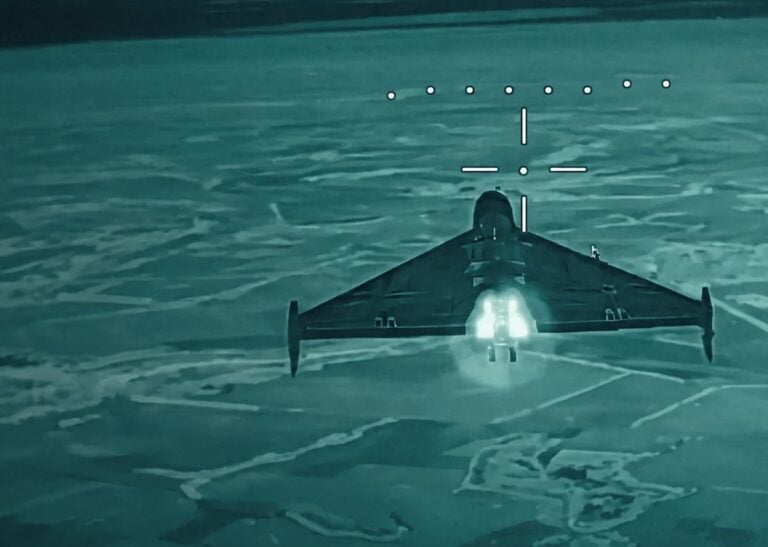
The uncrewed systems included Shahed-family strike drones, Gerbera and Italmas drones, and Bandierol loitering munitions. Russia also used Parodiya-type decoy drones.
Ukraine’s Air Force said Ukrainian defences destroyed 604 aerial targets. These included 11 Iskander-M or S-400 ballistic missiles and 44 Kh-101, Iskander-K and Kalibr cruise missiles.
Ukrainian forces also neutralised 549 drones of various types. The figures point to one of the largest combined Russian strikes reported in recent months.
As of 11:00 a.m. on 24 May, at least 65 people had been wounded in Kyiv and the Kyiv region as a result of the Russian attack. Four people died from their injuries.
Kyiv recorded the highest number of casualties. Two women, aged 44 and 86, were killed, while 56 people were wounded, including two children.
Thirty of the wounded were taken to city hospitals. Three were reported to be in serious condition.
At least 27 high-rise buildings were damaged in Kyiv. A market building, a business centre and a shopping centre were also damaged.
Damage was also reported in the Vyshhorod, Brovary, Fastiv and Bucha districts of the Kyiv region. Private homes, high-rise buildings, a medical clinic and a logistics centre were damaged there, while two people were killed and nine were wounded.
The mass Russian attack followed a Ukrainian drone strike on the night of 22 May against a dormitory of the Starobilsk Vocational School of Luhansk Pedagogical University in the Russian-occupied part of the Luhansk region. Russian President Vladimir Putin on Friday condemned the strike and ordered the Russian military to submit proposals for retaliation.
Putin said there were no military or law enforcement facilities near the college. Moscow blamed Kyiv for the strike, while Ukrainian officials said the victims were participants in a course for drone operators from the secret Rubikon unit.
The death toll from the Starobilsk strike rose to 21 after search-and-rescue operations ended, the press service of Russia’s Ministry of Emergency Situations said late on Saturday. It said 42 other people were injured in the attack.
Kremlin-installed authorities in the Luhansk region announced two days of mourning on Sunday and Monday to honour the victims. Russian officials said the dormitory housed 86 civilians, pupils of the school aged between 14 and 18.