
The study will assess two competing concepts against a common set of requirements. Each proposal must feature a single-seat, tailless airframe equipped with movable control surfaces.
The fighter is intended to use two three-stream engines, also described as variable-cycle engines. The propulsion system must allow the aircraft to maintain high supersonic speeds without afterburners.
Other requirements include an internal weapons bay and advanced stealth technology. The aircraft must have reduced detectability across the L, S and X radar bands.
The Agency for Defense Development, Korea Aerospace Industries and Korean Air can participate through their own design teams. DAPA will also permit consortia involving smaller companies and research institutes.
KAI and Korean Air are already involved in an ADD programme to develop a next-generation stealth aircraft demonstrator. That programme began last November and is running alongside the newly announced fighter concept study.
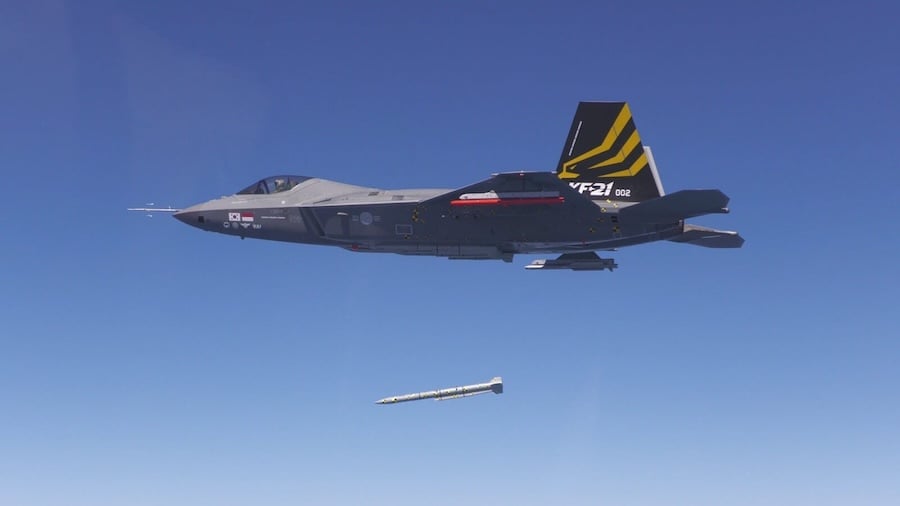
South Korea has accumulated low-observable aircraft design experience through the KF-21 fighter, the LOWUS unmanned aircraft and the KAORI-X flying-wing stealth technology demonstrator. Those projects form part of the country’s expanding technical base for future combat-aircraft development.
ADD is separately running a 63.6 billion won programme, worth about $46 million, to develop bridging stealth technologies. The work covers radar cross-section reduction, new composite materials and low-observable sensors.
The technologies developed under that programme are intended to provide an industrial and technical foundation for future South Korean combat aircraft. The concept study will establish how such capabilities should be reflected in the country’s proposed sixth-generation fighter.