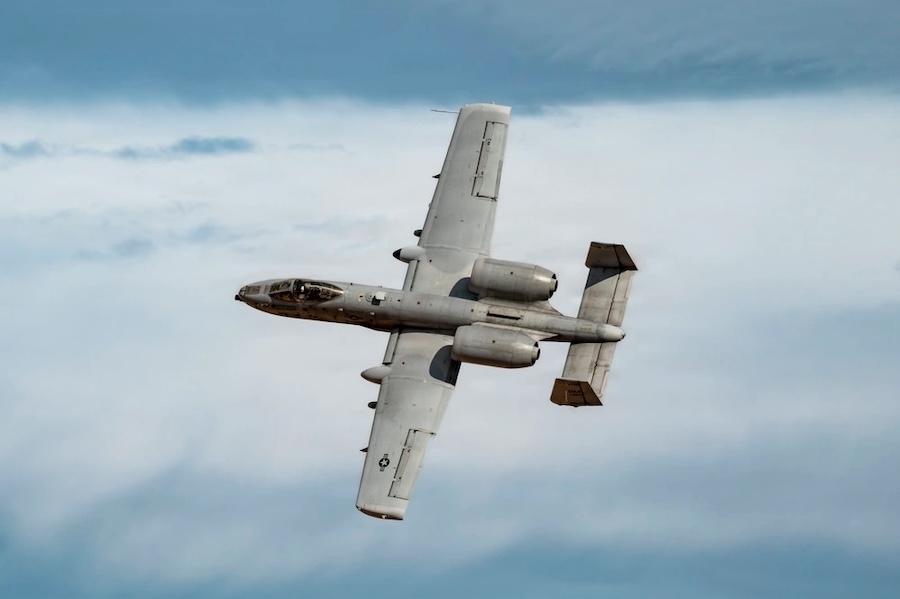
Air Force Secretary Troy Meink announced the move on social media, noting it was made in consultation with Defense Secretary Pete Hegseth. The announcement signals a pause in the service’s long-standing effort to phase out the close air support aircraft.
Troy Meink said: “This preserves combat power as the Defense Industrial Base works to increase combat aircraft production.” He also indicated further developments are expected, stating there was “more to come” after praising leadership for accelerating force modernization.
In consultation with @SecWar, we will EXTEND the A-10 “Warthog” platform to 2030. This preserves combat power as the Defense Industrial Base works to increase combat aircraft production.
Thank you to @POTUS for your unwavering support of our warfighters and quick, decisive… pic.twitter.com/zn1l3OshdY
— Office of the Secretary of the Air Force (@SecAFOfficial) April 20, 2026
The Air Force had previously argued the A-10 lacked survivability in high-end conflicts and planned to retire the fleet by the end of the decade. However, its continued use in active operations has prompted a reassessment of its near-term role.
The aircraft has been heavily deployed in the U.S. Central Command area of responsibility. It has been used in operations against Iranian-aligned militia groups in Iraq and against armed Iranian small boats in the Strait of Hormuz.
A-10s also supported a recent rescue operation involving two U.S. Airmen from a downed F-15E Strike Eagle. During that mission, the aircraft provided close air support, and one A-10 was severely damaged by Iranian fire before its pilot ejected after reaching friendly airspace.
The Air Force has increased its A-10 presence in the Middle East, doubling the number of deployed aircraft earlier this month. The platform has also been continuously deployed in the region since 2023, including missions against the Islamic State group.
Despite the extension, the Air Force continues to pursue plans to replace the A-10 with the F-35A Lightning II. The service plans to procure 38 F-35A aircraft in fiscal year 2027 as part of its broader modernization strategy.
The Air Force is also investing in other platforms, including the F-15EX Eagle II, the B-21 Raider bomber and the sixth-generation F-47 fighter. These programs are expected to shape the future structure of the service’s combat aviation fleet.
As of fiscal year 2026, the Air Force maintained 162 A-10 aircraft, though it had already reduced the fleet by about a quarter since 2024. Congress has required the service to retain at least 103 aircraft through the end of the current fiscal year.
Earlier this year, the Air Force halted training for new A-10 pilots and began phasing out depot-level maintenance for the aircraft. These steps reflect the long-term intent to retire the fleet, even as its operational use continues.
Pete Hegseth responded to the extension by saying: “Long live the Warthog.” The aircraft, known for its 30 mm GAU-8/A cannon, remains capable of delivering a range of munitions, including precision-guided bombs and missiles in current operations.
Source: Air & Space Forces Magazine.