Spending is projected to decline steadily after that point, dropping to under $3 billion by fiscal 2031. Analysts say this pattern suggests a transition toward the next phase of development.
Heather Penney, director of studies and research at the Mitchell Institute for Aerospace Studies, said the funding trajectory reflects progress in development. She noted that the most complex research work may be nearing completion.
“This is a surge for development,” Penney said. “[20]28 might be the big purchase of test articles, because that’s going to be all R&D money. It’s not going to be procurement money.” She added that by around 2029 the program could shift into engineering and manufacturing development.
R&D spending for the Next-Generation Adaptive Propulsion (NGAP) program follows a similar trend. Funding is expected to rise to nearly $906 million in 2028 before declining sharply in the following years.
NGAP is designed to provide the propulsion system for the F-47. The program focuses on adaptive engine technologies to deliver greater thrust and cooling capacity.
Penney said the parallel funding patterns suggest the two programs are aligned in their timelines. She indicated that this alignment points to coordinated development between the aircraft and its propulsion system.
“This shows me [the Air Force is] serious” about these programs, Penney said. “We know that we need to make investments in next-generation engine technology.” She emphasized the importance of advancing propulsion capabilities to maintain operational advantages.
“Our engines have long been our operational strength,” Penney continued. “People overlook engines because they just take thrust for granted. … We cannot take that for granted any longer, and we have to move forward into advanced engines if we want to be able to maintain that kind of advantage.”
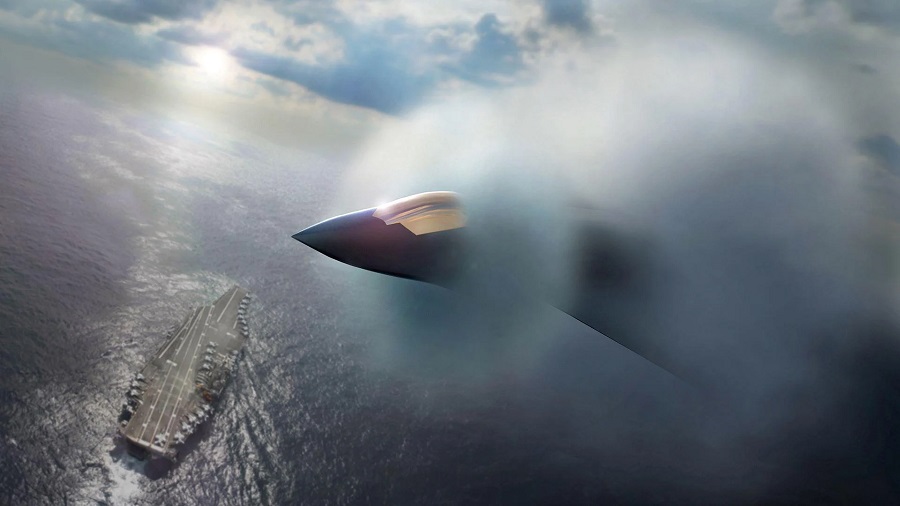
The F-47 is expected to replace the F-22 Raptor as the Air Force’s primary air superiority fighter. It is designed to feature advanced stealth, extended range and speeds exceeding Mach 2.
The aircraft is also expected to operate alongside semi-autonomous Collaborative Combat Aircraft. These systems are intended to expand mission flexibility and operational effectiveness.
Penney noted that former Air Force Chief of Staff Gen. David Allvin indicated in 2025 that the first F-47 aircraft is already in development. The initial flight is expected to take place in 2028.
By the time R&D spending declines in 2029, the program is expected to enter flight testing. The Air Force has also requested $730 million in its 2027 budget to build infrastructure at Nellis Air Force Base to support operational testing.
Officials said the funding trajectory reflects a broader commitment to advanced aerospace capabilities. The program is intended to ensure the Air Force maintains technological superiority in future combat environments.
Source: Air & Space Forces Magazine.