The figure reflects demonstrated performance as of February 24, 2026, and applies to aircraft EX1 through EX16. The report characterises the result as slightly below the objective and records no formal performance deviation.
Materiel availability is one of the F-15EX programme’s key sustainment performance measures. The acquisition baseline sets a threshold of 60%, meaning the early fleet is 12.4 percentage points above the minimum requirement.
The performance requirement comes from the Air Force’s Rapid Fielding Requirements Document, validated by Air Combat Command in August 2020. The 80% objective has remained unchanged under the programme’s current acquisition baseline.
The availability data provides a measure of the aircraft already in service while the Air Force prepares for a sharp expansion of the fleet. As of April 14, 2026, 18 F-15EX aircraft had been delivered, while the revised acquisition plan covers 268 aircraft.
The programme has already cleared its principal operational test phase. Initial operational and live-fire evaluations concluded in November 2023, with the aircraft found effective across its air-superiority roles, including defensive and offensive counter-air missions against surrogate fifth-generation adversary aircraft.
The evaluation also confirmed a basic air-to-ground capability. The Air Force approved full-rate production in June 2024 and declared initial operational capability the following month.
The report treats production delays and material shortages as separate schedule and industrial risks rather than performance deficiencies. It says the F-15EX continues to meet all approved technical performance and cost thresholds.
Sustaining the aircraft remains a substantial long-term cost commitment as the fleet grows. The report estimates annual operating and support costs at $13.1 million per fighter in constant fiscal 2020 dollars.
Maintenance represents the largest share of that amount at $7.2 million per aircraft, followed by unit operations at $3 million and unit-level manpower at $1.9 million. Sustaining support and continuing system improvements account for the remaining costs.
The aircraft’s software is delivered through the separate F-15 Continuous Development and Integration programme, which also supports the F-15C, F-15D and F-15E. The report identifies no significant software-related problems affecting the F-15EX programme.
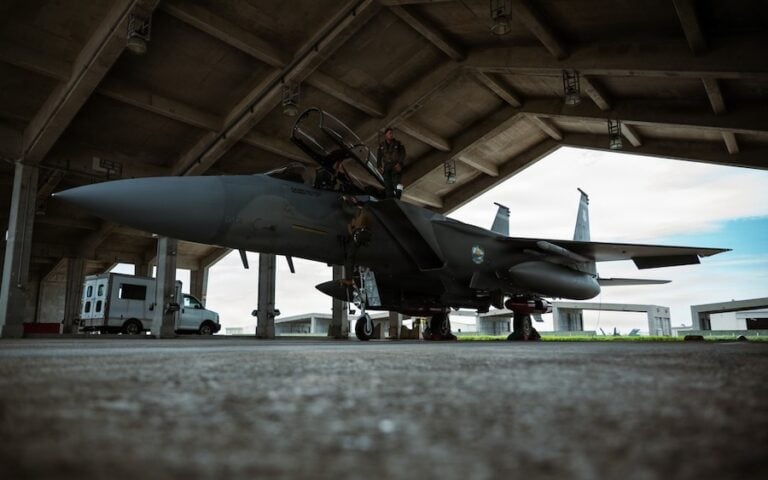
The two-seat F-15EX Eagle II is derived from the F-15QA configuration developed for Qatar and incorporates Air Force-specific electronic warfare systems and mission software. It is intended initially to replace aging F-15C and F-15D aircraft in defensive and offensive counter-air missions.