The request places the next round of XM30 spending behind a competitive selection process rather than committing the Army to a supplier in advance. Details were included in the Congressional Research Service report *The Army’s XM30 Mechanized Infantry Combat Vehicle*, updated on September 8.
General Dynamics Land Systems and American Rheinmetall Vehicles are currently competing under contracts awarded in June 2023. The agreements, worth approximately $1.6 billion combined, cover detailed design work, prototype construction and testing.
Both companies have now delivered their first vehicles. General Dynamics delivered its Wolf prototype at the end of August 2026, followed by American Rheinmetall’s first Lynx prototype on September 1.
The vehicles are scheduled to undergo operational evaluation with the 1st Cavalry Division at Fort Hood, Texas. The division is expected to receive two XM30 platoons before taking the vehicles to the National Training Center at Fort Irwin, California, for testing through March 2027.
Soldiers will assess the vehicles while “shooting, moving and communicating,” according to an account cited in the CRS report. The Army Test and Evaluation Command is expected to monitor the process and pass operational feedback to engineers for design adjustments.
The results will help shape contract decisions for the 19 additional prototypes included in the fiscal 2027 request. The Army said awards would be based on performance during the Middle Tier Acquisition Rapid Prototyping phase and subsequent testing and operational evaluations.
The open approach follows the Army’s decision in February 2026 not to finalize the XM30’s Milestone B documentation. That decision paused the program’s formal transition into engineering and manufacturing development and allowed officials to reconsider its acquisition strategy.
Army leaders reportedly wanted to avoid locking the service into a particular design or a slower procurement path. The service said it was assessing “multiple, competing designs” and looking for partners able to deliver advanced capabilities sooner.
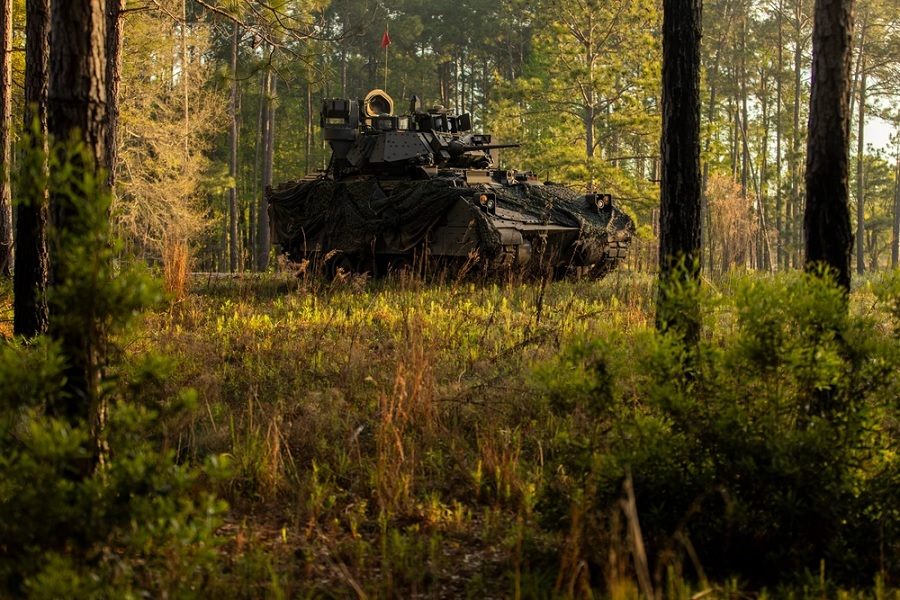
The XM30 is intended to replace the M-2 Bradley, which has served with the Army since 1981. The Bradley has been upgraded repeatedly, but the Army considers it to be approaching the limits of its capacity to accommodate additional armor, electronics and defensive systems.
A winning XM30 design is expected to be selected in fiscal 2027 following evaluation of the competing vehicles. The production phase is planned to result in a single low-rate initial production contract, with the first vehicles expected to enter service in fiscal 2029.