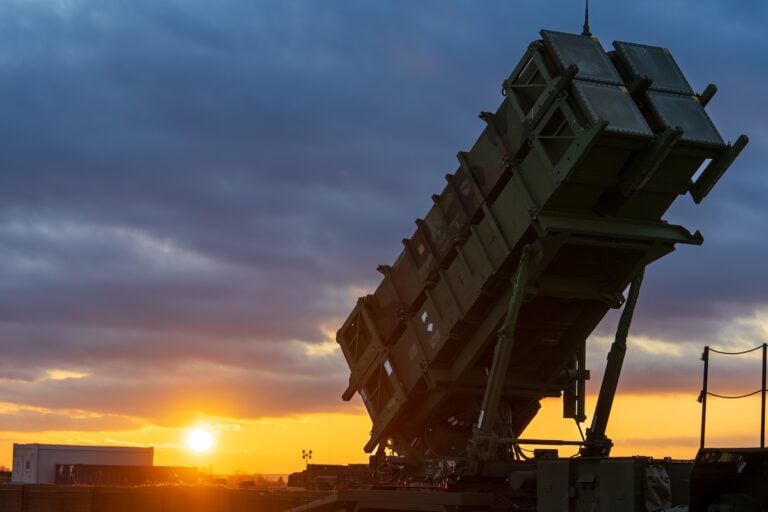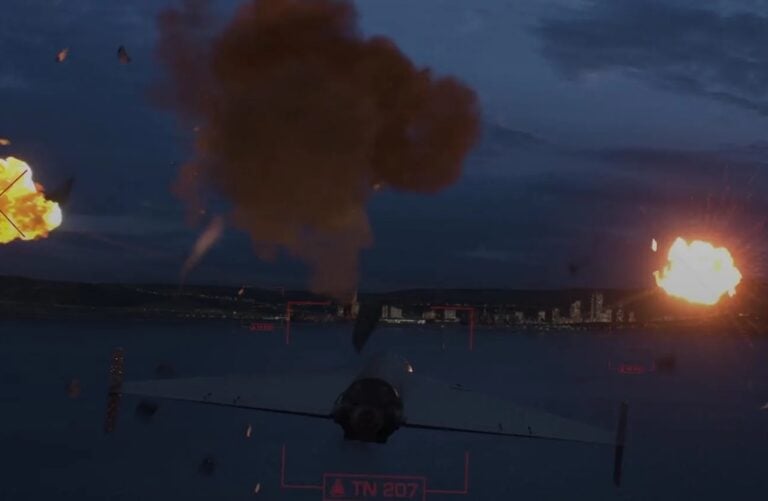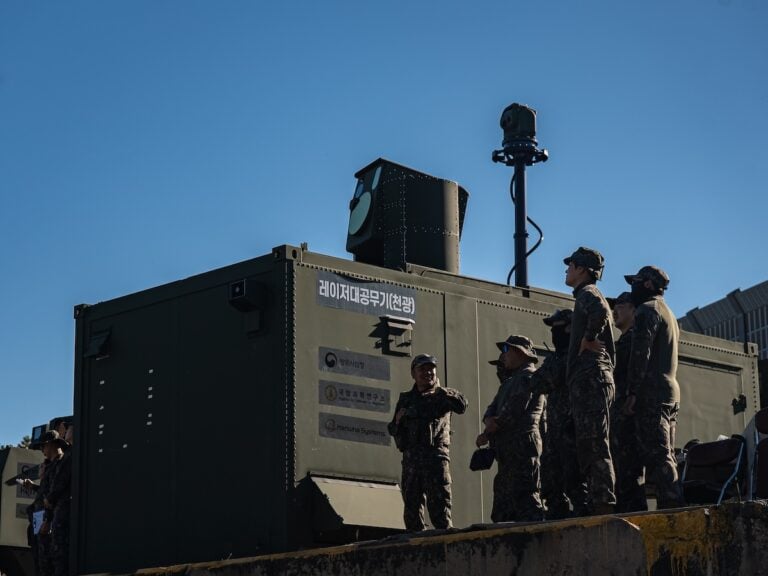
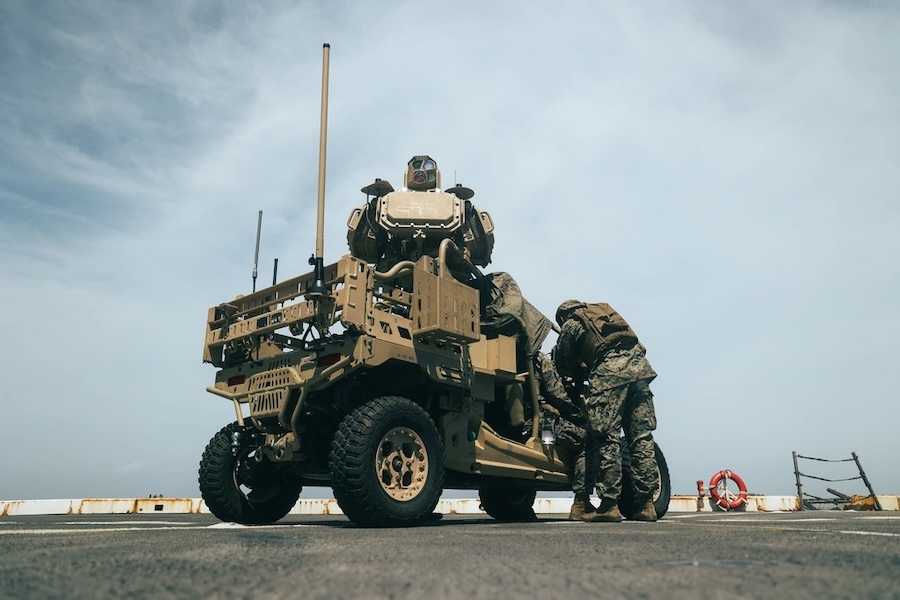
Marines from the 3rd Low Altitude Air Defense Detachment, assigned to Marine Medium Tiltrotor Squadron 364 (Reinforced), used LMADIS during simulated threat scenarios. The system is designed to detect, track, identify and defeat unmanned aircraft systems.
The fielding reflects the Marine Corps’ response to the expanding use of drones in recent conflicts. LMADIS packages electronic warfare, radar, sensing and communications capabilities onto two highly mobile vehicles.
“Drones are the biggest thing right now and a lot of people don’t know the answer,” said U.S. Marine Corps Lance Cpl. Matthew Bass, a LAAD gunner attached to VMM-364 (Rein.). “The LMADIS is that answer.”
LMADIS consists of two Ultra-Light Tactical Vehicles and is operated by four LAAD gunners. One vehicle performs command-and-control functions while directing the second vehicle to conduct electronic warfare attacks against UAS threats.
The system uses the Skyview MPV-3 sensor to detect unmanned aircraft at ranges of up to 3,000 meters. Depending on the detected frequency, the sensor can determine the UAS group type and provide operators with the appropriate disabling code.
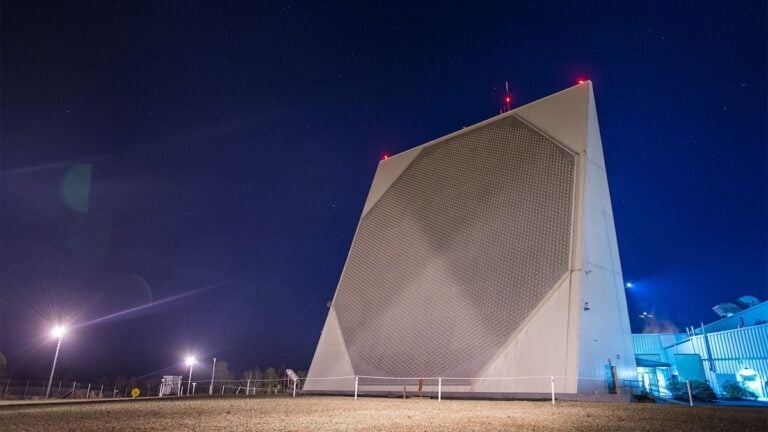
After detection, an RPS-62 radar tracks the aircraft’s movement and distance. Four hemispheric radar panels provide 360-degree coverage by transmitting radio-frequency signals and detecting their return from the target.
LMADIS also incorporates Link 16 communications to distribute information beyond the system itself. The connection allows Marines to provide real-time data to the ship or a command post.
Once a target is identified, operators can employ the MFEW-D portable electronic jammer. The system blocks hostile radio frequencies and communications, disrupting the control link between a drone and its operator.
Breaking that link disables the unmanned aircraft and forces it away from its intended flight path. The capability gives the 13th MEU an electronic means of responding to drone threats during amphibious operations.
“The LMADIS is perfect for the MEU,” Bass said. “ULTVs are extremely capable in rough terrain and they’re quieter and easier to transport using our aircraft than other military vehicles.”
Mobility is a central feature of the system’s use within a Marine Expeditionary Unit. Its lightweight vehicles can be moved by aircraft and rapidly deployed across difficult terrain.
The combination of mobility, sensors and electronic jamming is intended to help the 13th MEU defend amphibious forces against UAS threats. The recent training aboard USS Makin Island is integrating that capability directly into the unit’s operations at sea.