
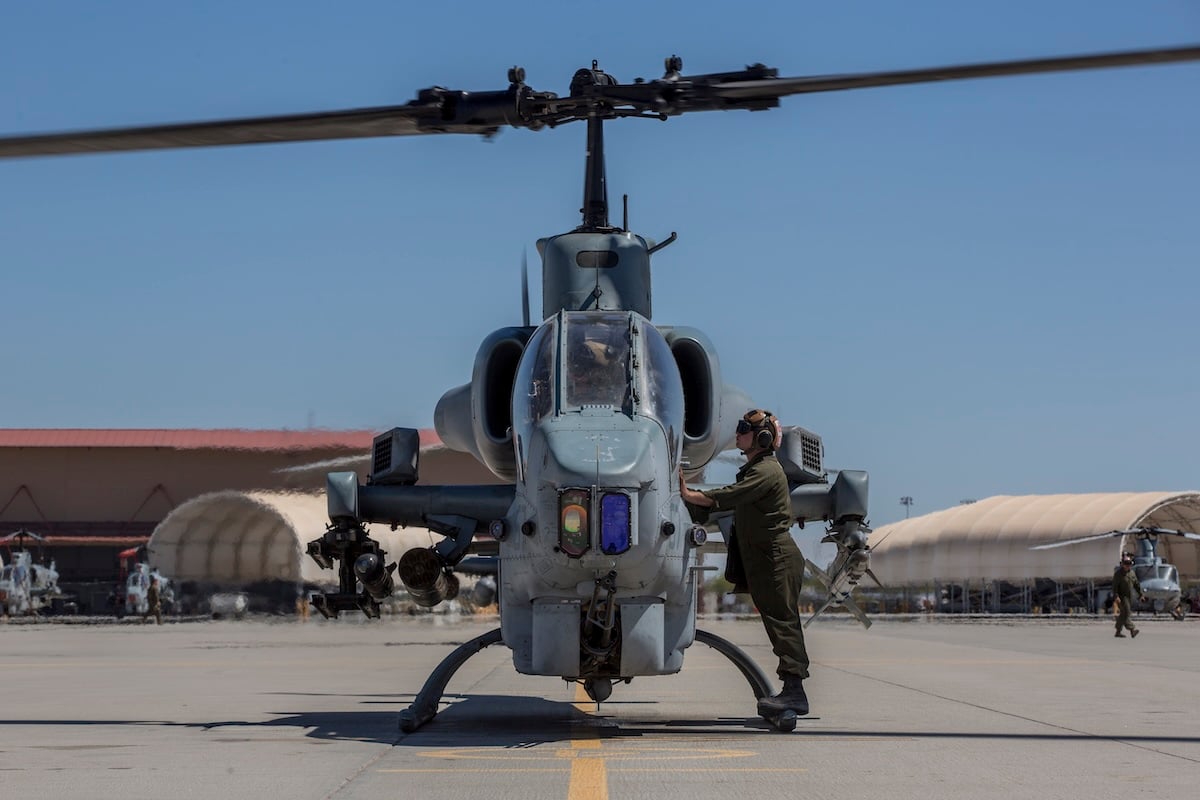
The event was designed to help streamline training and reduce the time needed to field the capability across the Marine H-1 helicopter community. The Marine Corps said APKWS gives commanders a scalable strike option against time-critical targets in contested environments, with limited collateral damage.
“By validating APKWS delivery parameters in one of the most space-constrained range environments, our H‑1 team demonstrated precise, scalable effects that commanders can employ with confidence,” said Col. Jason Duke, PMA-276 program manager. The service said APKWS integration strengthens close air support and complements emerging manned-unmanned teaming concepts.
Testing within a restricted range
The limited range footprint required close coordination with Fort A.P. Hill’s Directorate of Plans, Training, Mobilization and Security, led by Matt Fleetwood. The directorate worked with Range Control to establish a tailored Weapons Delivery Zone for the firing.
Range Control imposed safety check-holds across adjacent training sectors to clear the zone and protect surrounding operations. HX-21 said the arrangements established repeatable procedures for Marines operating from expeditionary sites.
“The Weapons Delivery Zone (WDZ) construct and range deconfliction we provided here translate directly into repeatable procedures, improving readiness and expanding warfighting options for Marines operating from expeditionary sites,” said Michael Hunt, HX-21 ordnance officer. The event also gave 26 observers from across the Naval Aviation Enterprise a firsthand look at the system’s performance and future fleet fielding requirements.
Observers represented PMA-276, the Direct and Time Sensitive Strike Program Office, the Aviation Simulation Center and HX-21. Their participation added hands-on learning to the developmental flight-test work.
PMA-276 manages the development, acquisition, fielding and sustainment of the AH-1Z Viper and UH-1Y Venom helicopters. HX-21, based at Naval Air Station Patuxent River in Maryland, conducts developmental testing of rotary-wing and tiltrotor aircraft, airborne weapons systems and unmanned aerial systems for Navy and Marine Corps missions.