
The division’s Unmanned Systems Center of Excellence conducted the training at the Marine Corps Air Ground Combat Center in Twentynine Palms, California. The activity coincided with the division headquarters’ participation in a Marine Air-Ground Task Force warfighting exercise.
The systems included the Bumblebee V1 quadcopter, Hornet mid-range strike drone and AS-3 Merops interceptor. Merops is designed to counter one-way attack drones such as the Iranian Shahed 136.
“2nd Marine Division is the first Marine Corps unit to work directly with Perennial Autonomy,” said Col. Thomas Short, the air officer for 2nd MARDIV. “This experience was invaluable as the Division looks to receive these drones in the future and work with Perennial Autonomy testing and collecting data before they are actually implemented as weapons systems.”
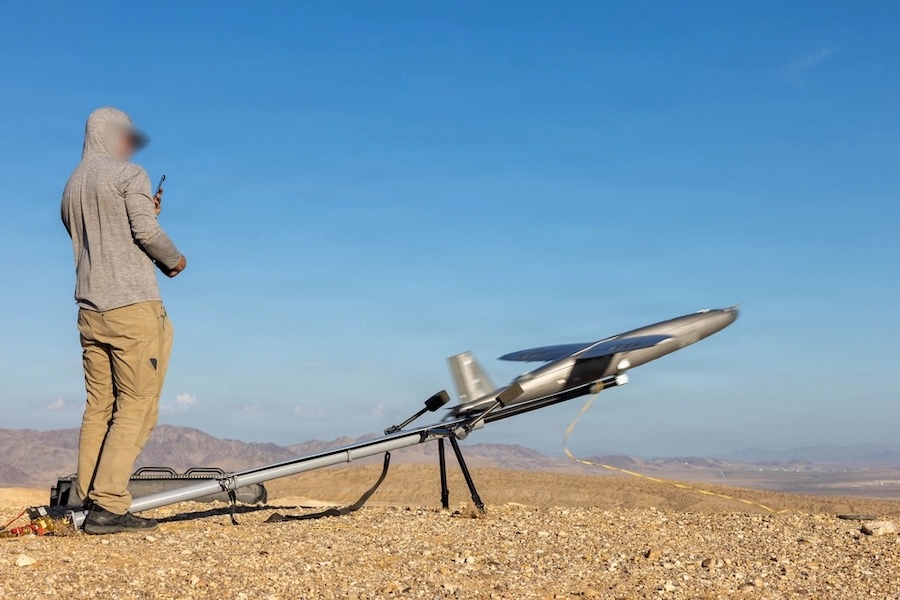
Marines flew the Bumblebee V1 and Hornet during the event, demonstrating reconnaissance, attack and payload-delivery capabilities. Perennial Autonomy also used a Merops interceptor to destroy one of its own Hornet strike drones.
The Marine Corps said Merops has been credited with more than 4,000 interceptions in Ukraine. The demonstration provided the division with direct experience operating and countering autonomous aircraft.
The Department of War is expected to receive Perennial Autonomy drones within weeks, according to Short. Company representatives met Marine Corps Commandant Gen. Eric Smith in May to discuss integration and potential refinements for service requirements.
“This training was an incredible opportunity for my team to get hands-on experience as we prepare to receive Perennial Autonomy drones and work them into the division,” said Master Sgt. Patrick Harrington, the director of the UXS COE. The center is preparing to certify and introduce the systems when they reach Marine Corps formations.
The training involved the division’s operations staff and Unmanned Systems Center of Excellence. The II Marine Expeditionary Force Office of Science, Technology and Experimentation also supported the activity.
The division is developing tactics, techniques and procedures for employing and countering small unmanned aircraft systems. The work supports the Marine Corps’ wider force-modernization and naval-integration efforts.
Based at Marine Corps Base Camp Lejeune, North Carolina, the 2nd Marine Division provides formations for expeditionary operations and crisis response. It is also structured to support large-scale combat operations as part of a Marine Air-Ground Task Force.