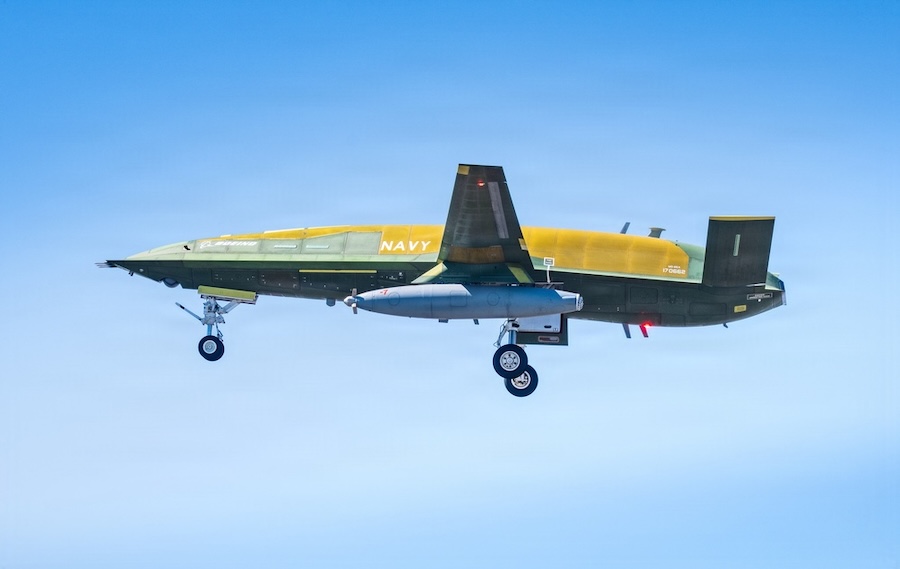
The aircraft took off from Boeing’s facility at MidAmerica Airport in Mascoutah, Illinois, at 10:49 a.m. CDT and flew for approximately two hours. During the flight, Navy and Boeing air vehicle pilots controlled the aircraft from the Unmanned Carrier Aviation Mission Control System MD-5 ground station, which includes Lockheed Martin’s MDCX system.
Pilots conducted a series of manoeuvres and tests during the flight. The Navy said the mission successfully validated the aircraft’s basic flight controls, engine performance and handling characteristics.
“Achieving this first flight underscores the strong partnership between the Navy and our industry partners,” said Rear Adm. Tony Rossi, who oversees the Program Executive Office for Unmanned Aviation and Strike Weapons.
“The MQ-25A is not just an aircraft: it’s the first step in integrating unmanned aerial refueling onto the carrier deck, directly enabling our manned fighters to fly further and faster,” Rossi added. “This capability is vital to the future of naval aviation.”
The MQ-25A is the Navy’s first operational carrier-based unmanned aircraft system. It is primarily designed to serve as an aerial refuelling tanker for carrier air wings.
By assuming the refuelling mission from crewed fighter aircraft, the Stingray is expected to extend the combat range and strike capability of carrier-based operations. The programme is considered a key part of future naval aviation planning.
“I am incredibly proud of the team for working tirelessly over the last several months to achieve this milestone,” said Capt. Daniel Fucito.
“The successful first flight officially initiates the rigorous flight test program, which will focus on expanding the aircraft’s performance envelope and verifying all mission systems,” Fucito added.
The integrated test team will continue work on ground control station integration and additional flight evaluations. The aircraft is expected to be transferred to Naval Air Station Patuxent River later this year for further testing.