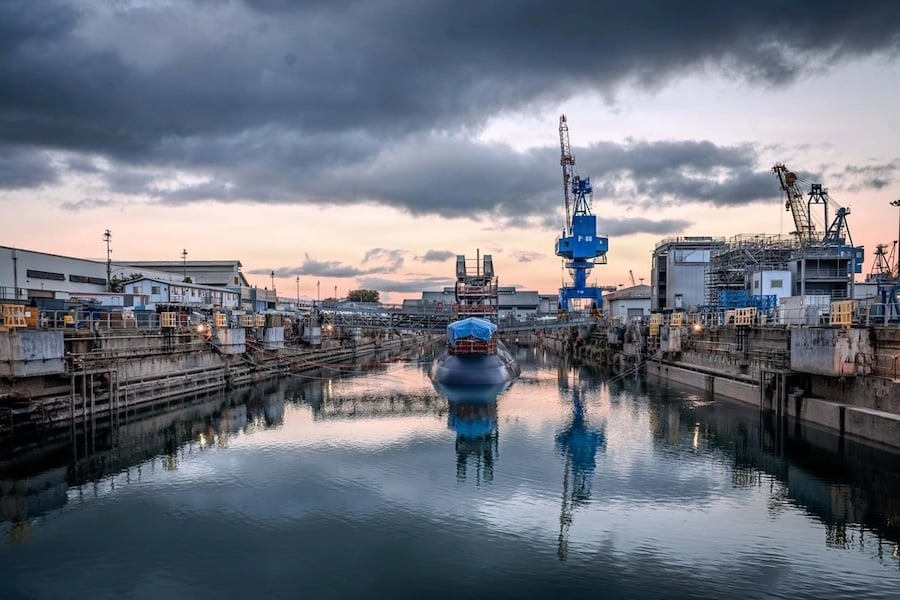
The shipyards maintain and modernize the Navy’s nuclear-powered submarines and aircraft carriers, making their capacity central to fleet readiness. The Shipyard Infrastructure Optimization Program is designed to replace deteriorating facilities, expand dry docks and adapt the yards to newer, larger vessels.
GAO based its assessment on Navy funding guidance, planned projects and cost analyses completed for three of the four shipyards as of April 2026. The Navy had not yet approved an overall program cost and schedule baseline when GAO conducted its review.
The rough cost of currently planned work at Portsmouth Naval Shipyard alone was $41.6 billion over the possible period of construction, according to the lowest of the three completed shipyard analyses. GAO said the Navy’s plans now spread projects across three overlapping blocks, with some facilities for maintenance and equipment functions pushed into the 2070s or later.
Navy officials told GAO that the work proved more extensive than originally expected, citing seismic improvements, utility upgrades and repair projects absent from early plans. Higher commodity prices and more comprehensive treatment of project risks have also raised cost estimates.
The increases are already evident in major construction projects. Estimated costs for new dry-dock work at Portsmouth and Pearl Harbor have risen by more than $2.5 billion combined since the Navy first requested funding from Congress, GAO said.
The Navy must carry out the rebuilding while all four yards continue working on the fleet. GAO said a change in the cost, timing or scope of one project can affect others, complicating construction across active shipyards for decades.
That long horizon makes oversight especially consequential, GAO said. It found that Congress receives information on individual projects and parts of the program, but lacks a consolidated annual account of total spending, future costs, schedules and risks needed to track the overhaul from year to year.