

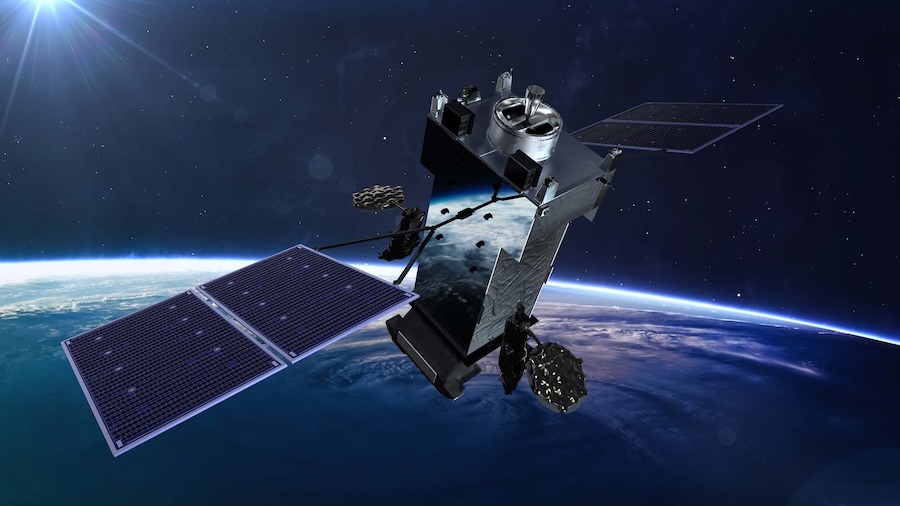
The satellites, known as Next-Gen OPIR GEO Block 0, are designed to improve missile warning and tracking capabilities against evolving threats in space. Officials said the system is intended to strengthen the United States’ missile detection architecture.
Raytheon said its sensor payloads use advanced optical designs and algorithms to detect heat signatures from missile launches. The company said the sensors are designed to identify threats including hypersonic weapons and other advanced missile systems.
The sensors are intended to provide improved sensitivity and tracking performance as part of a broader missile warning network. The system is being developed to address increasingly complex threats across multiple orbital environments.

“Demand for resilient missile warning and tracking across all orbital regimes continues to accelerate,” said Jeff McCall.
“Programs like NGG demonstrate how high-altitude, long-duration observation sensing unlocks new mission coverage in key areas,” McCall added.
Lockheed Martin is building the satellites that will carry the sensors. The company said the satellites will provide continuous coverage over mid-latitude regions.
The new spacecraft are expected to complement the current missile warning satellite constellation. They will also work alongside emerging systems in low Earth orbit and medium Earth orbit.
Raytheon said it designed and built sensor payloads for two satellites under the program. The company added that the first satellite has already been completed and is ready to support initial launch capability.