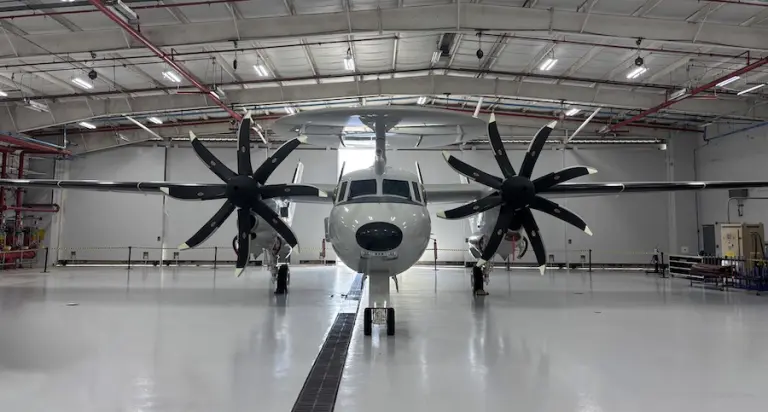
The E-2D is described by Northrop Grumman as the most tasked aircraft in the U.S. military’s inventory. The airborne command center uses a 360-degree radar to provide situational awareness for joint and coalition missions.
Northrop Grumman’s model-based sustainment team for digital transformation developed Armor, a tool that combines augmented reality with predictive and fleet analytics. The company said Armor gives maintainers a clearer understanding of aircraft performance, usage patterns and maintenance needs.
The system provides animated, step-by-step instructions through visual aids available on tablets or augmented reality goggles. It also allows maintainers to virtually inspect the inside of the aircraft and identify potential trouble spots with greater precision.
“Armor can reduce training and labor time, keeping the aircraft operational in hours instead of weeks,” said Kenney Crooks, Northrop Grumman fellow for product support.
Northrop Grumman is also using virtual reality training to place maintenance teams in a 360-degree digital environment. The company said the system allows trainees to interact with components that are difficult to access or too costly to transport to multiple training locations.
Early results show that virtual reality training improves task performance and can reduce repair times by up to 75%. Northrop Grumman said trainees also report higher confidence after completing virtual scenarios, which supports better performance during real-world repairs.
The E-2D engineering team in Melbourne, Florida, also worked with the data analytics team in Redondo Beach, California, to develop the Learning Intelligence Tools Ecosystem, known as LITE. The machine learning tool is designed to help maintainers identify the root cause of maintenance issues more quickly.
Northrop Grumman said LITE reduced maintenance rework in the radar pressurization and cooling system by 67%. The company said this saved weeks of testing and helped return aircraft to the fleet faster.
Northrop Grumman said it is investing across its 30 million square feet of manufacturing space to develop and apply tools that support mission readiness and reduce downtime. Enhancements developed for the E-2D are also being used to support platforms including the F-35 Lightning II, B-2 Spirit and other strike aircraft.
The company said more than 1,000 augmented reality solutions have been deployed across its programs. These applications support areas including visual work instructions, facility layout planning and maintenance schedule acceleration.