
U.S. Central Command identified the B-2 among the aircraft employed during the operation’s first 72 hours, when American forces struck more than 1,700 targets. Military imagery subsequently documented B-2 activity on March 18 and April 2, followed by a confirmed combat departure from an undisclosed base in the U.S. Strategic Command area of responsibility on April 5.
The operational pattern suggests the B-2 was used as a sustained combat asset rather than reserved for a single, highly choreographed opening strike. It also showed that the U.S. could continue generating stealth-bomber missions while a far larger regional air campaign placed heavy demands on aircraft, maintenance crews, tankers and weapons inventories.
For commanders, the B-2 offers a combination that few other aircraft can match: intercontinental reach, a large weapons load and the ability to penetrate sophisticated air defenses. The bomber can fly approximately 6,000 nautical miles without refueling and carry about 40,000 pounds of conventional or nuclear weapons.
Those characteristics gave Washington the option to strike high-value targets from bases outside the immediate theater, reducing its reliance on locations exposed to Iranian missiles and drones. They also allowed the United States to retain a manned penetrating-strike capability while fighters, carrier aircraft and non-stealth bombers handled other parts of the campaign.
Publicly available information does not disclose how many B-2 sorties were flown, which targets were assigned to the aircraft or what weapons they delivered. The Pentagon has also not released platform-specific assessments showing how many targets the bombers destroyed, leaving their performance to be measured principally through their sustained operational use.
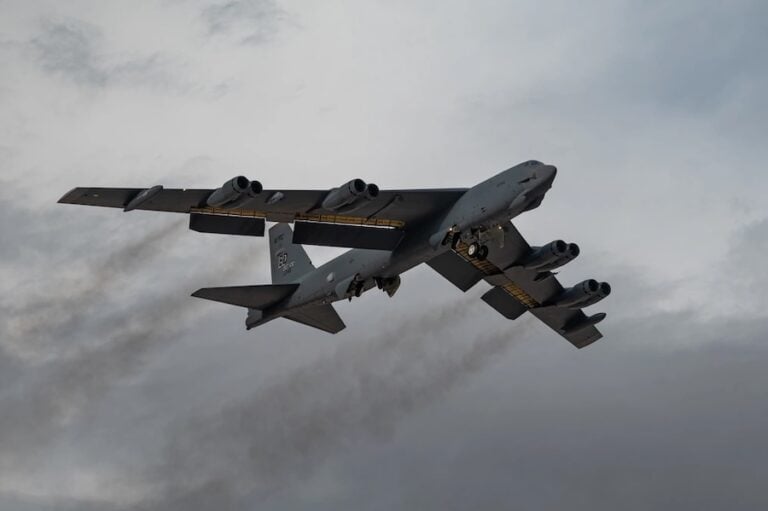
The B-2 operated alongside B-1 Lancers and B-52 Stratofortresses in a bomber force supported by fighters, aerial-refueling tankers, surveillance aircraft and electronic-attack platforms. This mix allowed commanders to assign aircraft according to target defenses, range, payload requirements and the level of risk presented by each mission.
By April 1, U.S. forces had struck more than 12,300 targets and completed more than 13,000 combat flights, illustrating the scale of the air operation in which the B-2 participated. The broader campaign ultimately included approximately 36,000 combat sorties, more than 1,800 fire missions and strikes against about 13,500 targets.
The bomber’s performance carries broader significance for U.S. force planning because the Air Force is preparing to replace the B-2 and B-1 with the next-generation B-21 Raider. Operation Epic Fury provided a fresh demonstration of the military requirement the B-21 is intended to inherit: delivering conventional or nuclear weapons over intercontinental distances and penetrating contested airspace.
The Lead Inspector General report to Congress on Operation Epic Fury said U.S. Strategic Command provided global-strike capabilities from the continental United States and forward bases throughout the campaign. It said those operations included dozens of 2,000-pound penetrating guided bombs dropped on deeply buried missile launchers across southern Iran during the first 11 days, although it did not attribute those strikes or their results specifically to the B-2.