BlackSky said the timeline continued a consistent pattern across recent Gen-3 launches. Bringing satellites online quickly gives customers earlier access to new collection capacity during fast-moving operations.
Supply of very high-resolution imagery remains limited, according to the company. Additional capacity allows customers to assign more collection missions without delaying other requests.
BlackSky said each Gen-3 satellite costs about one-fifth as much as legacy platforms. The company expects the expanding constellation to provide more frequent imagery and analytics for defense and intelligence customers.
BlackSky links the shorter commissioning cycle to faster delivery of operational intelligence. “The Gen-3 constellation continues to deliver exceptional performance, and each new satellite we rapidly bring online shortens the time between an event on the ground and delivery of actionable intelligence necessary to effectively respond,” said Brian O’Toole, BlackSky CEO.
“We’re not just adding satellites, we’re adding decision-making speed for customers operating in contested, fast-moving environments, at incredibly competitive economics. Each Gen-3 on orbit comes in at about one-fifth the cost of legacy platforms, while exponentially increasing available capacity,” said O’Toole.
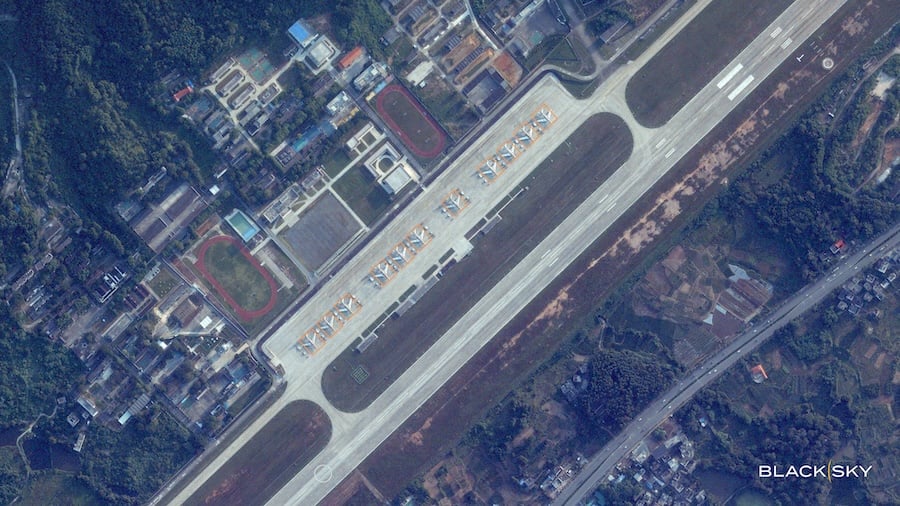
Gen-3 satellites produce imagery with a resolution of 35 centimeters. BlackSky’s AI-enabled analytics can automatically detect a growing range of vehicles, aircraft and vessels.
The company plans to deploy additional Gen-3 satellites by the end of 2026. The spacecraft will operate alongside the Gen-2 fleet in BlackSky’s dual-constellation architecture.
Gen-2 remains part of the company’s real-time monitoring of events on Earth and objects in orbit. Gen-3 adds higher-resolution imagery and expands the supply available to customers.
BlackSky combines its low-Earth-orbit satellites with the Spectra tasking and analytics software platform. Customers can obtain data through On-Demand and Assured subscription services or through full sovereign systems.