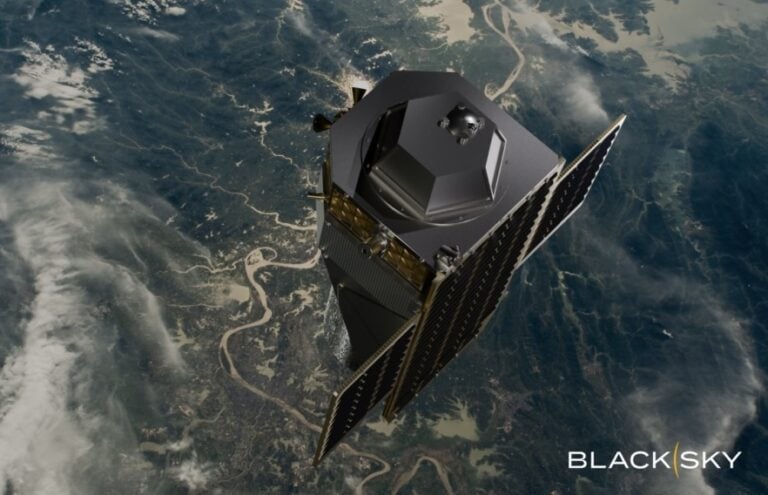
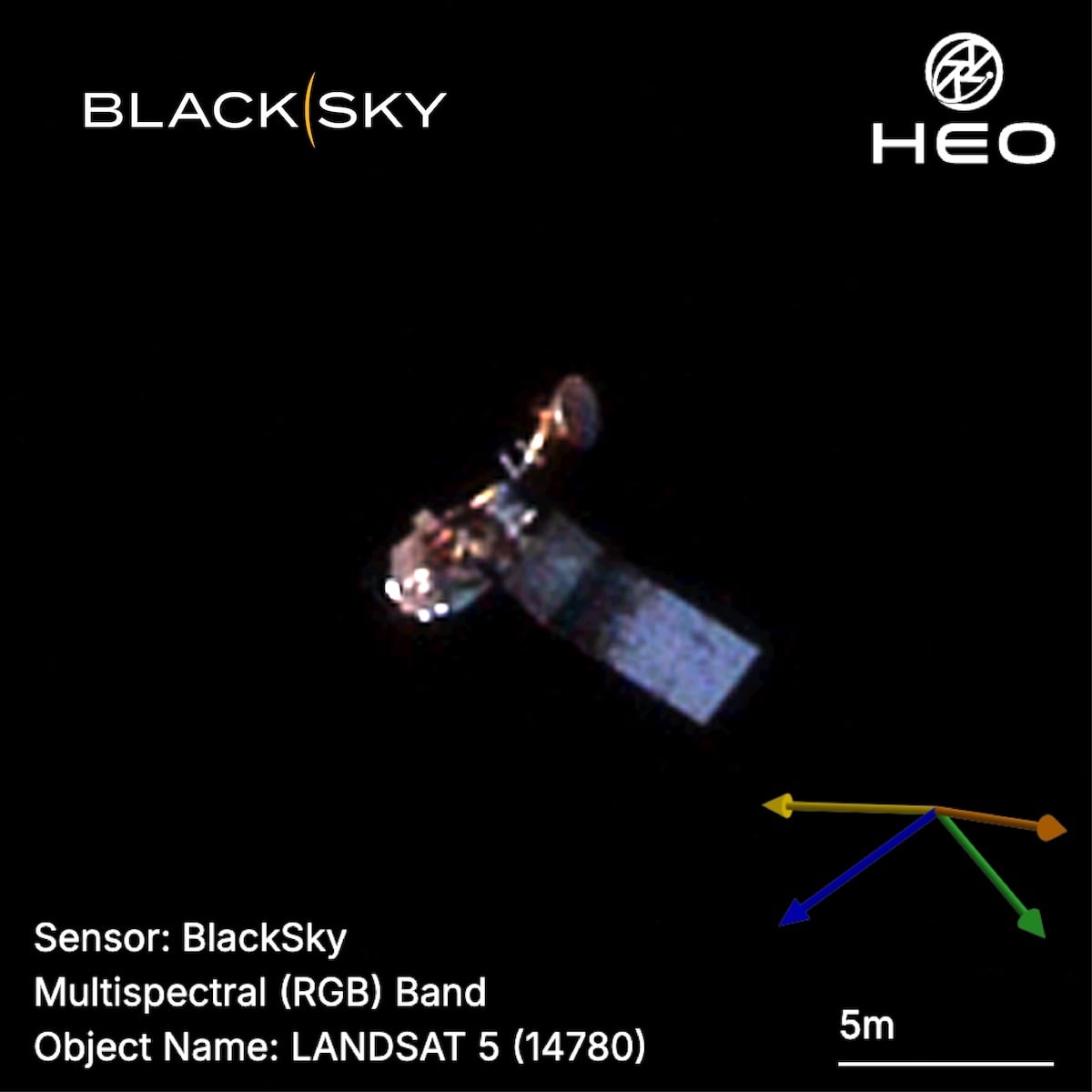
The partnership is entering its third year after starting with a short-term, six-figure pilot in 2024. HEO will gain access to BlackSky’s combined Gen-2 and Gen-3 constellation, providing more collection opportunities and greater detail in orbital imagery.
The service combines frequent monitoring by Gen-2 satellites with the increased imaging precision of Gen-3. HEO’s targeting and imaging algorithms identify opportunities to observe, characterize and track objects using the constellation.
BlackSky said it can use spare satellite capacity for these collections without disrupting its primary Earth-imaging operations. The arrangement gives customers access to orbital inspection imagery without requiring a dedicated spacecraft for each mission.
“We are entering an era where we must inspect, understand and maintain the infrastructure we put in orbit,” said Will Crowe, HEO CEO and co-founder. “That requires more frequent access to high-resolution imagery, without building a dedicated spacecraft for every mission.”
The companies began by integrating BlackSky’s mid-inclination constellation into the HEO Inspect platform. The system now automates the process from tasking satellites to delivering imagery.
Defense and commercial operators can use the resulting data to identify satellite subsystems, detect anomalies and examine patterns of activity. Object detection and identification algorithms, combined with data fusion, support rapid analytical reports.
“Our expanded partnership with HEO reflects the rapid evolution of non-Earth imagery from a specialized proof-of-concept into a critical component of mainstream space domain awareness,” said BlackSky CEO Brian O’Toole. “With access to our combined Gen-2 and Gen-3 constellation, customers gain industry-leading image clarity and more collection opportunities essential for observing and characterizing intricate objects in orbit.”
BlackSky operates its own low Earth orbit constellation alongside the Spectra tasking and analytics platform. HEO uses existing satellites as inspection platforms and develops sensors where coverage gaps remain.