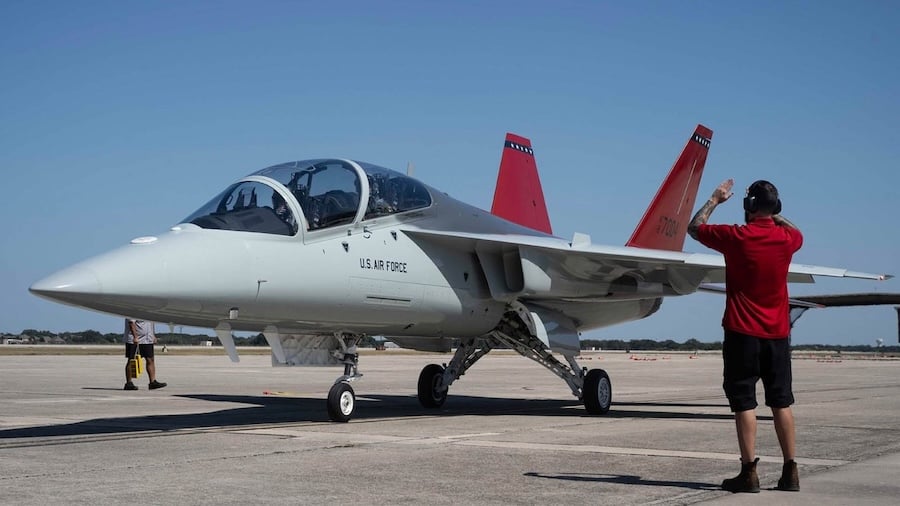
A separate group of pilots and weapons systems officers involved in Initial Operational Test and Evaluation has also completed the simulator phase. The newly trained instructors are expected to teach other aircrew who will eventually train future fighter and bomber pilots and weapons systems officers.
“This outcome is the culmination of many years of design, build, test and instructional design development,” said Nathan Schelp, Boeing’s senior director of Government Training Engineering. The simulators use 8K imagery and integrated live, virtual and constructive training to familiarise crews with the aircraft before they fly it.
Boeing said flight testing at Edwards Air Force Base in California has reached the test points needed for the graduates to begin training in a T-7A delivered to Joint Base San Antonio-Randolph. Air Force instructor pilots are beginning Type 1 sorties covering takeoffs and landings, navigation, instrument approaches and aircraft systems.
“This team worked through challenges and constraints and still delivered a tested syllabus and data package for the advanced trainer on schedule,” said Sophia Halloran-Ritter, Boeing’s T-7A engineering and manufacturing development programme manager. The Air Force’s programme of record includes 351 aircraft and 46 simulators.
Source: Boeing.