
The program was announced in London on July 16. Minister for Defence Readiness and Industry Luke Pollard presented it at the Air Power Association Global Air and Space Chiefs’ Conference.
StormFighter is part of Britain’s plan to build what the RAF described as “Europe’s first sixth-generation air force”. The program is backed by £300 million, or $406 million, in funding under the Defence Investment Plan published on July 2, 2026.
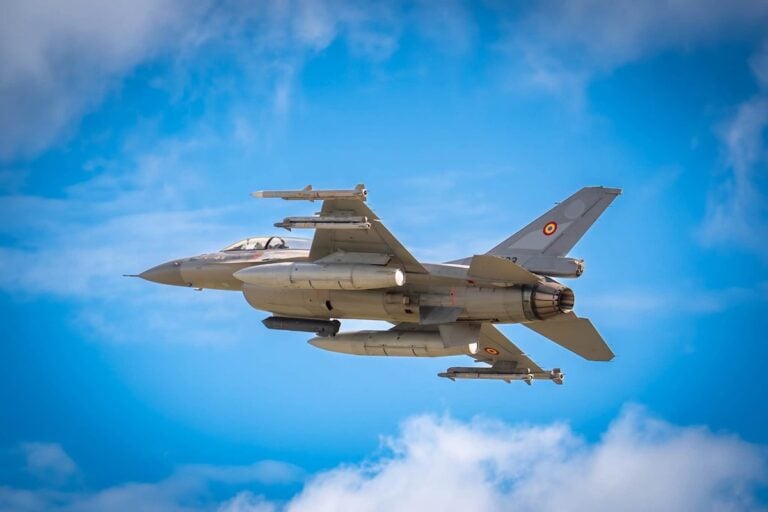
The aircraft are intended to operate beside crewed fighters, not replace them. Pollard described the future drones as both “guardian angel” and “attack dog” for pilots flying into contested airspace.
The program places uncrewed combat aircraft at the center of the RAF’s future force design. It reflects a shift toward cheaper, risk-absorbing systems that can protect high-value crewed aircraft.
The StormFighter launch came with two more uncrewed projects. Air Chief Marshal Sir Harv Smyth introduced Storm Chrome and Storm Fire at the same conference.
Storm Chrome is planned as an electronic warfare drone. Storm Fire is a one-way attack drone developed by the RAF Regiment, with a stated range of 1,000 miles.
The wider Storm family builds on StormShroud, which entered RAF service last year. StormShroud is an autonomous electronic warfare system designed to disrupt hostile radars and improve pilot survivability.
StormFighter will first need integration with the Typhoon and F-35 fleets. Over time, it is expected to align with Tempest, the sixth-generation fighter being developed with Japan and Italy under the Global Combat Air Programme.
That link gives Britain a distinct position in European combat air planning. It now has both a named, funded collaborative combat aircraft program and a signed sixth-generation crewed fighter contract.
The Defence Investment Plan calls for a technology demonstrator to fly by “at least 2030”. The RAF has also signaled interest in moving faster, with a demonstrator flying beside a Typhoon as soon as 2027.
Major contractors are already positioning for the program. BAE Systems is expected to compete with its Autonomous Collaborative Platform concept, while Boeing is also cited as a likely contender.
The investment in drones and advanced uncrewed systems now stands at £5 billion. It forms part of a wider £27.8 billion plan to modernize the RAF over four years.
StormFighter also brings support questions for the future force. Tempest is expected to use boom refueling, which could require changes to the RAF’s Voyager tanker fleet.
The government has tied the program to exports, industrial growth and partnerships with friendly nations. It also sees the effort supporting defense jobs and a more resilient industrial base.
For the RAF, StormFighter marks a move from experimentation toward a structured combat drone program. Alongside StormShroud, Storm Chrome and Storm Fire, it sets the framework for Britain’s next generation of crewed-uncrewed air operations.