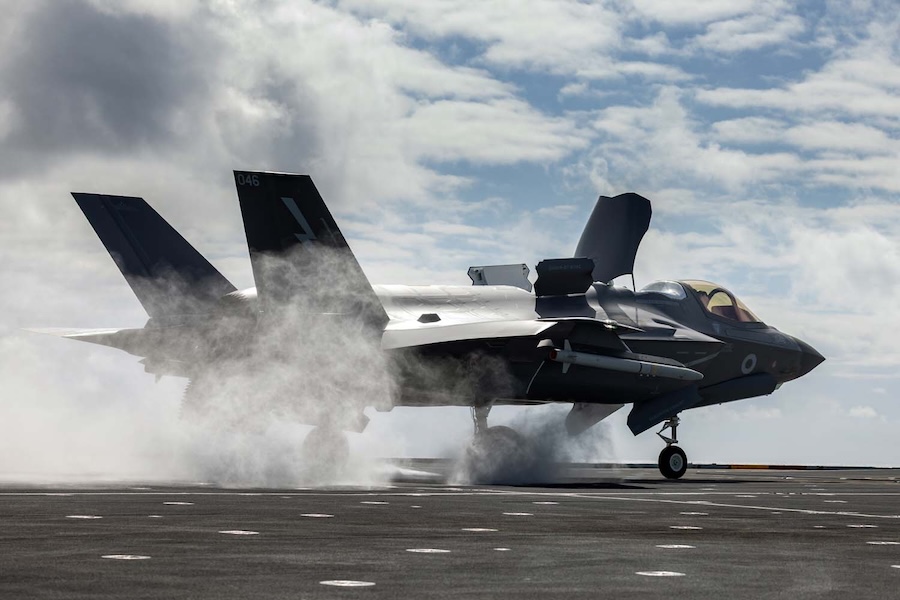
The plans are set out in the UK Ministry of Defence’s 2026 Defence Investment Plan. The future carrier air wing will retain the F-35B force while adding uncrewed aircraft, with increasingly autonomous rotorcraft expected to operate from escort vessels.
Project VANQUISH does not have a separate funding allocation in the document. The nearly £240 million covers Project PANTHEON and the broader development of autonomous systems for the Hybrid Carrier Air Wing.
The ministry has not identified the drone model, number of aircraft, suppliers or schedule for the VANQUISH trials. It describes the planned activity only as early trials of jet-powered drones operating with the F-35B force.
Crewed aircraft will remain at the center of Britain’s combat air plans, according to the document. Autonomous collaborative platforms are intended to provide more affordable mass for air defense, strike, intelligence, surveillance and reconnaissance, and electromagnetic attack.
A separate £300 million Collaborative Combat Aircraft program will begin developing British autonomous jets. The government aims to fly a concept demonstrator by 2030 and eventually operate the aircraft from both land bases and carriers.
Over the longer term, those autonomous aircraft are expected to extend sensor coverage, carry additional missiles and operate ahead of crewed fighters. Britain also plans to provide autonomous capability to every combat air squadron during the next decade.
Project VANQUISH sits within a wider commitment of more than £5 billion for autonomous military systems through 2030. The ministry describes that package as its largest-ever drone investment, spanning the Royal Navy, British Army and Royal Air Force.
The government has allocated £1.5 billion to the Hybrid Navy over the four years through fiscal 2029/30. It plans at least £32 billion of further maritime investment between 2030 and 2035, including the integration of autonomous air, surface and underwater systems with crewed platforms.
The Defence Investment Plan separately assigns £2.2 billion to the F-35 fleet and £510 million to the Queen Elizabeth-class carriers during the next four years. The ministry also plans additional F-35 purchases, which it says will generate substantial work for British industry.
The document records the first air-to-air engagement of a drone by a British F-35B over Jordan. It cites that operation while outlining the need for high combat-air readiness and a broader mix of crewed aircraft, autonomous systems and lower-cost weapons.
The investments remain planned priorities rather than binding commitments and are subject to government approvals, affordability reviews and contracting procedures. Individual programs may be reprioritized, delayed, rescoped or canceled.