The announcement was made by Canadian Prime Minister Mark Carney at CANSEC, Canada’s largest defence and security trade show. Saab said it will now follow the next steps in the process with Canadian authorities.
Saab has offered to build, maintain and upgrade Canada’s GlobalEye aircraft with a team of Canadian partners. The company said the goal is to transfer knowledge and technology to Canada and support the growth of the domestic defence industry.
Saab also plans to invest in research and development work in Canada as part of the future programme. The company said these activities would form part of its broader industrial approach for the proposed capability.
“We welcome Canada’s decision to enter into discussions with Saab as the preferred supplier of the future Canadian AEW&C capability,” said Micael Johansson, President and CEO of Saab.
“GlobalEye offers proven capability for the Royal Canadian Air Force, sovereign ownership for Canada and comprehensive and skilled work for Canadian industry”, Johansson said.
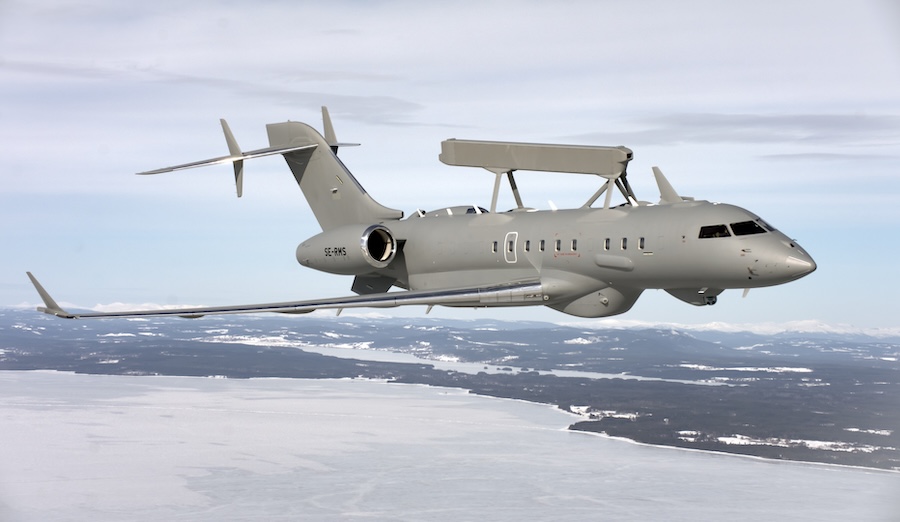
GlobalEye would allow Canada to monitor wide areas of land, sea and sky. The system is based on Bombardier’s Global 6500 aircraft.
The aircraft combines Saab’s Erieye Extended Range radar with an advanced sensor suite and a multi-domain command and control system. Saab said GlobalEye can provide long-range and low-signature detection at a high update frequency.
The company said the system is designed to detect targets ranging from low-observable and stealthy threats to drones, ballistic missiles and hypersonic missiles. Saab said this capability applies in high-clutter and jamming environments.