The criticism focuses on canards, or forward control surfaces placed ahead of the main wing. The feature was long described in the West as problematic for stealth aircraft because of its potential impact on radar detectability.
Chinese social media users have accused the United States of copying a design associated with China’s main fifth-generation fighter. The J-20 uses a delta wing and canard layout, which was widely debated after the aircraft first appeared.
A Chinese military expert cited earlier by the Global Times acknowledged that the F-47 appeared to follow stealth trends, including the absence of vertical tail surfaces, a flat nose and a lifting-body fuselage. The same expert questioned the use of canards, describing them as an element associated with older designs.
? BREAKING
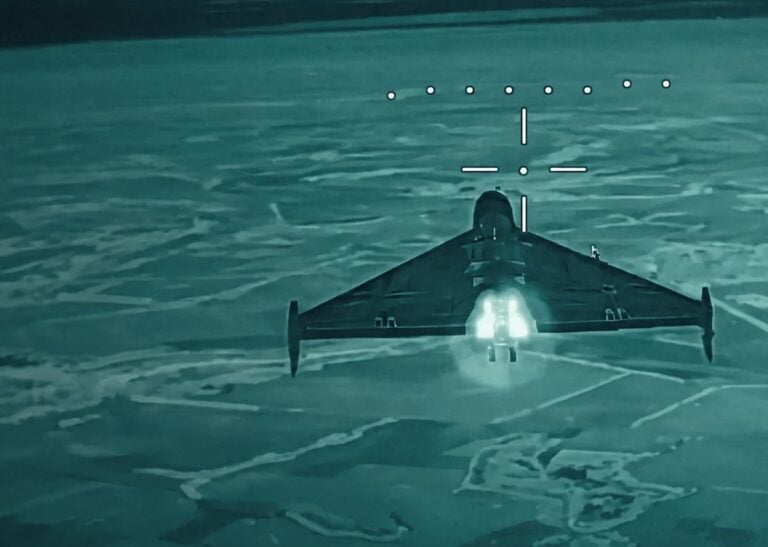
Thermal cam catches mystery stealth jet over Area 51
Cranked wings, canards, sharp maneuvers — believed to be Boeing’s new F-47 NGAD fighter.
Sixth-gen air dominance just got real. ?#F47 #Area51 #FighterJet #US #EverythingCanWait pic.twitter.com/EVvRH2ugIt
— Public News X (@PublicNewsX) June 5, 2026
Chinese analysts have also said that China’s recently revealed sixth-generation aircraft, referred to as the J-36 and J-50, do not have vertical tails or canards. Chinese state media, including Global Times and CCTV, have presented the F-47 as an unimpressive response to Chinese programs and have also pointed to the aircraft’s size and Boeing’s reputation.
The latest wave of criticism followed the appearance of the thermal video from the Area 51 region. Analysts cited in the source material regarded the footage as authentic and identified canards on the aircraft shown in the recording.
The aircraft in the video is most likely not the F-47 itself, according to the source material. The F-47 is expected to make its first flight in 2028, while the aircraft filmed near Area 51 is more likely to be a flying demonstrator from the Next Generation Air Dominance program.
For Chinese commentators, that distinction has not stopped the criticism. The broader debate has reversed earlier roles, because Western analysts were among the first to mock canards on Chinese aircraft when the J-20 was revealed.
At the time, critics predicted that the J-20’s forward control surfaces would damage its stealth characteristics, especially from the front. Assessments of the Chinese fighter later changed, and similar design features now appearing in U.S. images and footage have become a point of Chinese ridicule.
The source material notes that caution is needed before concluding that the United States copied any solution from China. The idea of forward control surfaces did not originate in China, and similar operational requirements can lead designers to similar technical choices.
It also notes that the only official F-47 graphics released so far have been deliberately distorted, according to U.S. Air Force representatives. The purpose was to mislead opposing analysts, mainly in China, and the images may not reflect the final configuration of the aircraft.
The broader argument over copying has also surrounded the J-20 itself. After the aircraft first flew in 2011, Balkan military sources claimed China had built it using wreckage from the U.S. F-117 shot down over Serbia in 1999.
Those claims alleged that Chinese agents bought pieces of the wreckage from local farmers. Russian state media also accused Chengdu of using an aerodynamic layout that resembled the unrealised Russian MiG 1.44 project.
Beijing rejected both accusations. Chinese officials argued that any similarity between the J-20 and U.S. designs was limited to the fact that the aircraft had wings and wheels.
The article notes that disputes over who copied whom have long been part of combat aviation. It says such arguments are often unproductive because physics is the same for all aircraft designers and similar requirements can produce similar solutions.
Canards are also among the oldest configurations in aviation. The Wright brothers’ 1903 Flyer, the first powered aircraft to fly, used a forward elevator ahead of the pilot.
In that sense, Chinese experts calling canards on the F-47 “outdated technology from older designs” are literally correct, according to the source material. The same point, however, also applies to China’s J-20.
The F-47 has become closely associated with U.S. President Donald Trump, who is described in the source material as treating it as a favored aviation project. The aircraft is intended as a new-generation air superiority fighter designed to secure control of the air.
Such aircraft are optimized to defeat enemy aircraft in air combat. In the U.S. Air Force, that role is currently performed mainly by the F-22 Raptor and F-15EX Eagle II.
Boeing won the F-47 contract in March 2025. The designation broke with previous numbering logic and honored the 47th U.S. president, reflecting Trump’s current place in the chronology of U.S. presidents.
The first aircraft was built at Boeing’s St. Louis facilities, which are being expanded for the program. The known schedule calls for a first flight in 2028 and entry into service in the early 2030s.
The U.S. Air Force wants to buy at least 185 F-47 aircraft. They are intended to replace the F-22 Raptor fleet, of which around 180 aircraft remain in service.
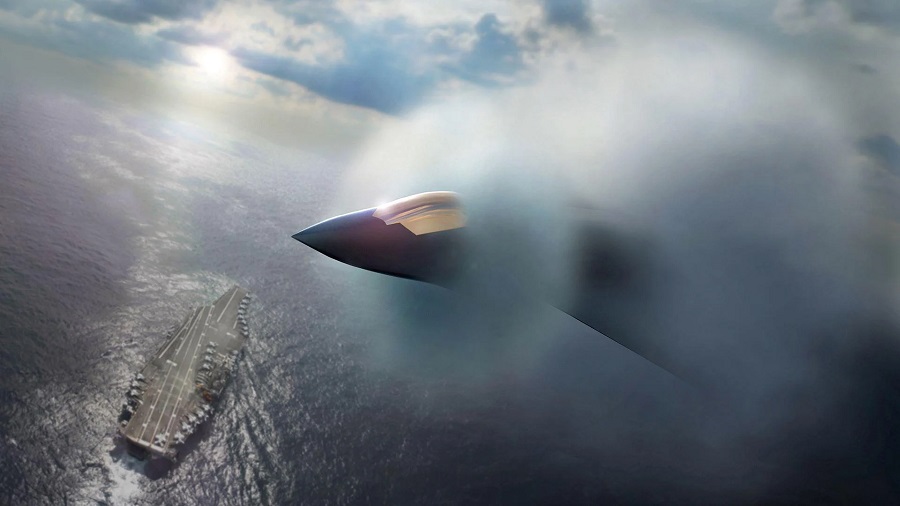
Beyond that, few firm details are available. There is no confirmed photograph of the F-47, and the United States has released only two official renderings that officials say were deliberately distorted.
Air Force Secretary Troy E. Meink publicly joked that Chinese analysts were spending a great deal of time studying those images. He also wished them luck in drawing anything useful from them, according to the source material.
The aircraft is not being developed in isolation. Secret demonstrators have been flying for years under the NGAD program, with two experimental X-planes reportedly making their first flights in 2019 and 2022.
The aircraft filmed near Area 51 in early June was most likely one of those demonstrators, according to the source material. Such aircraft may indicate the direction of development, but they do not determine the final F-47 configuration.
By contrast, more is publicly visible about China’s sixth-generation aircraft programs. China took the opposite approach to the United States by displaying its aircraft in daylight over densely populated areas on December 26, 2024.
Two tailless aircraft were seen in the air during those flights. Analysts identified the larger aircraft as a Chengdu design known as J-36 and the smaller aircraft as a Shenyang design known as J-50.
Chinese sources have described the J-36 as an aircraft of a type “no one has built before”. The aircraft is a heavy tailless design with three engines and a wide cockpit in which two crew members sit side by side.
Analysts have attributed long range, a large payload and missions beyond traditional air combat to the J-36. The aircraft has been described as a fighter with a large missile load, a drone mothership, a regional bomber or potentially a combination of those roles.
The Chinese program appears to be continuing. By the end of 2025, observers had reportedly seen what may have been a third prototype of the J-36.
Less is known about the J-50. It is smaller, twin-engined, tailless and may be adapted for operations from aircraft carriers.
The source material says this could make the J-50 a sixth-generation carrier aircraft for future Chinese nuclear-powered aircraft carriers. It also cautions that these assessments are based on only a few photographs and should be treated as speculative.
New material from 2026 suggests that flight testing has continued. In September 2025, the aircraft was officially mentioned during a major parade in Beijing among China’s sixth-generation fighters.
The question of who leads the sixth-generation race remains contested. Chinese commentators stress that their prototypes have flown since the end of 2024, while the F-47 is not expected to fly before 2028.
The American response is that U.S. demonstrators were already flying before the J-36 was publicly known. Those flights, however, took place in secrecy, leaving much of the competition hidden from public view.
The source material says few countries outside China and the United States appear close to building and fielding a sixth-generation fighter. Russia is described as having fallen out of that race and still trying to catch up in fifth-generation aircraft with the Su-57 and the still-unbuilt Su-75.
The German-French FCAS project is described as officially buried. The GCAP program involving the United Kingdom, Italy and Japan is said to remain on schedule, though its final results are not certain.
The current GCAP plan calls for a demonstrator flight in 2027 and entry into service around 2035. That timeline is broadly close to the one adopted for the F-47.
The history of the J-20 is presented as a warning against dismissing Chinese combat aircraft too quickly. When the Mighty Dragon entered service in 2017, it was treated by many in the West with scepticism because of its canards, engine limitations and perceived status as little more than a technology demonstrator.
Today, the J-20 is no longer seen in the same way. The source material says its shape can be understood as a deliberate compromise between stealth and manoeuvrability.
China had about 50 J-20 aircraft in 2020. Current estimates cited in the source material suggest the fleet may now exceed 300, with a possible target of around 400 aircraft.
That would make the J-20 the world’s most numerous stealth aircraft after the F-35. The aircraft has also moved through several engine stages, from Russian AL-31 engines to domestic WS-10 engines.
The final WS-15 engines are expected to give the J-20 sustained supersonic flight without afterburner. The source material says this would address a long-standing weakness in the program.
The J-20 production rate may now reach up to 120 aircraft per year, although that figure is based largely on Chinese messaging and should be treated cautiously. Even if accurate, the source material notes that F-35 production remains higher, averaging about 156 aircraft annually and reaching 191 in 2025.
The dispute over canards is therefore only part of a wider competition in airpower. After the online arguments fade, the source material concludes that what will matter is which aircraft flies, when it enters service, how many are built and at what cost.
The article’s final point is that online mockery is easier to win than air superiority. Real advantage will depend not only on advanced technology, but also on development speed and large-scale production, a lesson the source material says China has already learned through the once-dismissed J-20.