
As NATO Allies gather in Ankara, Europe’s rearmament has entered a new phase.
For years, the debate centered on increasing defence spending. Today, the question has shifted: how can Europe rapidly expand defence production, strengthen industrial resilience and deliver military capabilities at the pace today’s security environment demands?
That question dominated discussions throughout this year’s NATO Summit and the NATO Defence Industry Forum, where Allied governments, industry leaders and policymakers placed unprecedented emphasis on expanding manufacturing capacity, strengthening defence supply chains and accelerating industrial cooperation. The message was clear: military readiness ultimately depends on industrial readiness.
For Hanwha Aerospace, this is more than a policy debate. It is the strategic direction the company has been investing in for years.
Europe’s security environment has fundamentally changed since Russia’s full-scale invasion of Ukraine. Governments across the continent are making historic investments to strengthen deterrence, replenish inventories and rebuild sovereign defence industries. Yet increased spending alone will not close Europe’s capability gaps.
The challenge is no longer simply acquiring advanced defence systems. It is producing them at scale, delivering them at speed and sustaining them through resilient industrial capacity.
The greater task lies in translating investment into industrial capacity—expanding production, shortening delivery timelines, strengthening supply chains and developing the manufacturing base needed to sustain long-term readiness.
No single nation can accomplish this alone. As Europe accelerates its defence industrial transformation, cooperation with trusted partners has become increasingly important. This is reflected in NATO’s growing engagement with the Indo-Pacific partners (IP4)—Australia, Japan, New Zealand and South Korea. What began as political dialogue has steadily evolved into broader cooperation on industrial resilience, defence production and technology collaboration, recognizing that the security of Europe and the Indo-Pacific has become increasingly interconnected.
Among those partners, South Korea has emerged as one of the few countries capable of delivering both immediate capability and long-term industrial value.
Over the past decade, South Korea has built one of the world’s most advanced and responsive defence manufacturing ecosystems. Combining proven technologies, large-scale production capacity and rapid delivery with a willingness to localize production, Korean defence companies have demonstrated an ability to help partner nations address urgent operational requirements while strengthening their own sovereign industrial capabilities.
Importantly, South Korea offers more than platforms. Its defence industry increasingly delivers a partnership model built on localization, technology transfer, industrial investment and long-term cooperation. Rather than viewing exports as the conclusion of a commercial transaction, Korean companies are helping partner nations expand manufacturing capacity, strengthen local supply chains and build more resilient defence industries.
This broader transformation is increasingly being recognized by European policy experts. An analysis by Dr. Eric J. Ballbach, Visiting Fellow at the German Institute for International and Security Affairs (SWP), argues that South Korea is uniquely positioned to help Europe address production bottlenecks, shorten supply chains and strengthen operational readiness—not only as a short-term capacity multiplier, but also as a long-term industrial partner supporting the rebuilding of Europe’s defence industrial base.
As Ballbach writes, “South Korean firms – known for speed, scalability, and competitive technologies – are well positioned to fill emerging gaps, both as a short-term ‘gap-filler’ and, as the first South Korean companies are now aiming for localised production in Germany, as a long-term industrial partner in rebuilding Germany’s defence industrial base.”
Hanwha Aerospace is already putting this model of industrial partnership into practice across Europe.
Speaking at the NATO Defence Industry Forum in Ankara, Jacek Cyrek, President and CEO of Hanwha Aerospace Europe, said:
“The security environment is evolving at an unprecedented speed. New technologies, emerging threats and shifting geopolitical realities are reshaping the way we think about defence, deterrence and resilience. Technology delivers its greatest value when it is built on trust, shared purpose and strong partnerships. That is why our vision extends beyond platforms and systems. We are committed to strengthening sovereign capabilities, fostering industrial cooperation and contributing to a stronger and more resilient NATO ecosystem.”
That commitment is already being realized through long-term industrial partnerships across Europe.
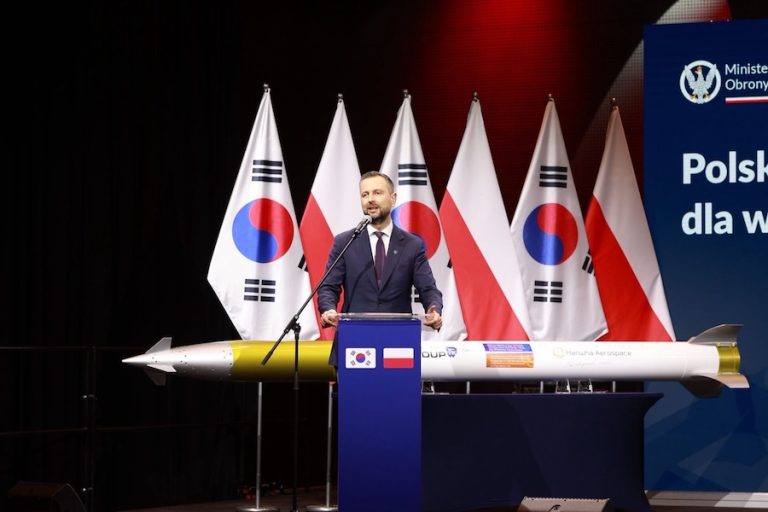
In Poland, Hanwha’s cooperation has expanded beyond platform deliveries to include localized production of Chunmoo multiple rocket launchers, missile production through a joint venture, technology transfer, supplier development and plans for modular charge system (MCS) manufacturing. In Romania, the company is establishing its first European land systems production facility, creating industrial capacity that will support both Romanian requirements and Europe’s broader manufacturing base.
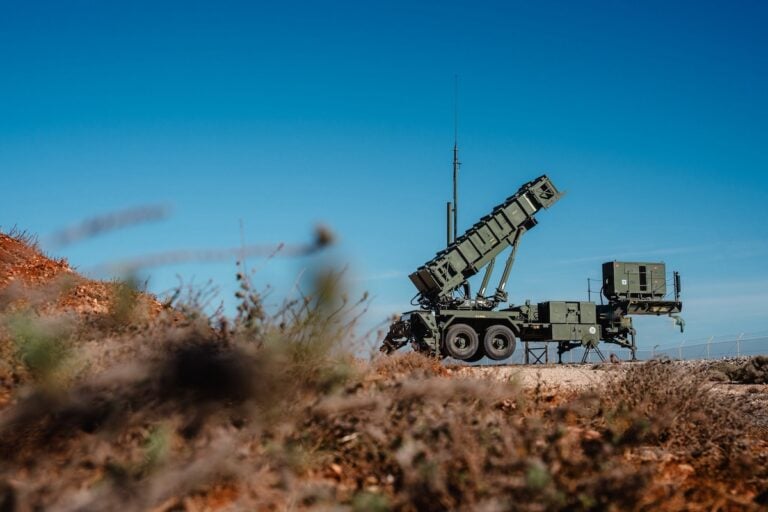
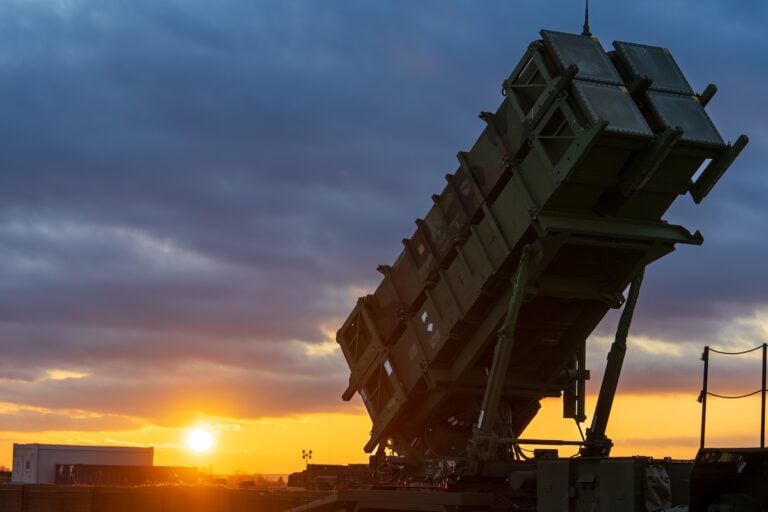
Beyond land systems, Hanwha is expanding cooperation across critical capability areas—including integrated air and missile defence, precision-guided munitions, propulsion systems, aerospace and space technologies—helping European nations close emerging capability gaps while strengthening long-term industrial resilience.
The company is also broadening technology cooperation and industrial partnerships across the Nordic region and Western Europe, working with European governments and defence companies to develop localized solutions that contribute to NATO’s evolving defence industrial architecture.
For Hanwha Aerospace, these initiatives are not isolated business opportunities. They represent a long-term commitment to Europe’s security.
Through its “Built with Europe, for Europe” vision, Hanwha is investing alongside European governments and industry to expand localized manufacturing, strengthen technology cooperation and reinforce Europe’s defence industrial ecosystem.
Europe’s rearmament will ultimately be measured not only by how much governments invest, but by how effectively industry can produce, deliver and sustain military capability.
That is the role Hanwha Aerospace intends to play—working alongside European governments and industry as a trusted industrial partner to strengthen production capacity, reinforce supply-chain resilience and help build the industrial foundations that NATO’s long-term security will depend upon.