
The Commission said future cooperation could give South Korea access to the IRIS² architecture. It could also allow European space companies to benefit from Korean industrial expertise.
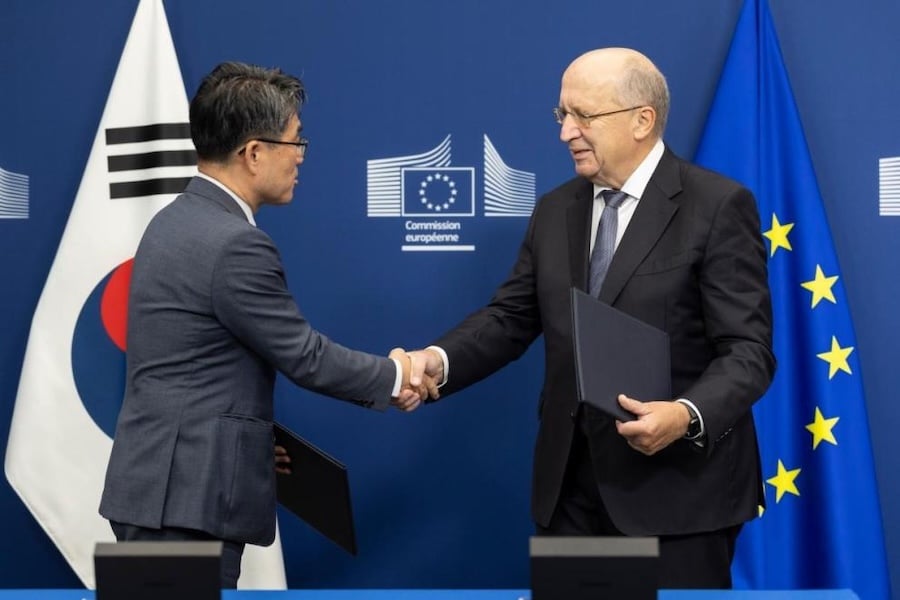
European Commissioner for Defence and Space Andrius Kubilius signed the arrangement with Giyoung Jeoung, South Korea’s deputy minister for the Advanced Capabilities Program. Their agreement establishes a joint working group focused on secure satellite connectivity.
The group will exchange information on existing and forthcoming programmes and identify potential joint applications. It will also assess technical options for system-level cooperation with IRIS².
The European Commission and European Space Agency will participate alongside South Korea’s Defense Acquisition Program Administration and Agency for Defense Development. Representatives of other agencies and national authorities will also be involved.
The first phase of IRIS² is scheduled for launch by the end of 2029. Negotiations completed in August 2026 confirmed the programme’s governance, technical structure and financing, and shortlisted its main suppliers.
IRIS² allows cooperation with non-EU countries through international treaties. Norway and Iceland have so far signed agreements providing a framework for such participation.
The arrangement with South Korea does not itself confirm integration into the constellation. It begins the technical and institutional work needed to determine the scope of any future cooperation.
Source: European Commission (press release).