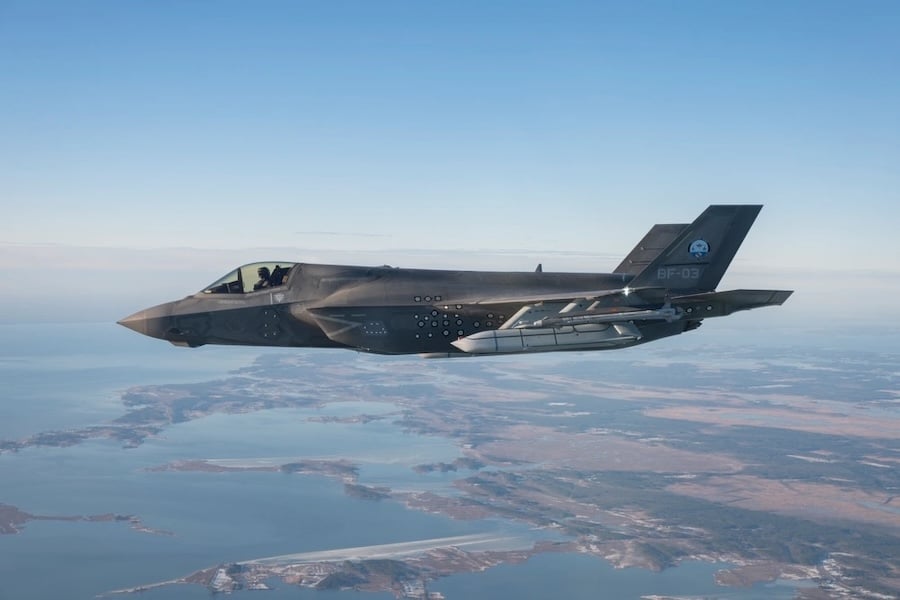
The 2025 total was the highest number of F-35s delivered in a single year and included aircraft previously withheld because of TR-3 delays. Releasing those fighters allowed Lockheed Martin to reduce the accumulated inventory while sustaining output from its expanding production system.
The recovery removed an immediate bottleneck but did not resolve the technical problems behind it. TR-3-equipped aircraft are being delivered, while the production and release of the complex software needed to unlock their full capability remain difficult.
TR-3 replaces the F-35’s core processor, cockpit display and memory system, providing the computing capacity required for many Block 4 weapons, sensors and electronic-warfare functions. Delays therefore extend beyond aircraft acceptance and directly affect the timetable for future combat capabilities.
The cost of the upgrade has risen sharply. The current reported value of the third TR-3 contract phase is approximately $795 million, but Lockheed Martin estimates it will cost about $1.94 billion at completion and the program manager projects $2.01 billion.
The contract recorded a $1.17 billion unfavorable cost variance despite being more than 96% complete. The increase reflects the design and maturation of the Integrated Core Processor, Panoramic Cockpit Display and Aircraft Memory System, along with delays involving key suppliers.
Qualification problems have also slowed the delivery of processor modules and upgrade kits for aircraft already in service. That has complicated the retrofit schedule and added pressure to maintenance and modification capacity across the fleet.
The record delivery year coincided with a major commitment to future production. The department awarded Lockheed Martin a $24 billion contract in September 2025 covering as many as 296 aircraft in Lots 18 and 19.
The agreement provides greater visibility for Lockheed Martin and its suppliers, but current production data show that the industrial system remains strained. Lot 18, covering 148 fighters, was 59.6% complete by March 31, 2026, although no aircraft from the lot had been delivered by that point.
Lot 18 recorded a $1.29 billion unfavorable earned-value schedule variance, which measures completed work against the contractual plan rather than a direct cost increase or a delay expressed in months. Shortages of structural parts, difficulties involving wing production and core coating, and late center and aft fuselages drove the variance.
Delayed tails and mission-system components added to the pressure, although the contract recorded a favorable cost variance of approximately $99 million. The result highlights the difference between controlling expenditure and keeping complex manufacturing work aligned with the production schedule.
Similar difficulties affected the Block Buy 2 contract covering 398 aircraft from Lots 15 through 17. Lockheed Martin had delivered 359 of those fighters, but the contract carried a $724 million unfavorable cost variance and a $460 million unfavorable schedule variance.
Nonconforming parts, scrap, rework and production performed outside planned assembly stations contributed to those results. Shortages and delays affected TR-3 software, low-observable components, wiring harnesses, radar modules, wings, center fuselages and final assembly.
Lockheed Martin told the program that it did not expect the problems to prevent the contract from being completed on time. The size of the variances nevertheless shows how much industrial effort is required to protect delivery targets while suppliers contend with technical changes and component shortages.
Demand for the fighter remains strong despite those pressures. The fiscal 2027 plan calls for 85 U.S. aircraft in Lot 21, comprising 38 F-35As, 10 F-35Bs and 37 carrier-capable F-35Cs.
More than 1,200 F-35s are operating from 48 bases and 12 ships across 20 countries, according to the report. Every increase in production and fleet size creates additional demand for engines, modifications, spare parts, software support and depot repairs.
Delivering 191 aircraft demonstrates that Lockheed Martin can restore output after a major disruption and work through a large inventory of completed fighters. The more difficult test will be maintaining that pace while stabilizing TR-3 software, containing modernization costs and resolving the supplier problems still affecting newer production lots.
The production recovery is detailed in the “Modernized Selected Acquisition Report (MSAR): F-35 Lightning II Joint Strike Fighter (JSF) Program (F-35), FY 2027 President’s Budget”. The U.S. Department of War report was effective April 21, 2026, and cleared for public release on August 3.