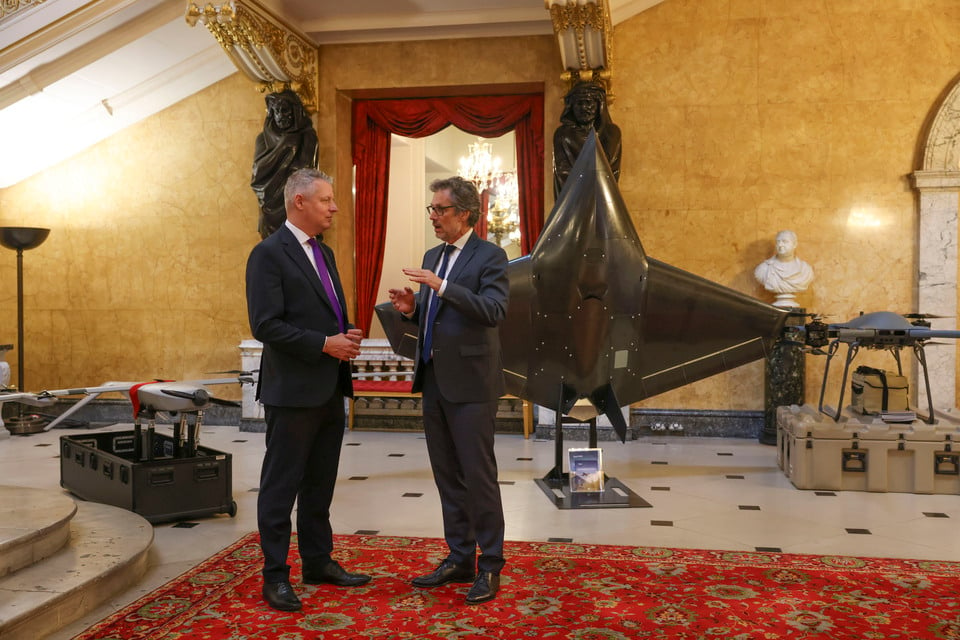
Luke Pollard, the UK’s Minister for Defence Readiness and Industry, hosted Jens Plötner, Germany’s State Secretary for Armament and Innovation. Senior officials and military leaders attended the Ministerial Group on Equipment and Capability Cooperation meeting.
Deep Precision Strike was among the main programmes on the agenda. The joint initiative aims to address capability gaps and strengthen NATO deterrence through the development of long-range strike capability.
“Germany is one of our closest and most valued defence partners, and today’s talks demonstrate our determination to turn that ambition into real capability for our armed forces and real opportunity for our defence industries,” Pollard said. “As threats to our shared security evolve, the UK and Germany are standing together, strengthening our forces, our industrial bases and our resilience in lockstep.”
The discussions built on the Trinity House Agreement, signed in October 2024. It sets out bilateral cooperation across air, land, maritime, cyber and space.
That agreement sits within the wider Kensington Treaty, signed in July 2025. The treaty provides the strategic framework for relations between the two countries.
The talks followed the UK Prime Minister’s visit to Berlin on 8 October. During that visit, the countries agreed to deepen space cooperation and establish a UK-Germany Counter-Hybrid Partnership to strengthen resilience against grey-zone threats.
After the Lancaster House meeting, Pollard and Plötner joined policymakers and industry executives at the German Embassy in London. The panel reviewed defence-industrial progress and identified practical priorities for further cooperation.
Other panellists included Hypersonica co-founder and chief executive Dr Philipp Kerth and Alex Zino, Director Business Development & Future Programmes at Rolls-Royce. The ministerial meeting formed part of wider UK-German engagement ahead of the EU-UK summit.
Source: UK Ministry of Defence (press release).