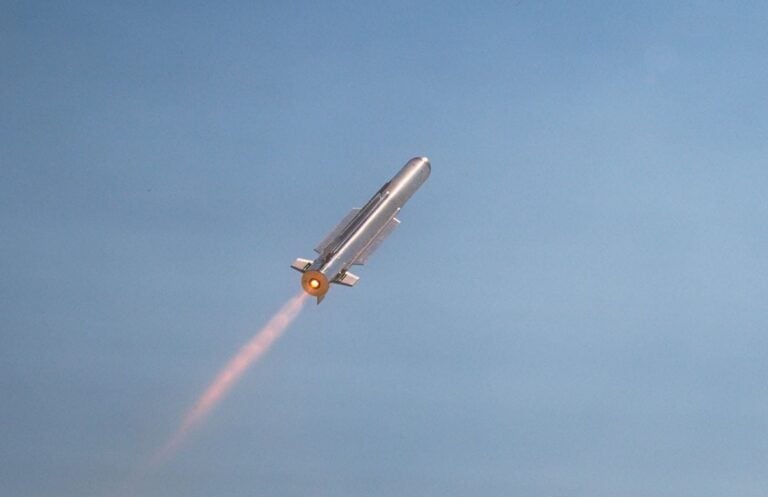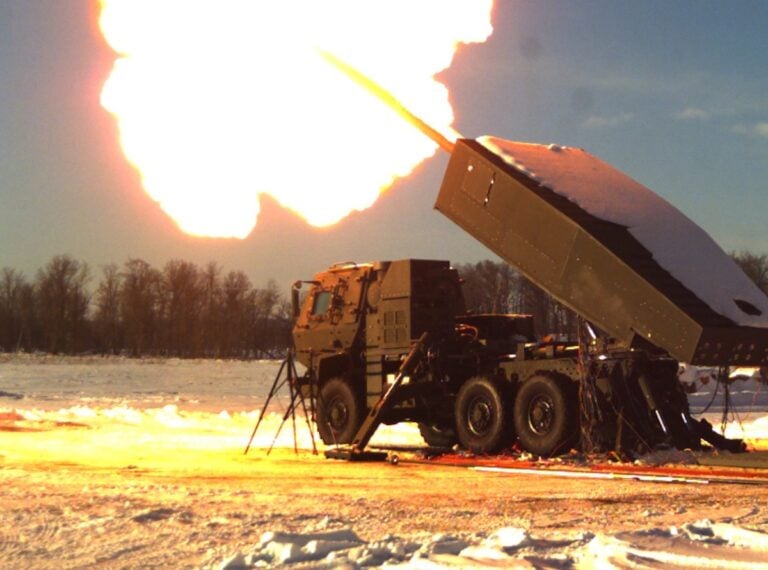
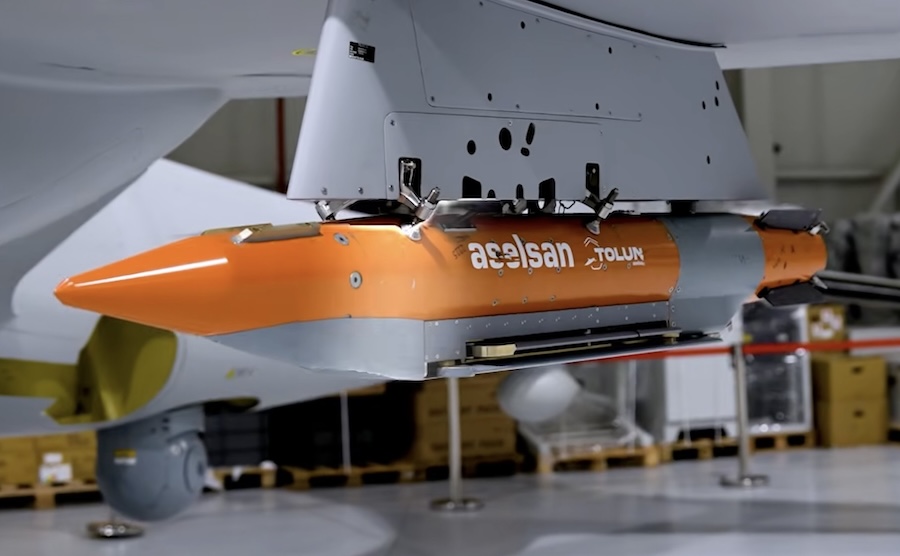
TOLUN I, TOLUN F and TOLUN P were used against separate targets selected to demonstrate their respective warhead and fuze configurations. ASELSAN said each weapon followed its planned engagement profile and successfully struck its target.
TOLUN I, which carries an impact fuze and fragmentation warhead, achieved a direct hit on a container. The variant is designed to detonate on impact and concentrate its fragmentation effect on the selected target.
TOLUN F engaged an armoured personnel carrier using a proximity sensor and fragmentation warhead. Its selectable impact angle and GPS spoofing-resistant software are intended to improve operational flexibility and increase the weapon’s effect against personnel and other targets in the surrounding area.
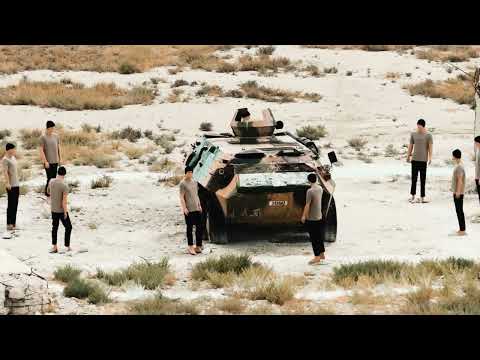
TOLUN P penetrated a two-storey concrete structure before neutralising elements at the designated level. The variant combines a penetrating warhead, programmable time-delay fuze and ASELSAN’s ASAF-Hard Target Fuze for use against reinforced concrete targets.
The three variants give operators a choice of fragmentation, proximity-effect and penetrating warheads within a common munition family. This allows the configuration to be matched to the type, construction and location of the intended battlefield target.
ASELSAN’s SADAK-4T Multiple Ejector Rack enables an aircraft to carry several TOLUN munitions at once. The arrangement allows one or multiple high-value targets to be engaged during a single sortie.
ASELSAN said the TOLUN family was designed to operate by day or night and in varying weather conditions. The system combines precision guidance, specialised warheads and advanced fuze technologies to deliver effects tailored to different missions.