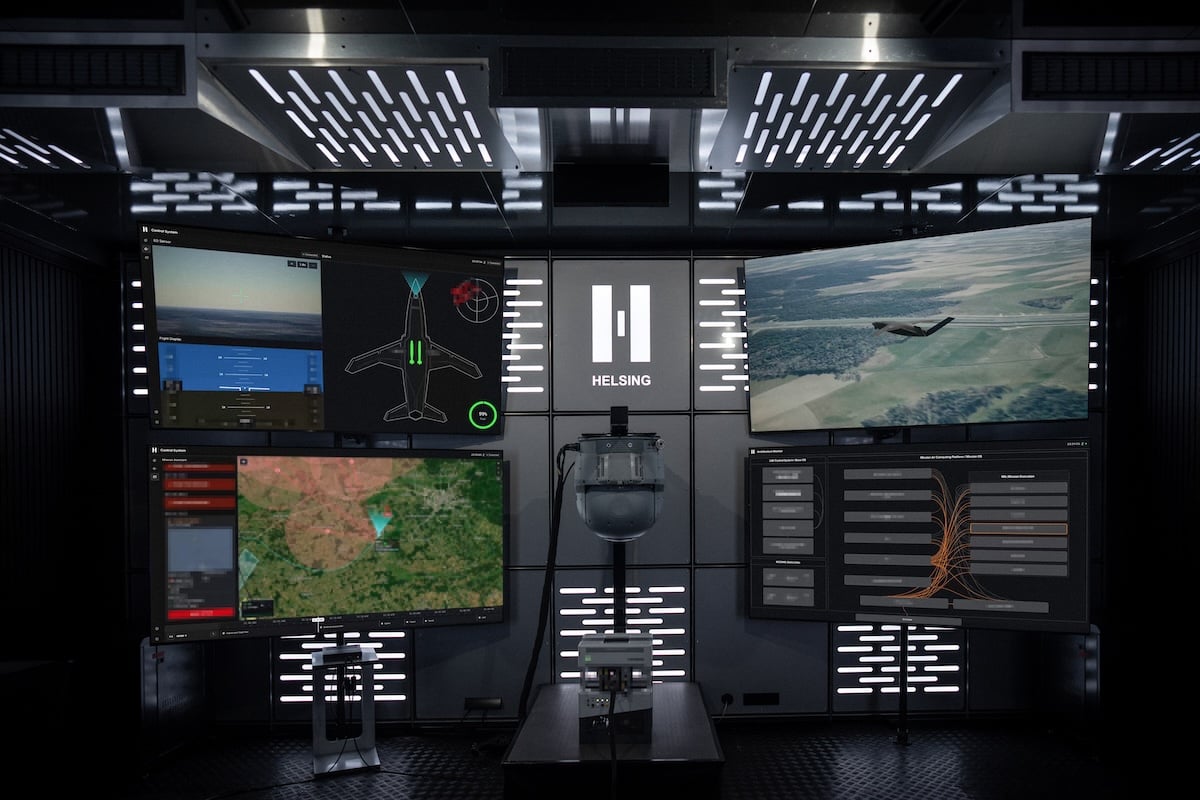
The first release of MissionOSBw includes technical documentation and a software development kit, Helsing said on 4 November. The handover is an early delivery under the Combat Fighter System of Systems Nucleus, or CFSN, programme, approved by the Bundestag’s Budget Committee in July 2026.
The contract was awarded to Helsing and an industry consortium including Hensoldt, Rohde & Schwarz, MBDA and Diehl Defence. It covers two experimental uncrewed combat aircraft, two ground control stations, a ground segment, autonomy software, a government-owned software reference architecture and MissionOSBw.
The operating system provides common infrastructure and interfaces for integrating sensors, communications management, automated mission planning, weapons control and effectors. Different suppliers can develop mission modules that work together but can be upgraded or replaced independently.
Helsing says this approach addresses the lengthy integration work associated with closed architectures, where adding a sensor or algorithm has typically taken months. MissionOSBw follows the Modular Open Systems Approach, allowing air combat systems to receive new capabilities throughout their service lives.
“CFSN represents a modular approach to developing future air combat systems,” said Robert Fink, Helsing’s chief technology officer. “The handover of MissionOSBw marks an important milestone for the German Air Force and the Bundeswehr.”
The software will be developed further as Government Open Source Software under CFSN, with the source code belonging to the state. BAAINBw and the Bundeswehr can reuse and modify it for future systems, retaining control over its development independently of individual suppliers.
“CFSN shows how innovative procurement can make new software capabilities available more quickly and enable them to be further developed independently of individual manufacturers,” Fink said. “That is Software Defined Defence in practice.”