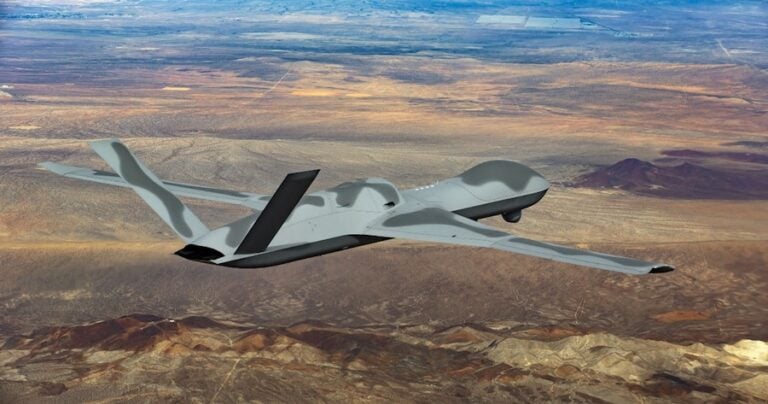
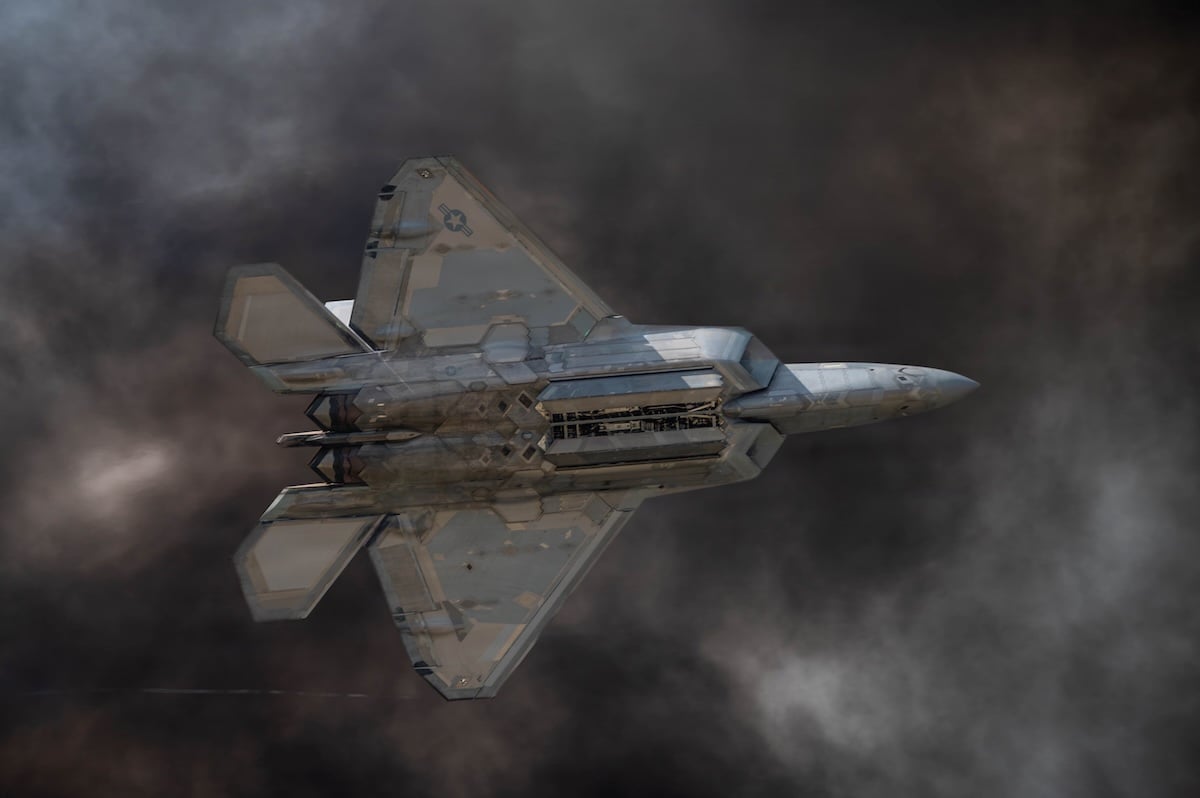
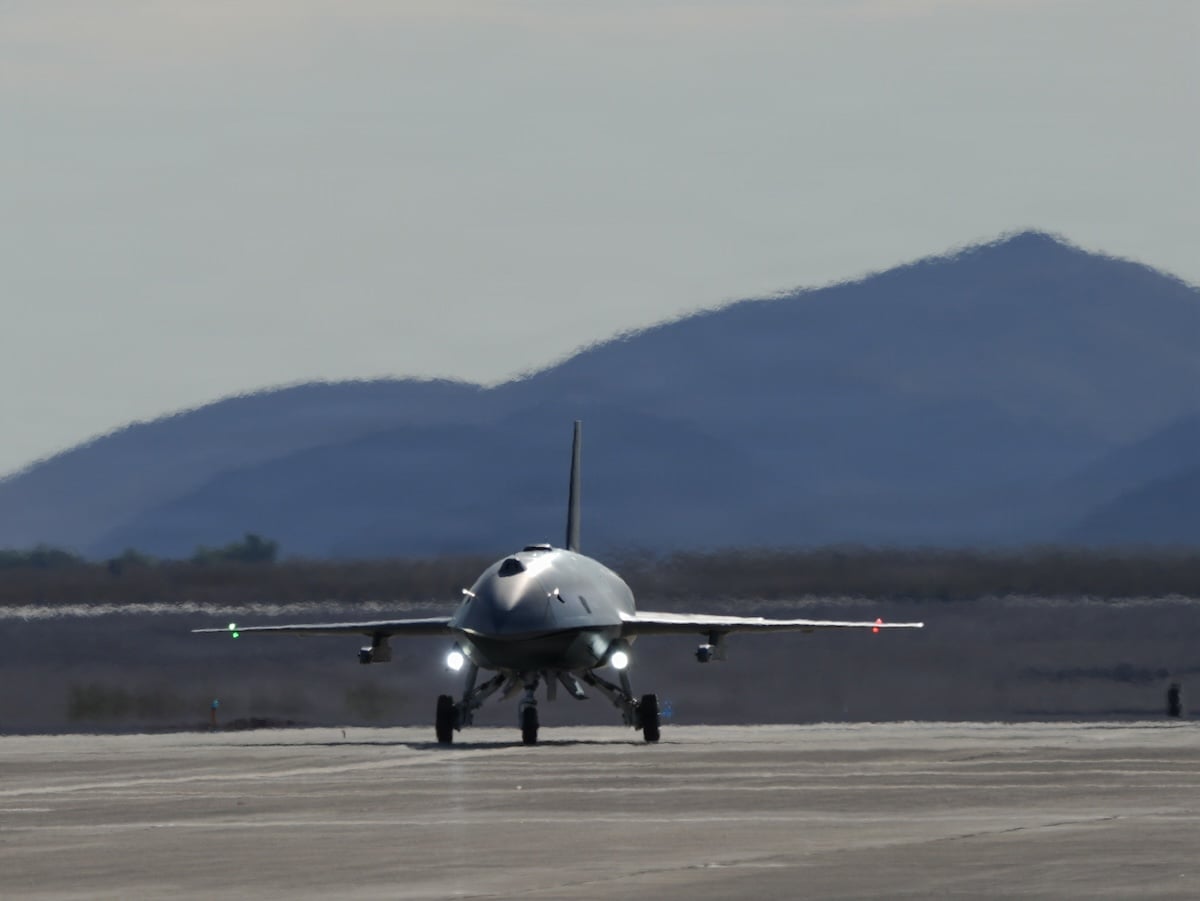
The demonstration involved a single YFQ-44A Collaborative Combat Aircraft, or CCA. The F-22 pilot provided high-level direction rather than remotely operating the aircraft’s flight controls.
Anduril designed the Fury to operate alongside crewed fighters or independently in highly contested environments. Its intended role is to improve the survivability, lethality and effectiveness of the combined force.
According to the company, all taxi and flight tests have been semi-autonomous from the outset. The aircraft executes a mission plan and manages its flight controls and throttle without an operator flying it remotely with a stick and throttle.
An operator monitors the aircraft and can command it to return and land at the push of a button. That approach leaves flight execution to the onboard system under human supervision.
“This flight shows the power of crewed-uncrewed teaming and the advantage it provides our warfighters,” said Air Force Chief of Staff Gen. Ken Wilsbach. “We must test often, learn fast and give commanders what they need, when they need it.”
The Air Force will use the results to inform software integration, developmental testing and future CCA operating concepts. The broader flight-test effort is also developing tactics for collaboration between crewed and uncrewed aircraft.
Anduril said the YFQ-44A reached flight testing 556 days after work began on its clean-sheet design. Testing evaluates speed, maneuverability, autonomy, stealth, range and weapons integration.
The company describes its mission software as designed to process combat data, identify targets and command effects. Separate sustainment functions track aircraft health and maintenance requirements.
Personnel from the 412th Test Wing, 422nd Test and Evaluation Squadron and 309th Software Engineering Group participated in the demonstration. The effort also included the Experimental Operations Unit, F-22 System Program Office and CCA Software Autonomy and Teaming Branch.
New test footage: first missile shot from YFQ-44A.
YFQ-44A executed an end-to-end, beyond-line-of-sight strike against a simulated target.
The test, executed out of @EdwardsAFB, represents an important step in turning CCA into an operational capability. https://t.co/70cRIs6uXJ
— Anduril Industries (@anduriltech) July 15, 2026
“This achievement demonstrates what is possible when we are aligned with industry on a shared imperative: delivering capability to the warfighter at unprecedented speed,” said Secretary of the Air Force Troy Meink. “We are driving urgency into every part of acquisition from rapid integration and flight learning to disciplined assessment, so we can turn promising technology into combat capability at the pace the threat demands.”
Anduril is preparing to manufacture the YFQ-44A using established industrial processes and its ArsenalOS production software. The company said changes to workflows and hundreds of design adjustments had more than doubled manufacturing speed.
The Fury is planned as the first program to enter Arsenal-1, Anduril’s five-million-square-foot factory in Columbus, Ohio. Its production approach is intended to support larger volumes through simpler manufacturing methods and a broad supplier and labor base.
The Air Force intends to have 500 combat-ready, semi-autonomous systems by 2032, with an overall CCA fleet objective of 1,000. The program aims to extend the reach, awareness and survivability of U.S. airpower in contested environments.