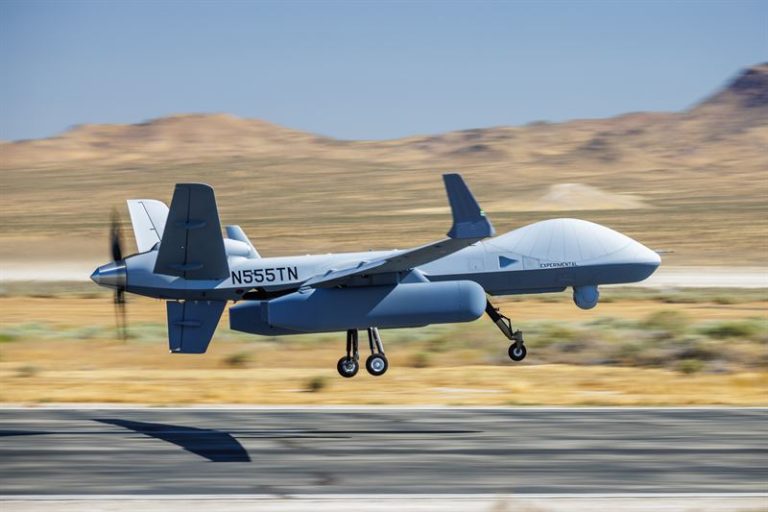

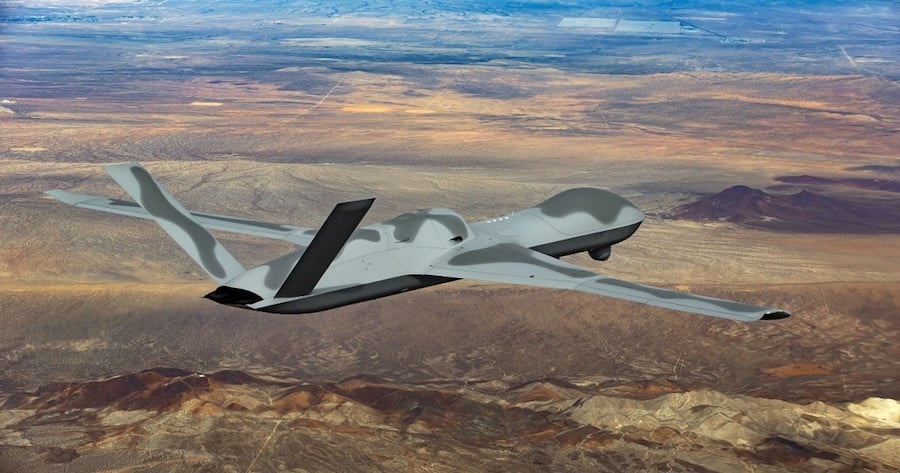
The July 21 mission was conducted with Tactical Air Support during a large-force event. It demonstrated Infrared Search and Track Multi-Ship Ranging between an unmanned GA-ASI CCA test aircraft and the F-5.
Both aircraft carried infrared search-and-track sensors and GA-ASI’s TacACE Tactical Autonomy Ecosystem software. TacACE is based on the latest Autonomy Government Reference Architecture, known as the Agile Mission Suite.
The two aircraft fused data from AMS-GRA-compliant sensors and coordinated through a beyond-line-of-sight data link. The F-5 transmitted target information from an AMS-GRA-compatible system, with commands relayed to the CCA’s TacACE software.
GA-ASI presented the result as evidence that aircraft and systems from different suppliers can operate together through a plug-and-play government architecture. The company said this approach would prevent the U.S. Air Force from becoming dependent on a single vendor or system.
The flight was part of a continuing GA-ASI test campaign rather than a standalone demonstration. The program is moving through increasingly complex and operationally representative missions combining live aircraft, sensors and autonomous mission systems.
“With this flight, we moved beyond simply flying an autonomous jet and showed how a manned fighter and an autonomous CCA can work together to find, track, and engage a target using passive sensors and shared autonomy,” said Michael Roberts, Advanced Programs Emerging Technology Director at GA-ASI. “This is the kind of operationally relevant mission that will allow autonomous CCAs to deploy alongside manned aircraft and deliver real combat capability for the warfighter.”
“The flight test marks another milestone in warfighter adoption of the CCA solution and confirms its readiness for production,” Roberts said. GA-ASI said the broader campaign is building the foundation for operational human-machine teaming.
The company defines that approach as pairing crewed combat aircraft with large numbers of highly autonomous wingmen. It said recent demonstrations involving F-35, F-22 and F-5 Advanced Tiger aircraft validated the hardware, autonomy software, mission systems and networks required for such operations.