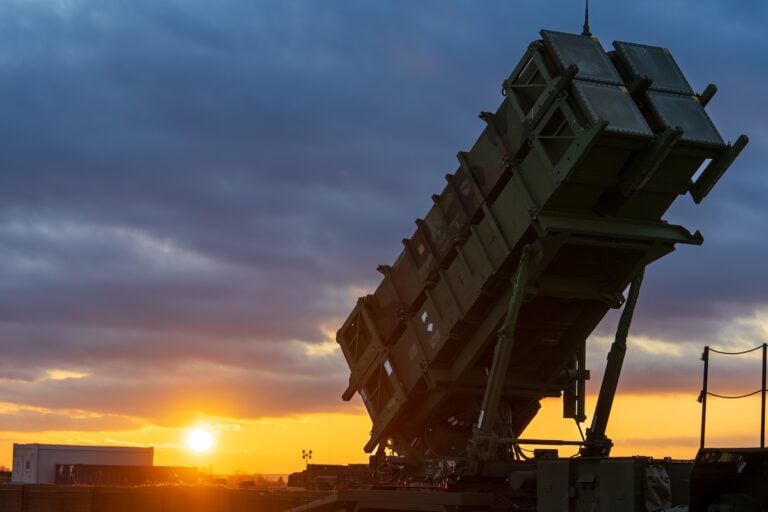
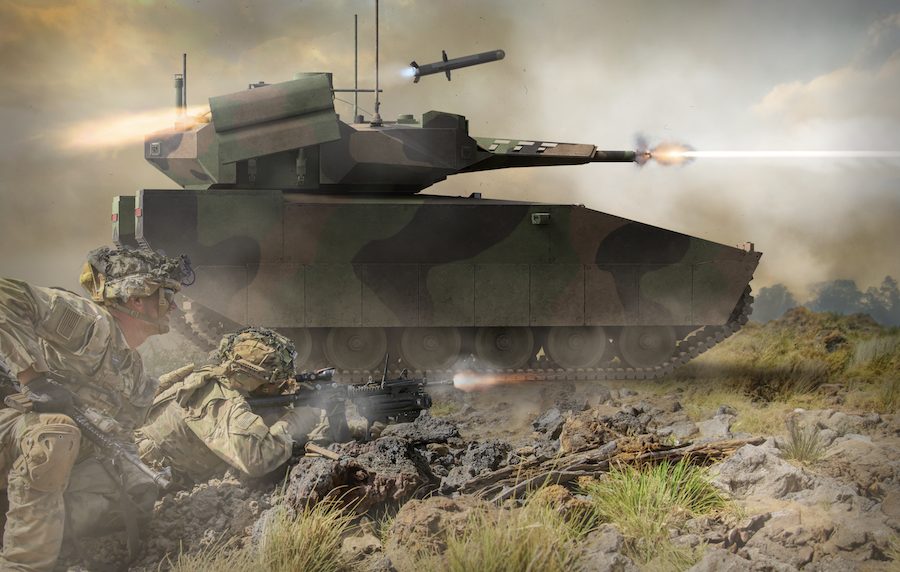
Brian Burton, Raytheon’s vice president of Precision Fires & Maneuver, outlined the launcher’s role at AUSA 2026. American Rheinmetall, which leads Team Lynx, announced delivery of the first vehicle prototype in September.
“Our primary offering is the Multi-Mission Launcher, which allows the Army to use multiple effectors already in its inventory from day one of the fight,” Burton said. “As the environment and demands evolve and new weapons come online, we have the ability to scale and give the warfighter more options on the battlefield.”
The first Lynx XM30 is one of eight prototypes due to be delivered by the end of the year. Soldiers from the 1st Cavalry Division will test the vehicles at Fort Hood, Texas, alongside specialists and officials from other Army organizations.
Training will precede trials of performance, functionality and reliability. The findings could prompt changes to the design before production.
Team Lynx competes against General Dynamics Land Systems, which is offering the XM30 Wolf. The prototype deliveries fall under an engineering and manufacturing development contract valued at approximately $764 million.
Team Lynx includes Textron Systems, Raytheon, L3Harris Technologies, Allison Transmission and Anduril Industries, alongside American Rheinmetall. The consortium also works with U.S. technology and manufacturing suppliers.
Its vehicle is derived from the KF41 Lynx, with changes including a 50 mm Northrop Grumman XM913 cannon, hybrid propulsion and a revised hull. The design incorporates a substantial share of American-made components.
The turret was manufactured in Plymouth, Michigan, while hull production and vehicle integration took place in Louisiana. Factory trials preceded delivery of the first prototype.
The program has progressed from digital design and virtual testing to the construction and evaluation of physical vehicles. Raytheon’s statement did not name the existing weapons supported by its launcher or give a timetable for adding future effectors.