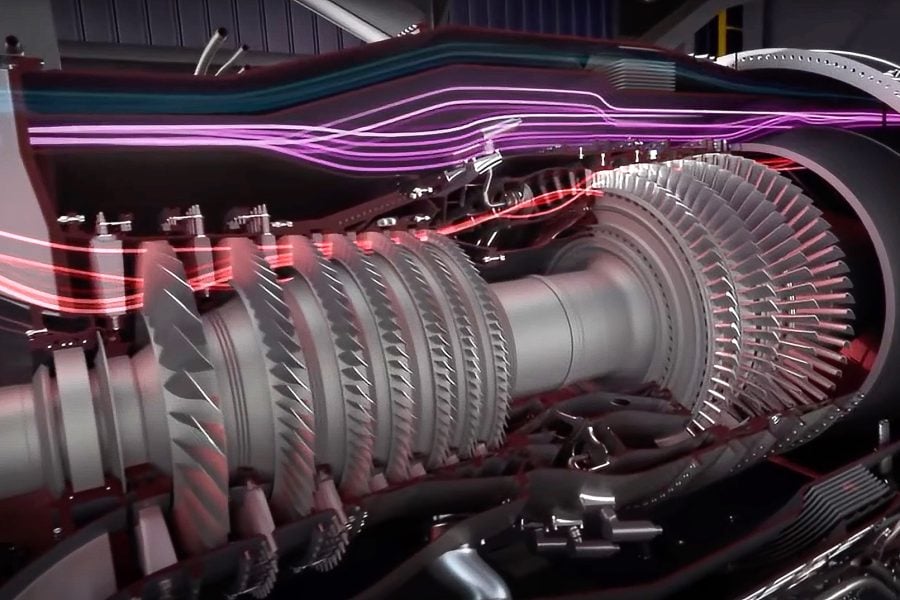
The company is procuring hardware from suppliers and testing subcomponents before the engine enters assembly. The work moves the XA102 from digital development towards a physical test configuration.
“Our team is working with suppliers to procure hardware and test subcomponents as we prepare for assembly of the first XA102 test asset,” said Jorge Perez, general manager of Edison Works Advanced Combat Engines at GE Aerospace. “With our learnings from the XA100 program as a foundation, we are well positioned to advance adaptive cycle engine technology and support the Air Force’s vision for next-generation propulsion.”
Adaptive cycle engines are intended to address the propulsion, fuel efficiency and thermal-management requirements of future combat aircraft. GE Aerospace is applying experience gained through the XA100 programme to mature the XA102 and prepare it for testing.
The XA102 was designed using model-based engineering to reduce development time and cost. GE Aerospace is now extending that approach into manufacturing, inspection and assembly.
The engine will be the company’s first built using model-based definition throughout the process, replacing traditional two-dimensional drawings. The technology provides a complete machine-readable product definition that can be used directly by downstream manufacturing and inspection systems.
GE Aerospace said the digital framework connects design, production and inspection through a common set of integrated models. The company expects this approach to improve accuracy and shorten the transition from engineering into manufacturing.
Suppliers are also being prepared to use the model-based data in their manufacturing and inspection operations. Their ability to process the digital product definition will form part of the XA102 production framework.
GE Aerospace completed demonstrations of its model-based engineering practices during the first phase of the program. The company is now applying those methods alongside lessons from the XA100 in adaptive propulsion, thermal management, fuel efficiency and advanced engine design.