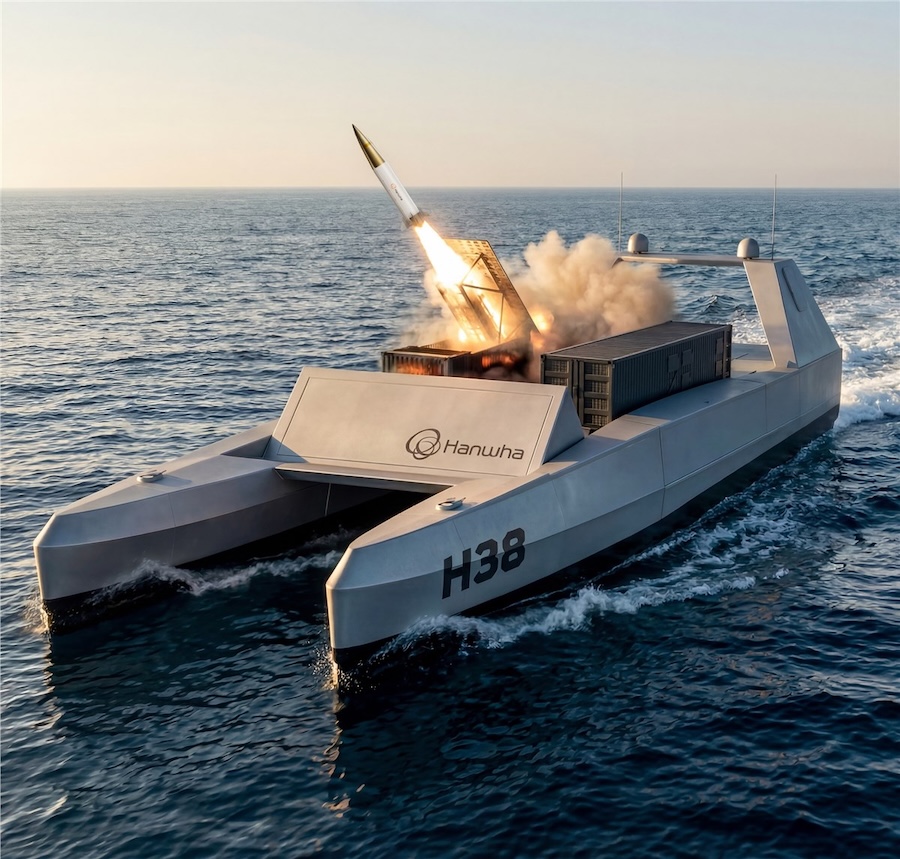
The collaboration will focus on producing advanced 38-metre unmanned vessels designed for global naval operations. The companies said the programme aims to deliver cost-effective and highly capable platforms for rapid response missions.
Magnet Defense’s M48 vessel will serve as the basis for the partnership’s development efforts. The platform has a reported range of 17,000 nautical miles and has been tested in long-distance and high-sea conditions.
The vessel completed a round-trip voyage from Miami to American Samoa in 2024. It also conducted additional open-water missions, including operations in Sea State 9 conditions to demonstrate stability and reliability.
Michael Coulter said: “Hanwha remains committed to fielding the most capable and lethal MUSVs to support American warfighters and other allies in times of conflict.” He added: “By partnering with Magnet Defense, Hanwha can utilize its manufacturing capacity and advanced robotics and pair these capabilities with Magnet Defense’s proven autonomy and technology.”
The agreement includes plans to jointly design and build the 38-metre MUSV platform. It also covers configuration of vessel capabilities and integration of advanced technologies.
Marc Bell said: “Hanwha’s advanced missile systems, coupled with Magnet Defense’s designed and built MUSVs, make for a powerful combination.” He added: “Our ability to project force globally by working together in quick response to America’s Armed Forces needs is critical in today’s ever-changing environment.”
The partnership will also explore the development of AI-driven robotic shipyards and advanced autonomy software. Officials said these efforts are intended to enhance production efficiency and operational capability.
The companies said the initiative reflects growing demand for unmanned maritime systems in defence operations. The programme is expected to support future naval capabilities through increased autonomy and global deployment flexibility.