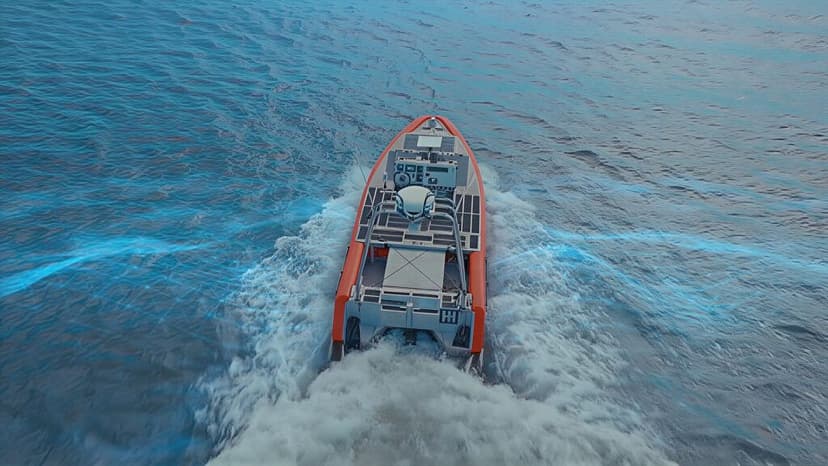
HII described a hypothetical mission in which REMUS underwater vehicles search for mines while a ROMULUS surface vessel relays information and supports the wider operation. Operators would retain authority over critical decisions, with the vehicles handling navigation, coordination and other routine tasks.
“Our approach to autonomy is intentionally different,” said Duane Fotheringham, president of HII’s Unmanned Systems business group. “Instead of a vertically integrated, closed ecosystem, we employ a modular open systems strategy that enables integration of best-of-breed technology partners and gives our customers choices.”
Odyssey is designed to work across different unmanned platforms, allowing them to share tasks as a mission changes. HII says vehicles using the software can reroute around obstacles, manage energy reserves and continue operating when satellite communications are lost or GPS signals degrade.
“Artificial intelligence isn’t autonomy,” said Jeremy Shattuck, chief technology officer for HII’s Unmanned Systems business group. “AI is integrated throughout an autonomy stack, but autonomy is the software that allows a robotic vehicle to manage input from the platform layer up to the mission layer, understand its surroundings, make decisions, to accomplish an objective.”
The company says Odyssey has been integrated across more than 30 unmanned surface platforms. HII has also delivered more than 750 REMUS underwater vehicles to customers in over 30 countries, according to its figures, with more than 90% still in service after 25 years.
HII says Odyssey’s modular design lets operators add payloads, sensors and software functions through updates without redesigning the underlying vehicle. “One of Odyssey ACS’s strengths is its open architecture and our ability to rapidly upgrade the software, add new capabilities and adapt as those lessons are learned,” Fotheringham said.