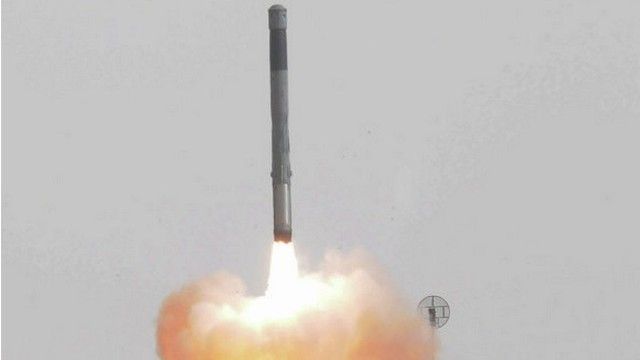
The contract was signed between BrahMos Aerospace Private Limited and the Indonesian Ministry of Defence. Neither side has disclosed the value of the contract, the number of missiles ordered, the delivery schedule or the missile version that will be supplied.
According to the source article, unofficial estimates put the value of the agreement at around $630 million. That figure would reportedly include not only the missile system itself, but also training and logistical support.
The agreement comes as Indonesian military planners have for years emphasised the development of coastal defence systems, including land-based anti-ship missiles. These capabilities form part of an anti-access and area-denial strategy focused particularly on archipelagic sea lanes and key maritime chokepoints such as the Malacca, Makasar, Sunda and Lombok straits.
BrahMos will not be Indonesia’s first supersonic anti-ship missile. The Indonesian Navy, Tentara Nasional Indonesia Angkatan Laut, already operates Russian Yakhont missiles, the export version of the P-800 Oniks system and the closest relative of the Indian missile.
BrahMos was developed from the Oniks as a joint Russian-Indian design. The only Indonesian platforms adapted to launch the Yakhont missiles are former Dutch-built Van Speijk-class frigates from the 1960s, classified in Indonesia as the Ahmad Yani class.
More specifically, two of the five active units are equipped for that role. They are KRI Ahmad Yani, formerly Tjerk Hiddes F 804 and in service since 16 August 1967, and Oswald Siahaan, formerly Van Nes F 805 and in service since 9 August 1966.
The newly signed agreement is part of a broader Indonesian military modernisation effort. For decades, the reference point for the modernisation of the Indonesian Navy was the programme known as KPM, or Kekuatan Pokok Minimum, established by Presidential Directive No 7 of 2008 and implemented in three phases from 2010 to 2024.
The KPM programme envisaged, among other goals, expanding the navy to as many as 274 vessels and 12 submarines. However, the programme was chronically underfunded and had achieved about 70% of its targets by the end of 2024, mainly because defence spending remained below 1% of GDP.
Under President Prabowo Subianto, the concept is evolving towards the Optimum Essential Force. This marks a shift away from a purely quantitative model of a minimum sufficient force towards credible deterrence and operational readiness across land, sea, air, cyber and space domains, while also strengthening the domestic defence industry.
Indonesia’s defence budget in 2026 rose by 37% from the previous year to about $23.4 billion, intended to bring spending closer to 1% of GDP. This has been accompanied by a strategy of supplier diversification, replacing earlier fragmented purchases from many manufacturers with integrated procurement packages designed to improve equipment integration and industrial offsets.
Indonesia would not be the first Southeast Asian country to operate land-based anti-ship missiles of this type. The Philippines ordered BrahMos missiles in 2022 and received a second battery on 20 April last year.
Vietnam has also begun talks with India on a possible BrahMos purchase. The country already operates a range of coastal defence systems, from older Russian 4K44 Redut and 4K51 Rubezh systems to the modern K-300P Bastion-P equipped with Yakhont missiles.