President and Chief Executive Officer Eric DeMarco outlined the production plan during Kratos’ second-quarter 2026 earnings call. “We’re increasing our production rate right now,” he said.
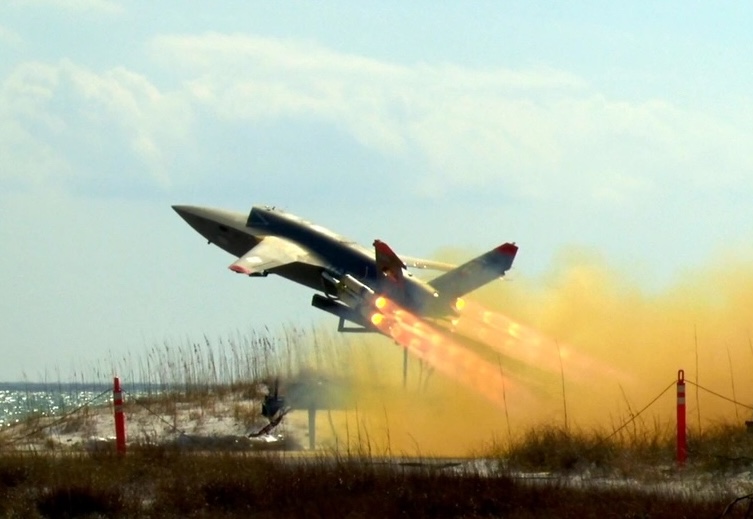
“I believe as we get into 2027, we’ll be up to 1.5 planes on average a month,” DeMarco said. That rate would equal approximately 18 Valkyries a year.
Kratos is also preparing for a larger production increase beyond 2027. DeMarco said annual output could eventually reach between 35 and 40 aircraft, depending on the versions selected by customers.
Rail- or trolley-launched aircraft would support a rate closer to 40 units a year. Production would be closer to 35 if customers favor conventional takeoff and landing aircraft, which DeMarco said are more complex to manufacture.
The Marine Corps remains a central part of Kratos’ Valkyrie outlook. “We expect to receive an additional Marine Corps Valkyrie order by the end of this year,” DeMarco said.
He also cited Marine Corps budget documents that showed planned spending of $1.28 billion on the service’s collaborative combat aircraft program over the relevant five-year period. Kratos expects another award by the end of 2026 under the Marine Corps’ MUX TACAIR program, where it is partnered with Northrop Grumman.
Taiwan is considering a new Valkyrie derivative and could make a decision during the first half of 2027, DeMarco said. He linked the customer’s interest to the aircraft’s existing flight and weapons record.
“The Valkyrie is flying. It’s proven,” DeMarco said. “It’s flown with the Air Force. It’s flown with the Marine Corps. It’s deployed weapons.”
DeMarco also pointed to the aircraft’s ability to operate from a rail launcher or a runway. He said the proposed Taiwan derivative would use a different propulsion arrangement, but declined to provide details because of confidentiality restrictions.
The Taiwan customer is also working with Kratos on Mighty Hornet, a derivative of the Tactical Firejet. DeMarco said both the Mighty Hornet and Valkyrie opportunities “appear to be progressing very well for us.”
Kratos is pursuing two other international Valkyrie customers. DeMarco said the company hoped to secure the required State Department approvals and announce those opportunities soon.
“Kratos Valkyries are in Europe with our partner, Airbus,” DeMarco said. He did not identify a customer or disclose further information about the work.
The company has approved an expansion of its Oklahoma production facility by about 50,000 square feet. The plant currently produces Valkyries, Tactical Firejets and another aircraft.
The added space will support Valkyrie, Firejet and target-drone production. It will also support Mighty Hornet and could house another classified unmanned-aircraft program if that effort enters production.
Executive Vice President and Chief Financial Officer Deanna Lund said second-quarter Unmanned Systems revenue increased 8.1% organically. She said the increase was “primarily driven by Valkyrie-related activities.”
DeMarco estimated adjusted EBITDA margins of 10% to 15% for domestic Valkyrie production. International sales could generate margins of 15% to 20%, depending on configuration and quantity.