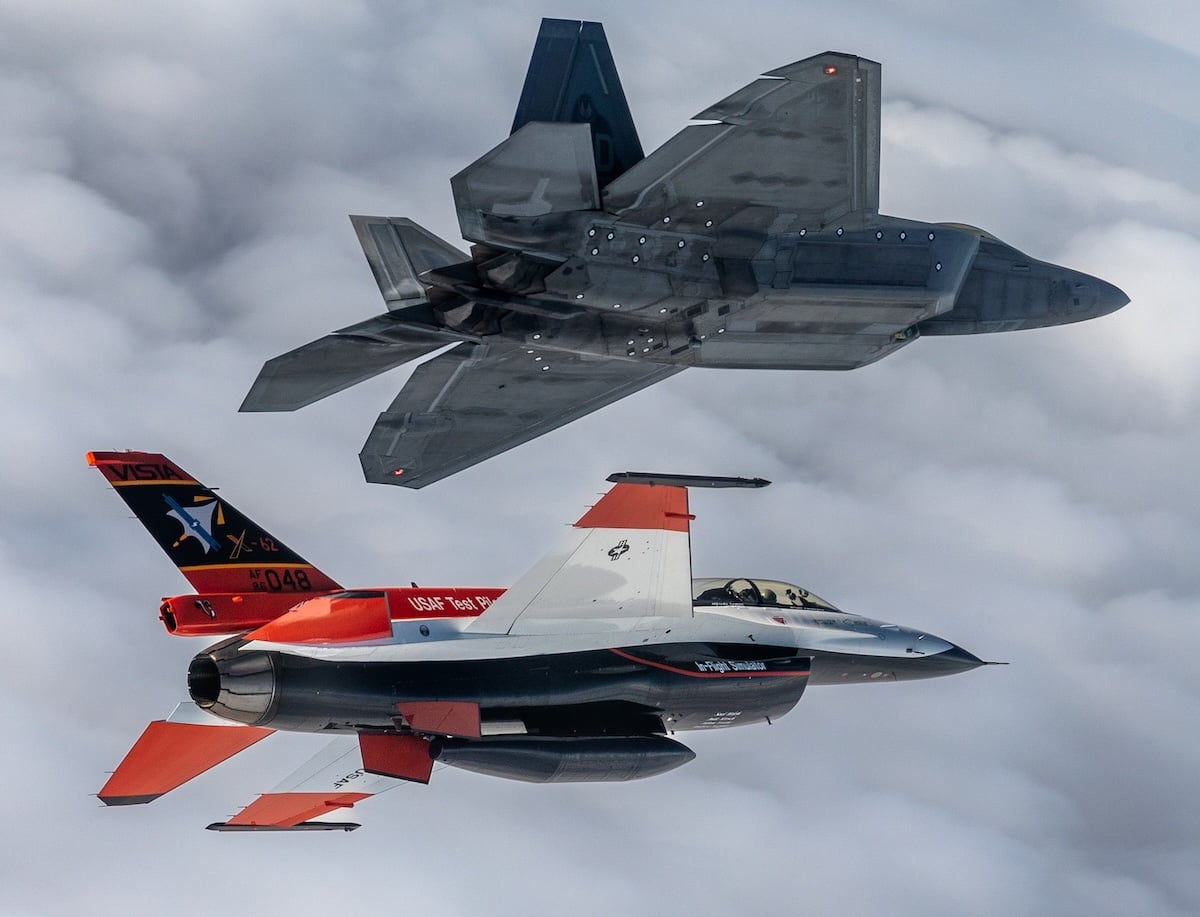
The ongoing Mission Systems Upgrade adds advanced radar, computing power and sensor capacity. Researchers have proposed more than 30 flight-test concepts for fiscal years 2027 and 2028, exceeding an initial planning goal of three.
The Test Resource Management Center is funding the upgrade through the Air Force Test Center. Lockheed Martin Skunk Works, Calspan Corporation, the Air Force Research Laboratory and RTX are participating.
The upgraded aircraft is intended to complement existing autonomy programs, including VENOM, and test emerging applications for priority defense programs. Meanwhile, the Air Force Test Pilot School and its partners have flown missions to establish the integration and logistical procedures needed for a higher test rate.
The series, called HAVE HOLIDAYS, ran alongside HAVE HEAT’s AI interception tests. It examined several ways to bring experimental hardware and software into the aircraft’s flight-test environment.
HAVE BALLDROP integrated a third-party autonomous agent derived from the Air Force Research Laboratory’s xFACTOR program. The test examined how lower-maturity technology could work within systems with more advanced mission autonomy.
During HAVE THANKS, X-62 flew with BirdBox, an open-architecture software framework for assisted target recognition. The research focused on using sensor data at the tactical edge.
HAVE DREIDEL evaluated runtime assurance software developed with 3Laws Robotics. It assessed whether software guardrails could keep autonomous operations within user-defined limits and provide additional active safety protection.
For HAVE SANTA, IBM’s NorthPole neuromorphic chip was installed in VISTA’s computers to assess its performance under flight conditions. The lower-power processor also accelerated Lockheed Martin Skunk Works’ Supermassive simulation, successfully executing parallel trajectory simulations in flight.
The work tested the feasibility of running parallel simulations aboard the aircraft. It also provided an environmental assessment of the chip.
More than 80 representatives from industry, academia and the joint force attended the inaugural X-62 Research Symposium at Edwards Air Force Base in August. Fighter aircrew also shared operational experience concerning pilot trust and machine learning.
“The X-62 Summit was the first time we convened stakeholders across the spectrum of capability development of autonomy tools for combat aviation,” said Col. Maryann Karlen, commandant of the Air Force Test Pilot School. “We were awed by the level of positive responses and interest.”
“This demonstrates, without a doubt, the demand for testbeds like the X-62,” Karlen said. The proposals will inform a shared research roadmap after the upgrade, while Test Pilot School students remain the aircraft’s primary innovators.